.png)
Influencer Outreach: Driving E-Commerce Brand Success


Finding the perfect strategy to put your e-commerce brand in front of keen British or Irish shoppers is a daily challenge. With social media feeds favouring creators over adverts, influencer outreach stands out as a direct route to genuine engagement and lasting trust. By connecting with content creators who already have loyal audiences, you position your products where it counts and drive real results for your online shop.
Table of Contents
Key Takeaways
Point | Details |
Influencer Outreach Strategy | Focus on building genuine relationships with influencers who resonate with your target audience for authentic advocacy. |
Importance of Engagement | Prioritise micro-influencers for higher engagement rates, as they often drive better conversions than celebrity counterparts. |
Structured Campaign Planning | Define clear objectives and personalise your outreach to increase response rates and partnership effectiveness. |
Legal Compliance | Ensure transparency in all influencer partnerships to avoid regulatory issues and maintain brand integrity. |
Defining Influencer Outreach in E-Commerce
Influencer outreach is the strategic process of identifying, connecting with, and collaborating with content creators who have engaged audiences aligned with your brand. Unlike traditional advertising, this approach leverages parasocial relationships that influencers build with their followers through authentic content and regular engagement.
For e-commerce businesses, influencer outreach goes beyond simply sending promotional products to random content creators. It’s a calculated effort to find the right voices who genuinely resonate with your target market and can authentically advocate for your products.
What Makes Influencer Outreach Different
Traditional marketing pushes messages out. Influencer outreach pulls recommendations in. There’s a fundamental difference in how audiences receive the message.
When a TikTok creator you follow recommends a product, you trust their judgment because you’ve seen their content repeatedly. That trust matters. Audiences today are increasingly sceptical of brand advertising but value recommendations from real people they connect with.
Social media influencer marketing involves individuals who create content and influence consumer behaviour through authenticity and engagement, ranging from mega-influencers with millions of followers to micro-influencers with smaller, highly engaged communities.
Each tier brings distinct advantages to your strategy.
Why E-Commerce Brands Need This Approach
Your e-commerce store competes against thousands of others. Social media algorithms favour content from friends and creators over brand posts. Influencer partnerships solve this problem by putting your products in front of engaged audiences organically.
Consider these key reasons:
Authentic recommendations carry more weight than sponsored ads, driving genuine interest
Targeted audiences reduce wasted marketing spend by reaching people already interested in similar products
Content creation at scale: influencers produce high-quality product content you can repurpose across channels
Trust building happens faster when a respected creator endorses your brand
Measurable results via unique discount codes, affiliate links, or promo campaigns
Influencer outreach isn’t about paying celebrities for mentions. It’s about building genuine partnerships with creators whose audiences naturally align with your customers.
The Three Core Elements
Effective influencer outreach rests on three pillars that work together:
Identification: Finding creators whose values, aesthetic, and audience demographics match your brand
Outreach: Crafting personalised messages that show you’ve researched them and understand their content
Collaboration: Establishing clear partnership terms, deliverables, and performance expectations
You’ll also want to understand how what influencer marketing for e-commerce brands actually involves shapes your approach to each stage.
Most businesses skip the first two and wonder why influencers ignore their generic partnership requests.
Pro tip: Start by following 20-30 creators in your niche and studying their engagement rates, audience comments, and content style before sending a single outreach message. This research transforms generic pitches into conversations.
Types of Influencer Partnerships Explained
Not all influencer partnerships work the same way. Different collaboration models serve different business objectives, budget constraints, and campaign goals. Understanding each type helps you choose the right fit for your e-commerce strategy.
Multiple types of influencer collaborations exist to suit various marketing aims, from increasing exposure to building trust through enriched content. Each demands different resources, timelines, and measurement approaches.
Partnership Types by Influencer Tier
Influencers fall into distinct categories based on audience size and influence. Your choice shapes both partnership terms and expected results.
Here’s how they typically break down:
Celebrity influencers: Large audiences (1M+ followers), broad reach, higher costs, lower engagement rates
Macro-influencers: 100K–1M followers, strong brand awareness, moderate engagement, substantial fees
Micro-influencers: 10K–100K followers, highly engaged communities, authentic recommendations, more affordable
Nano-influencers: Under 10K followers, ultra-niche audiences, exceptional engagement rates, often reciprocal arrangements
Most e-commerce brands find their sweet spot with micro-influencers. The engagement rates and audience trust typically outperform the broader reach of larger creators.

To assist with selecting the most effective influencer collaboration, here is a comparison of influencer partnership tiers and their likely campaign outcomes:
Tier | Typical Audience Size | Cost Range (per post) | Best Objective |
Celebrity | 1M+ followers | £10,000+ | Broad brand awareness |
Macro | 100K–1M followers | £1,000–5,000 | Large-scale launches |
Micro | 10K–100K followers | £150–500 | High engagement, conversions |
Nano | Under 10K followers | Product gifting/£50–150 | Niche targeting, trust building |
The best partnership tier depends on your goals. If you want awareness, go big. If you want conversions, go targeted.
Collaboration Formats That Drive Results
Beyond tier size, partnership structures vary by deliverable and compensation model. Sponsored content formats range from social posts to brand ambassador arrangements, each suited to different campaign objectives.
Paid partnerships include:
Sponsored social posts: One-off Instagram or TikTok videos featuring your product
Sponsored blog posts: Detailed reviews or tutorials published on their platform
Brand ambassador programs: Long-term relationships with ongoing content creation and exclusivity
Takeovers: Influencer controls your brand account for a set period
Unpaid or reciprocal arrangements work best when:
You’re offering premium products the influencer genuinely wants
Building relationships with emerging creators for future partnerships
Running volume-based campaigns where gifting costs less than paying dozens of creators
Gifting alone rarely drives meaningful sales. Pair it with a trackable discount code or affiliate link to measure actual impact.
Matching Partnership Type to Your Goals
Your campaign objective determines which partnership model makes sense. Confused about whether affiliate marketing partnerships align with your influencer strategy? They work brilliantly together when structured correctly.
Use sponsored content for brand awareness and social proof. Use affiliate partnerships for performance-based results where you pay only for conversions.
Pro tip: Start with micro-influencer sponsored posts (£100–500 each) to test messaging and audience response before committing to expensive brand ambassador deals. Track discount code usage to identify which influencers drive actual customers, not just likes.
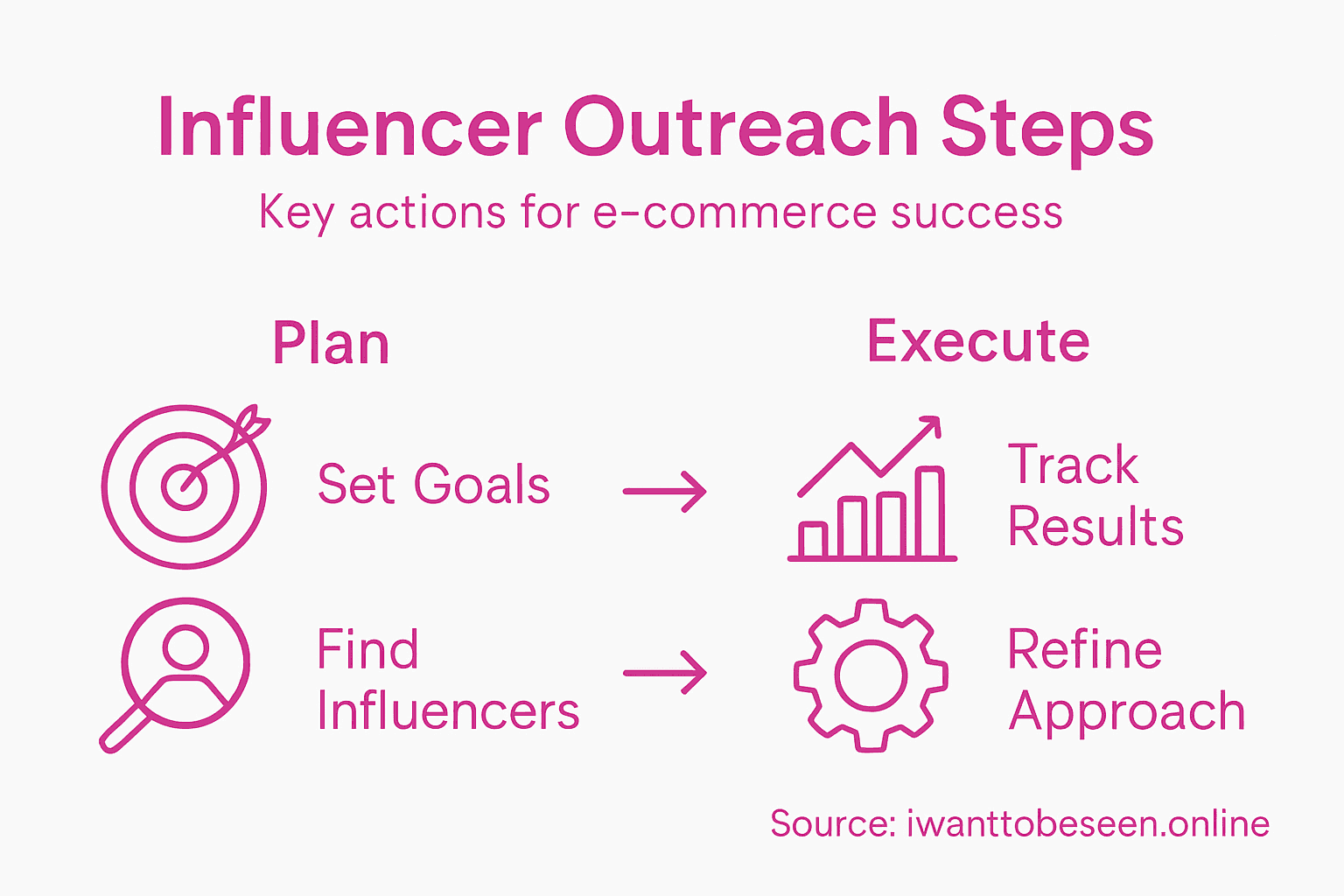
Steps to Plan Effective Outreach Campaigns
Random outreach rarely works. Successful influencer campaigns follow a structured planning process that starts before you contact anyone. This section walks through each stage so your partnerships deliver measurable results.
Think of campaign planning like content strategy. You wouldn’t publish blog posts without a plan—similarly, an effective outreach strategy requires defining clear marketing goals, identifying appropriate influencers, establishing budgets, and crafting personalised communications that resonate with creators.
Step 1: Define Your Campaign Objectives
Start here. Everything else flows from this decision. What do you actually want to achieve?
Common objectives include:
Brand awareness: Reaching new audiences and increasing visibility
Sales growth: Direct conversions through trackable discount codes or affiliate links
Content creation: Building a library of authentic product footage for your own channels
Community building: Strengthening relationships with engaged customer segments
Trust signals: Leveraging third-party validation to overcome purchase hesitation
Knowing your primary goal shapes influencer selection, budget allocation, and success metrics. A campaign aimed at awareness differs vastly from one designed to drive immediate sales.
Step 2: Identify Your Target Audience
Who are you actually trying to reach? Not everyone. Your specific customer.
Document their demographics: age, location, income level, interests, pain points. Then find influencers whose followers match this profile precisely. A 500K-follower account is worthless if their audience doesn’t overlap with yours.
Use platform analytics tools to examine influencer audiences before outreach. Look for audience demographics, follower growth trends, and engagement authenticity. This research prevents wasted budget on misaligned partnerships.
Step 3: Research and Vet Influencers
Quality matters far more than follower count. Examine engagement rates, comment sentiment, and content authenticity.
Key metrics to assess:
Engagement rate: Comments, shares, and saves as a percentage of followers (aim for 3–8%)
Audience quality: Real followers vs bots; check for suspicious spikes or bot-like comments
Content alignment: Does their aesthetic and messaging match your brand?
Previous partnerships: Review how they’ve worked with other brands
Skipping this step leads to partnerships with influencers who have fake followers or misaligned audiences.
Step 4: Plan Budget and Deliverables
Successful campaign planning involves budgeting for compensation, creative production, and contingencies alongside developing detailed creative briefs.
Estimate realistic costs:
Micro-influencers: £150–500 per post
Macro-influencers: £1,000–5,000+ per post
Brand ambassador programs: £2,000–10,000+ monthly
Define exactly what you’re paying for: number of posts, platforms used, content rights, exclusivity periods, and revision rounds. Vagueness creates conflict.
Step 5: Craft Personalised Outreach
Generic partnership requests get ignored. Show you’ve researched them.
Reference specific posts they’ve created. Explain why their audience aligns with your customers. Propose collaboration ideas that feel natural for their content style, not forced. The difference is immediate response rates.
Personalised outreach converts at 5–10 times higher rates than templated messages.
Step 6: Execute and Measure
Once partnerships launch, track performance continuously. Use unique discount codes, UTM parameters, and affiliate links to measure conversions, not just vanity metrics like likes.
Compare results against your original objectives. Which influencers drove actual customers? Which partnerships maximised return on investment? This data informs future campaigns and budget allocation decisions.
Pro tip: Build a simple spreadsheet tracking influencer name, audience size, engagement rate, partnership cost, discount code redemptions, and resulting revenue for every campaign. After three partnerships, patterns emerge that guide future selections and eliminate guesswork.
Legal and Compliance Considerations in the UK
Influencer marketing in the UK operates within a strict legal framework. Ignoring these rules exposes your brand to regulatory action, fines, and reputational damage. Understanding your obligations protects both your business and consumers.
The UK’s advertising landscape differs from many other markets. Regulators take transparency seriously, and influencers who breach guidelines face consequences alongside brands. Compliance isn’t optional—it’s essential to sustainable influencer partnerships.
The Core Legal Requirements
UK influencer marketing is governed by consumer protection and advertising laws emphasising transparency and honesty in promotional content. Both brands and influencers must disclose commercial relationships to avoid misleading consumers.
Key regulations include:
Consumer Protection from Unfair Trading Regulations 2008: Prohibits misleading actions and aggressive practices
Advertising Standards Authority (ASA) Code: Sets standards for truthful, honest advertising across all media
Distance Selling Regulations: Applies to products sold through influencer links
Competition and Markets Authority (CMA) guidance: Specifically addresses endorsements and testimonials
Breach of these rules can result in regulatory investigations, mandatory content removal, and financial penalties.
The following table outlines core UK influencer marketing regulations and explains their impact on e-commerce brands:
Regulation/Code | Requirement | Risk if Ignored |
ASA Code | Clear disclosure of paid content | ASA investigation, brand damage |
CMA Guidance | Transparent endorsements | Legal action, consumer distrust |
Consumer Protection | No misleading claims | Fines, content removal |
Distance Selling | Info on sales links required | Invalid sales, refunds needed |
Disclosure Requirements: Non-Negotiable
This is where most breaches occur. Every sponsored post must clearly disclose the commercial relationship.
Acceptable disclosure methods:
#ad or #sponsored hashtags (must appear in first line of caption)
“Paid partnership” labels (built into Instagram)
Clear text statements like “This is a sponsored post”
Affiliate link disclosures when applicable
Vague phrases like “thanks to” or “working with” don’t count. The average consumer must immediately recognise content as advertising. Burying disclosure in dozens of hashtags or placing it after “more” buttons fails compliance.
Instagram’s “Paid Partnership” feature exists precisely to meet these standards. Use it.
Due Diligence in Influencer Selection
UK Government guidelines for influencer marketing emphasise selecting influencers based on authority, knowledge, and genuine audience engagement rather than follower count alone.
Before partnering, verify:
Authenticity: Check for fake followers or engagement pods that artificially inflate metrics
Authority: Does the influencer have genuine expertise in your product category?
Honesty: Review their previous partnerships—do they disclose sponsorships consistently?
Audience alignment: Ensure their followers genuinely match your target demographic
If an influencer has consistently failed to disclose partnerships in the past, your brand inherits that reputational risk by association.
Creating Compliant Partnership Briefs
Document everything in writing. Your creative brief must explicitly require disclosure language and specify where it should appear.
Include these clauses:
Mandatory disclosure placement and format
Approval requirements before posting
Consequences for non-compliance (payment withheld, content removal)
Confirmation that influencer understands legal obligations
Email confirmation from the influencer acknowledging these requirements creates a paper trail protecting your brand if they breach guidelines.
Brands are held jointly liable for non-compliant influencer content. A single undisclosed post can trigger ASA investigation and damage your brand more than the partnership was worth.
Monitor and Document
After launch, monitor influencer posts actively. Screenshot everything. If non-compliance occurs, request immediate correction and document your response.
Keep records of:
Original partnership agreement
Influencer communications
Screenshots of published content
Corrective actions taken
This documentation protects you during regulatory inquiries.
Pro tip: Create a simple compliance checklist before approving any influencer content: disclosure visible in first line, audience demographics match your targets, claims are substantiated, and influencer has disclosed all previous partnerships honestly. Only approve posts meeting all criteria.
Common Pitfalls and How to Avoid Them
Most e-commerce brands make the same mistakes repeatedly with influencer outreach. Learning what goes wrong before you launch saves time, budget, and reputation. This section identifies the most damaging pitfalls and practical solutions.
Think of these as landmines. You can see them if you know what to look for, but many brands step on them anyway.
Pitfall 1: Chasing Follower Count Over Engagement
This is the most expensive mistake. An influencer with 500K followers and 0.5% engagement drives fewer sales than a micro-influencer with 50K followers and 6% engagement.
Followers are vanity metrics. Engagement means something. When followers actively comment, share, and click links, they’re genuinely interested in the creator’s recommendations. Fake followers do nothing.
Before outreach, examine engagement rates across their last 20 posts. Calculate it yourself: (total engagement ÷ followers) × 100. Aim for 3–8% minimum on Instagram, higher on TikTok.
Pitfall 2: Poor Brand-Influencer Alignment
Lack of authenticity and poor value alignment between influencers and brands undermines engagement and communication effectiveness. Audiences detect forced partnerships instantly.
If your brand sells luxury skincare and you partner with a fast-fashion influencer whose content screams budget-conscious lifestyle, the mismatch shows. Their audience won’t trust the recommendation, and your brand looks inauthentic.
Review 30 recent posts from potential influencers. Do their values, aesthetic, and messaging align naturally with yours? Or does it feel forced?
Pitfall 3: Irrelevant Audience Targeting
Sending the same partnership request to every influencer in your niche wastes time and money. Key mistakes include reaching out without proper research and prioritising follower count over audience relevance.
Your ideal influencer has followers matching your target customer exactly. A clothing brand selling premium workwear needs fitness influencers, not fashion generalists. A pet supplement company needs pet health experts, not general pet accounts.
Use platform analytics to examine follower demographics before reaching out. Wrong audience = wasted spend, every time.
Pitfall 4: Generic, Templated Outreach
Influencers receive dozens of generic partnership requests weekly. They bin them instantly.
Templated messages signal you haven’t researched them. Personalised outreach converts at vastly higher rates because it shows respect for their work.
Reference specific posts. Explain exactly why their audience aligns with your customers. Propose collaboration ideas that feel natural for their content style. The extra 10 minutes per outreach message pays for itself in response rates.
Influencers collaborate with brands that understand and respect their content. Generic requests get deleted.
Pitfall 5: Unclear Deliverables and Terms
Vague partnership agreements create conflict. Define exactly what you’re paying for before launch: post count, platforms, content rights, exclusivity periods, revision rounds, and disclosure requirements.
Put everything in writing. Verbal agreements vanish when disputes arise.
Pitfall 6: Failing to Verify Authenticity
Before signing agreements, verify the influencer’s audience is real. Look for:
Suspicious follower spikes (sudden 50K gain in one week)
Generic bot comments (“Great post!” repeated across hundreds of posts)
Follower-to-engagement ratio inconsistencies (100K followers but only 200 likes per post)
Tools like HypeAuditor or Social Blade analyse audience authenticity. Spending £20 on verification prevents £2,000+ in wasted partnership spend.
Pro tip: Before committing budget, run a small test campaign with 3–5 micro-influencers using identical briefs and tracking codes. Compare results across engagement rates, discount redemptions, and revenue per influencer. The data reveals which influencer types and audience profiles drive actual customers for your specific products.
Unlock Your E-Commerce Brand’s Full Potential with Expert Influencer Outreach Support
The challenge of turning influencer outreach into measurable success is real. As highlighted in “Influencer Outreach Drive E-Commerce Brand Success,” finding the right creators, crafting personalised messages, and ensuring authentic partnerships require precision and experience. Every e-commerce brand seeks stronger trust signals, higher engagement rates, and campaign results that truly move the needle. Without expert guidance, brands risk wasted budgets on misaligned audiences or generic outreach that gets ignored.
At iwanttobeseen.online, we bridge this gap. With over 25 years of scaling successful e-commerce ventures, our tailored digital marketing solutions combine SEO, AI, Social Media, and PPC strategies specialised for e-commerce. We help you identify the perfect micro-influencers, craft compelling personalised campaigns, and measure performance through data-driven insights. Experience how strategic influencer outreach paired with expert marketing accelerates conversions and builds authentic brand loyalty.

Ready to transform your influencer outreach into a powerful growth engine? Discover how our digital marketing services elevate your campaigns from guesswork to guaranteed success. Don’t settle for wasted effort take the next step in scaling your e-commerce brand today by visiting iwanttobeseen.online.
Frequently Asked Questions
What is influencer outreach in e-commerce?
Influencer outreach is the strategic process of connecting with and collaborating with content creators whose audiences align with your brand. It focuses on building authentic partnerships rather than traditional advertising methods.
Why is influencer outreach important for e-commerce brands?
Influencer outreach is vital because it helps e-commerce brands reach engaged audiences organically, builds trust through authentic recommendations, and reduces wasted marketing spend by targeting specific consumer groups that are already interested in similar products.
How do I choose the right influencer for my brand?
Choosing the right influencer involves identifying creators whose values, styles, and audience demographics match your brand. Conduct thorough research on their engagement rates, content authenticity, and previous partnerships to ensure a good fit.
What are common types of influencer partnerships?
Common types of influencer partnerships include sponsored social posts, blog posts, brand ambassador programs, and takeovers. Each type serves different campaign objectives and may vary in cost and deliverables.
Recommended
Comments