.png)
Why Use Email Marketing: Driving eCommerce Success


Most british ecommerce businesses miss a major opportunity hiding in plain sight. Email marketing delivers an average return of over 4000 percent globally, making it one of the most cost-effective ways to engage customers. For british and Irish shop owners aiming to deepen relationships and increase sales, understanding email marketing fundamentals reveals practical tactics that deliver measurable results, without expensive software or technical headaches.
Table of Contents
Key Takeaways
Point | Details |
Email Marketing Definition | Email marketing is a strategic digital approach that fosters connections between eCommerce businesses and their customers through personalised messaging. |
Campaign Types | Various email campaign types, such as newsletters and promotional campaigns, serve specific purposes in enhancing customer engagement and driving sales. |
Segmentation and Automation | Effective segmentation and automation improve targeting and response rates, enabling businesses to deliver timely, relevant content based on customer behaviour. |
Legal Compliance | Adherence to UK GDPR and PECR is essential for email marketing, requiring explicit consent and transparent communication with customers. |
Defining Email Marketing for eCommerce
Email marketing represents a strategic digital communication approach specifically designed to connect eCommerce businesses with their target customers through personalised electronic messaging. As research indicates, this digital marketing technique provides businesses a direct, measurable channel for promoting products, enhancing customer engagement, and driving online sales.
At its core, email marketing involves sending targeted, tailored electronic communications to potential and existing customers. These messages can range from promotional campaigns and product announcements to personalised recommendations and transactional updates. By leveraging customer data and segmentation strategies, eCommerce businesses can craft highly relevant messages that resonate with specific audience groups, ultimately improving conversion rates and customer loyalty.
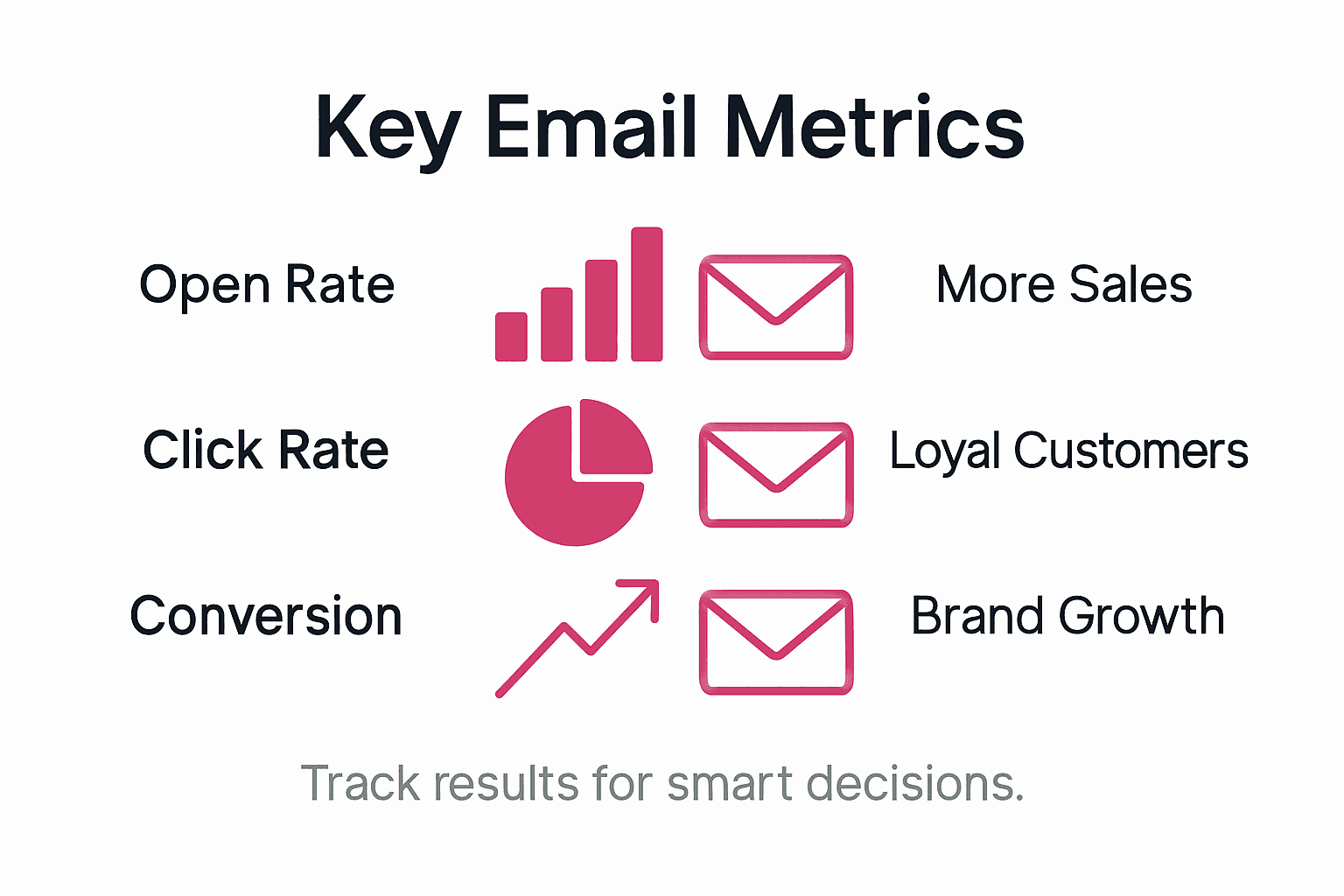
The effectiveness of email marketing is grounded in its precise metrics and trackable performance indicators. Global eCommerce research highlights key performance metrics such as delivery rates, open rates, and click-through rates that enable businesses to measure and optimise their communication strategies. These metrics provide invaluable insights into customer behaviour, preferences, and engagement levels, allowing eCommerce brands to continuously refine their marketing approaches.
The following table highlights key email marketing performance metrics and their impact on business outcomes:
Metric | What It Measures | Business Impact |
Delivery Rate | Email reachability | Ensures message delivery |
Open Rate | Subject line effectiveness | Gauges initial interest |
Click-Through Rate | Content relevancy | Assesses user engagement |
Conversion Rate | Campaign success | Tracks actual sales or actions |
Pro Tip: When designing email marketing campaigns, focus on creating segmented lists that allow for hyper-personalised content tailored to specific customer interests and purchase histories.
Different Email Campaign Types and Purposes
Email marketing encompasses several distinct campaign types, each serving unique purposes within an eCommerce strategy. Comprehensive research on marketing approaches identifies key campaign categories that businesses can leverage to achieve specific marketing objectives.
The primary email campaign types include newsletters, promotional campaigns, transactional emails, and automated trigger emails. Newsletters typically provide regular updates, industry insights, and curated content to maintain audience engagement. Promotional campaigns focus on driving sales through time-sensitive offers, discounts, and product announcements. Transactional emails, such as order confirmations and shipping updates, serve a critical functional role in customer communication, while automated trigger emails respond to specific customer actions like abandoned cart reminders or post-purchase follow-ups.
Marketing strategy research highlights the importance of aligning email campaign types with specific marketing goals. Each campaign type targets different stages of the customer journey, from initial awareness and consideration to conversion and retention. Successful eCommerce businesses strategically mix these campaign types to create a comprehensive communication approach that nurtures customer relationships, drives sales, and builds brand loyalty.
The table below summarises the main email campaign types and their strategic eCommerce purposes:
Campaign Type | Primary Purpose | Typical Content |
Newsletter | Nurture customer interest | Industry news, insights |
Promotional Campaign | Drive immediate sales | Limited-time offers, discounts |
Transactional Email | Support purchase process | Order confirmations, receipts |
Triggered Automation | Boost engagement | Abandoned cart reminders |
Pro Tip: Develop a balanced email marketing strategy by creating a content calendar that rotates between different campaign types, ensuring you provide value beyond pure sales messaging.
Core Features: Segmentation and Automation
Segmentation and automation represent the cornerstone technologies that transform basic email marketing into a sophisticated, targeted communication strategy. Advanced technical research reveals how modern email marketing management systems enable businesses to create intricate, personalised communication pathways that dramatically improve engagement and conversion rates.
The process of segmentation involves dividing your email list into distinct groups based on specific characteristics such as purchase history, demographic information, browsing behaviour, and engagement levels. Comparative platform analysis demonstrates that effective segmentation allows businesses to craft hyper-targeted messages that resonate with specific audience subsets. For instance, an eCommerce clothing retailer might create separate segments for male and female customers, further subdividing them by age groups, previous purchase categories, or seasonal preferences.

Automation takes segmentation a step further by enabling businesses to create dynamic, responsive email workflows that trigger specific communications based on individual customer actions. These automated sequences can include welcome series for new subscribers, abandoned cart reminders, post-purchase follow-ups, and re-engagement campaigns for inactive customers. By implementing intelligent automation, eCommerce businesses can deliver timely, relevant content that feels personalised and increases the likelihood of conversion.
Pro Tip: Start with three core customer segments and develop specific, tailored content for each, gradually expanding your segmentation strategy as you gather more detailed customer insights.
Legal Obligations and UK Data Protection
Email marketing for eCommerce businesses in the United Kingdom operates within a complex legal framework designed to protect consumer privacy and electronic communication rights. Official guidance from the UK Information Commissioner’s Office provides critical insights into the regulatory landscape that governs electronic marketing practices.
The primary legal mechanisms governing email marketing are the Privacy and Electronic Communications Regulations (PECR) and the UK General Data Protection Regulation (UK GDPR). These regulations establish stringent requirements for obtaining and managing customer consent, ensuring transparency, and maintaining detailed records of marketing communications. Key compliance obligations include securing explicit permission before sending marketing emails, providing clear opt-out mechanisms, and maintaining comprehensive documentation of consent processes.
Comprehensive legal analysis highlights the nuanced rules surrounding electronic marketing consent. The UK employs a ‘soft opt-in’ rule that allows businesses to send marketing communications to existing customers who have previously purchased products or services, provided they were given a clear opportunity to reject marketing communications during initial contact and in subsequent messages. This approach balances business communication needs with consumer protection, requiring businesses to implement robust consent management systems that respect individual privacy rights and preferences.
Pro Tip: Develop a standardised consent management process that documents each subscriber’s explicit agreement, including timestamp, method of consent, and specific marketing permissions.
Maximising ROI and Avoiding Common Pitfalls
Email marketing return on investment (ROI) represents a critical metric for eCommerce businesses seeking to optimise their digital communication strategies. Comprehensive analytical research reveals key strategies for maximising campaign effectiveness and avoiding potential performance pitfalls that can undermine marketing efforts.
The primary challenges in email marketing ROI include managing list quality, optimising content targeting, and maintaining consistent engagement. Poor list management can lead to decreased deliverability, while ineffective segmentation results in reduced open rates and conversions. Successful eCommerce businesses focus on developing sophisticated targeting approaches that leverage customer data to create personalised, contextually relevant communications that resonate with specific audience segments.
Digital marketing ROI measurement research emphasises the importance of comprehensive performance tracking beyond simple metrics. This involves understanding customer lifetime value, tracking multi-touch attribution, and developing nuanced approaches to measuring campaign effectiveness. Key performance indicators should extend beyond immediate conversion rates to include long-term engagement metrics, repeat purchase rates, and the overall impact on customer relationship development.
Pro Tip: Implement a quarterly review process that critically analyses your email marketing performance across multiple dimensions, focusing on both immediate conversion metrics and long-term customer value indicators.
Unlock eCommerce Growth with Smart Email Marketing
The article highlights the challenge eCommerce businesses face in crafting highly personalised, segmented email campaigns that comply with UK legal standards while maximising return on investment. If you are struggling with low open rates, poor conversion, or managing complex automation and segmentation, you are not alone. Effective email marketing requires expert knowledge of campaign types, legal compliance, and advanced automation to truly engage customers and boost sales.
At I Want To Be Seen, we combine over 25 years of experience scaling successful eCommerce brands with cutting-edge digital marketing solutions tailored for businesses like yours. Our specialised services in SEO, AI, Social Media, and PPC work seamlessly alongside email marketing strategies to deliver measurable results that exceed expectations. Let us help you harness customer data, craft targeted campaigns, and maintain compliance with UK GDPR to elevate your online store’s performance.

Take the next step towards transforming your email marketing. Visit I Want To Be Seen now for expert support that turns emails into revenue. Discover proven ways to overcome common pitfalls and maximise your eCommerce success with a comprehensive digital marketing approach. Act today to start seeing real growth.
Frequently Asked Questions
What is email marketing in eCommerce?
Email marketing in eCommerce refers to the strategy of using targeted electronic messages to connect businesses with their potential and existing customers. It aims to promote products, engage customers, and drive online sales through tailored communications.
How can segmentation improve email marketing effectiveness?
Segmentation allows businesses to divide their email lists into specific groups based on characteristics such as purchase history and behaviours. This ensures that messages are highly relevant to each segment, which can significantly enhance engagement and conversion rates.
What are the main types of email campaigns for eCommerce?
The primary types of email campaigns include newsletters, promotional campaigns, transactional emails, and automated trigger emails. Each type serves unique purposes, such as nurturing customer interest or driving immediate sales.
What legal obligations must eCommerce businesses follow in email marketing?
eCommerce businesses must comply with regulations such as the Privacy and Electronic Communications Regulations (PECR) and the UK General Data Protection Regulation (UK GDPR). Key obligations include obtaining explicit consent from recipients before sending marketing emails and providing clear opt-out options.
Recommended
Comments