.png)
What Is White Hat SEO and Why It Matters
- Darren Burns
- Jan 9
- 7 min read


Many British and Irish e-commerce business owners feel the pressure every time a new search engine update shakes the rules. With over 85 percent of online shoppers starting their purchase journey on search engines, the stakes for ethical SEO have never been higher. The challenge lies in building organic growth that lasts, not risking it all with quick-fix hacks. This guide brings clarity to White Hat SEO, busts common myths, and offers practical steps toward lasting success.
Table of Contents
Key Takeaways
Point | Details |
White Hat SEO is Ethical and Sustainable | It focuses on creating genuine user value, ensuring long-term growth while adhering to search engine guidelines. |
Common Misconceptions About White Hat SEO | Many believe it is slow or ineffective, but it actually supports sustained rankings and credibility. |
Technical Optimisation is Crucial | Ignoring website infrastructure can hinder performance; ensure fast, mobile-friendly design and structured data use. |
Quality Backlinks Matter | Focus on earning high-quality, relevant backlinks through excellent content and professional networking to enhance online authority. |
Defining White Hat SEO and Common Myths
White Hat SEO represents an ethical digital marketing strategy focused on improving website rankings by meticulously following search engine guidelines. Unlike aggressive manipulation tactics, this approach prioritises creating genuine value for users through strategic content development and technical optimisation techniques.
At its core, White Hat SEO involves understanding search engine algorithms while maintaining absolute integrity. This means developing content that authentically answers user queries, implementing clean technical infrastructure, and building credible backlink profiles through legitimate networking and high-quality referrals. Practitioners deliberately avoid deceptive strategies like keyword stuffing, hidden text, or purchasing low-quality links that could trigger search engine penalties.
Many entrepreneurs mistakenly believe White Hat SEO is slow or ineffective compared to more aggressive techniques. However, these misconceptions fundamentally misunderstand long-term digital marketing success. Search engines continuously refine algorithms to reward websites providing genuine user value. By consistently producing helpful, original content and maintaining technical excellence, businesses can achieve sustainable organic growth without risking sudden ranking collapses or reputation damage.
Pro tip: Invest time in understanding your target audience’s genuine information needs rather than attempting short-term ranking manipulations.
Core White Hat SEO Techniques Explained
White Hat SEO encompasses a comprehensive set of ethical optimisation strategies designed to improve website visibility through legitimate and sustainable methods. These techniques prioritise creating genuine value for users while adhering strictly to search engine guidelines, ensuring long-term organic growth and credibility.

The core techniques of White Hat SEO are multifaceted and include strategic keyword research, high-quality content creation, technical website optimisation, and natural link building. Keyword research involves identifying relevant search terms that align with user intent, then thoughtfully integrating these terms into well-structured, informative content. Technical optimisation includes improving site speed, ensuring mobile responsiveness, implementing clean HTML structure, and creating comprehensive metadata that accurately describes page content.
Off-page SEO techniques are equally crucial in White Hat approaches. These involve building credible backlink profiles through genuine relationship-building, creating shareable content, and establishing industry authority. Unlike manipulative link-building strategies, White Hat practitioners focus on earning links through exceptional content quality and meaningful professional networking. By consistently delivering valuable information and maintaining website technical excellence, businesses can achieve sustainable search engine rankings that withstand algorithmic changes.
Pro tip: Develop a content strategy that genuinely answers your target audience’s most pressing questions, focusing on depth and value rather than keyword density.
Key Differences: White, Black, and Grey Hat
Search engine optimisation strategies are typically categorised into three distinct approaches: White Hat, Black Hat, and Grey Hat SEO, each representing a different level of ethical compliance and risk management. White Hat SEO represents the most transparent and recommended approach, focusing entirely on creating genuine value for users while meticulously adhering to search engine guidelines.
In contrast, Black Hat SEO involves deliberately manipulative techniques designed to exploit search engine algorithms. These unethical practices include hidden text, keyword stuffing, cloaking, and purchasing low-quality backlinks. Websites employing Black Hat tactics risk severe penalties, including complete removal from search results. Grey Hat SEO occupies the murky middle ground between these two extremes, incorporating some questionable tactics that technically violate guidelines but might not trigger immediate punitive actions.
The critical distinction lies in long-term sustainability and reputation. White Hat practitioners prioritise building genuine authority through high-quality content, robust user experience, and natural link acquisition. Black Hat approaches seek immediate, short-term ranking gains at the expense of potential future visibility. Grey Hat strategies represent a risky compromise, attempting to push algorithmic boundaries without triggering outright penalties. For e-commerce businesses, the potential temporary gains from aggressive tactics are vastly outweighed by the potential catastrophic consequences of search engine sanctions.
Pro tip: Invest your resources in creating exceptional, user-focused content rather than seeking shortcuts that could compromise your digital reputation.
Here is a clear comparison of White Hat, Black Hat, and Grey Hat SEO approaches:
Approach | Typical Practices | Long-Term Impact | Risk of Penalties |
White Hat | Value-based content, strict guideline compliance | Sustainable growth, strong reputation | Minimal risk |
Black Hat | Manipulative tactics, guideline violation | Short-term gains, reputation damage | Very high |
Grey Hat | Semi-compliant, borderline tactics | Unpredictable results, moderate risk | Moderate to high |
Benefits for E-Commerce Websites
White Hat SEO offers transformative advantages for e-commerce platforms, providing a strategic approach to digital visibility that goes beyond mere ranking manipulation. Sustainable organic traffic generation represents the cornerstone of these benefits, enabling online stores to attract genuinely interested customers through ethical, value-driven optimisation techniques.
The most significant advantages include building long-term digital credibility and establishing robust online authority. User trust becomes a critical outcome of White Hat SEO practices, as websites consistently demonstrate their commitment to providing valuable, relevant content. E-commerce platforms implementing these strategies see improved engagement metrics, longer site visits, and higher conversion rates. Technical optimisation elements like site speed, mobile responsiveness, and intuitive navigation further enhance user experience, directly contributing to improved search engine rankings and customer satisfaction.
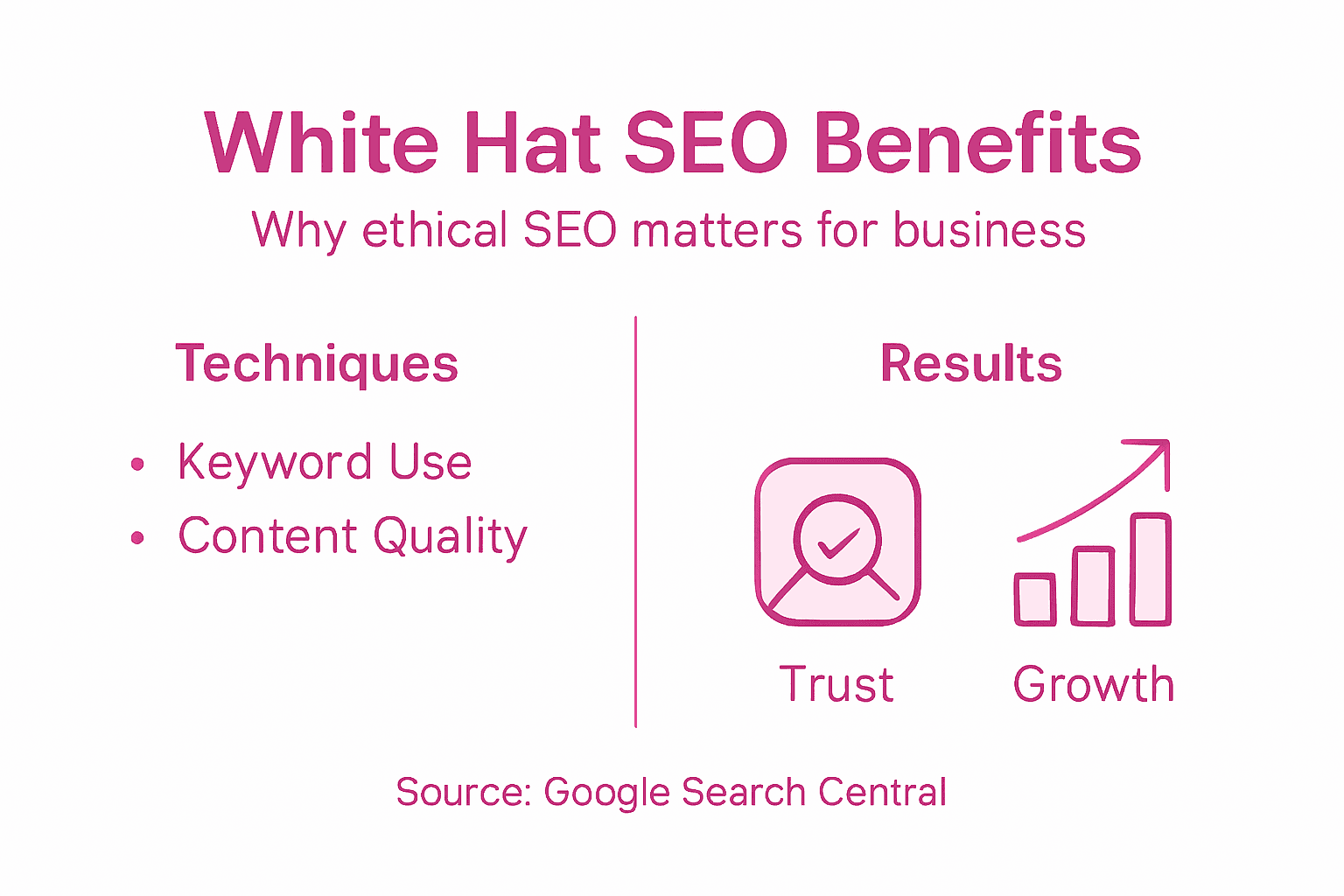
Financially, White Hat SEO proves remarkably cost-effective compared to paid advertising channels. By developing high-quality, keyword-optimised content that genuinely addresses customer queries, e-commerce businesses can create sustainable marketing assets that continue generating organic traffic months and years after initial publication. Unlike paid strategies that cease delivering results when funding stops, White Hat SEO builds cumulative momentum, establishing a digital presence that compounds in value over time. For online retailers, this means predictable, scalable growth without continuous high-marketing expenditure.
Pro tip: Prioritise creating comprehensive, solution-oriented content that directly addresses your target customers’ most pressing questions and challenges.
The table below summarises the main White Hat SEO techniques and their impact for e-commerce websites:
Technique | Business Benefit | User Experience Impact |
Strategic Keyword Research | Targets relevant customers | Answers genuine search intent |
Technical Optimisation | Improves search ranking | Faster loading, mobile-friendly |
High-Quality Content | Builds trust with audience | Engaging, useful information |
Natural Link Building | Increases online authority | Validates site credibility |
Common Mistakes and How to Avoid Them
E-commerce businesses frequently encounter pitfalls when implementing White Hat SEO, often undermining their digital marketing efforts through well-intentioned but misguided strategies. Keyword intent misalignment represents one of the most critical errors, where websites optimise content without genuinely understanding their target audience’s underlying search motivations.
Another significant mistake involves technical SEO negligence. Many online retailers underestimate the importance of website infrastructure, overlooking crucial elements like page loading speed, mobile responsiveness, and structured data markup. These technical factors directly impact user experience and search engine rankings. Keyword stuffing remains a persistent issue, with businesses mistakenly believing that cramming content with search terms will improve visibility. In reality, this approach signals low-quality content to search algorithms and can trigger ranking penalties.
Backlink quality represents another critical area where e-commerce sites frequently stumble. Purchasing low-quality links or engaging in link exchange schemes might seem tempting, but these practices directly contradict White Hat SEO principles. Instead, businesses should focus on earning organic, contextually relevant backlinks through exceptional content creation, genuine industry relationships, and providing unique value to their target audience. Consistent performance monitoring and adaptive strategy development are essential for maintaining long-term SEO success, requiring regular analytics review and strategic refinement.
Pro tip: Conduct a comprehensive quarterly SEO audit to identify and address potential optimisation gaps before they impact your website’s performance.
Elevate Your E-Commerce Success with Ethical SEO Strategies
Struggling to navigate the complex world of White Hat SEO and achieve sustainable organic growth for your e-commerce website It is crucial to address challenges like keyword intent misalignment, technical optimisation, and natural link building with proven expertise. Our team at IWantToBeSeen specialises in delivering transparent, ethical digital marketing solutions that align perfectly with White Hat SEO principles to boost your site’s credibility and long-term rankings.

Take control of your e-commerce growth today by partnering with experts who understand how to build high-quality content, improve technical performance, and cultivate genuine backlinks without risking your digital reputation. Visit our landing page now to discover how our SEO, AI, Social Media and PPC services, backed by over 25 years of success, can transform your online presence. Don’t wait for penalties or unpredictable algorithm changes act now to secure steady, scalable results the right way.
Frequently Asked Questions
What is White Hat SEO?
White Hat SEO refers to ethical digital marketing practices aimed at improving website rankings by following search engine guidelines while creating genuine value for users.
How does White Hat SEO differ from Black Hat SEO?
White Hat SEO focuses on transparency and ethical methods, such as providing valuable content, whereas Black Hat SEO uses manipulative tactics that violate search engine guidelines and can lead to penalties.
What are the core techniques of White Hat SEO?
Core techniques include strategic keyword research, high-quality content creation, technical optimisation, and natural link building, all aimed at improving user experience and search engine rankings sustainably.
Why is White Hat SEO important for e-commerce websites?
White Hat SEO helps e-commerce websites build long-term credibility, improve user trust, generate sustainable organic traffic, and enhance overall user experience, contributing to better engagement and conversion rates.
Recommended
Comments