.png)
Social Proof: Driving eCommerce Trust and Sales


What persuades someone to click ‘buy now’ often rests on seeing others do the same. For Ecommerce businesses in the United Kingdom and Ireland, social proof acts as a powerful trust signal that removes hesitation and strengthens credibility. Consumer choices are shaped by real user experiences, honest reviews, and visible digital engagement. This introduction helps you understand how these tools influence buyer confidence and turn hesitation into reliable sales.
Table of Contents
Key Takeaways
Point | Details |
Importance of Social Proof | Social proof significantly influences consumer trust and purchasing decisions in digital commerce. |
Types of Social Proof | Key mechanisms include user reviews, expert endorsements, and user-generated content, all of which enhance credibility. |
Ethical Considerations | Businesses must prioritise consent and transparency when implementing social proof to respect consumer rights. |
Common Pitfalls | Avoid using fabricated testimonials or selective content curation, as these can damage brand reputation. |
Defining Social Proof in Digital Commerce
Social proof represents a pivotal psychological phenomenon where consumers make purchasing decisions based on the actions, experiences, and recommendations of others in their digital ecosystem. In the realm of e-commerce, this concept transforms how potential buyers perceive and interact with online brands, reducing uncertainty and building digital trust.
At its core, social proof operates through several key mechanisms that influence consumer behaviour:
User Reviews and Ratings: Direct feedback from previous customers
Testimonials: Detailed experiences shared by satisfied buyers
Social Media Endorsements: Influencer and peer recommendations
Customer Count/Usage Statistics: Demonstrating widespread product adoption
Research indicates that social proof significantly impacts consumer trust by providing tangible evidence of a product’s value and reliability. When potential customers see that others have successfully purchased and enjoyed a product, their perceived risk diminishes substantially.
Moreover, digital platforms have amplified social proof’s effectiveness through sophisticated mechanisms like aggregated ratings, verified purchase badges, and real-time user engagement metrics. These tools transform abstract recommendations into concrete purchasing signals that guide consumer decision-making.
Pro tip: Implement multiple social proof elements strategically across your e-commerce platform to build comprehensive consumer confidence.
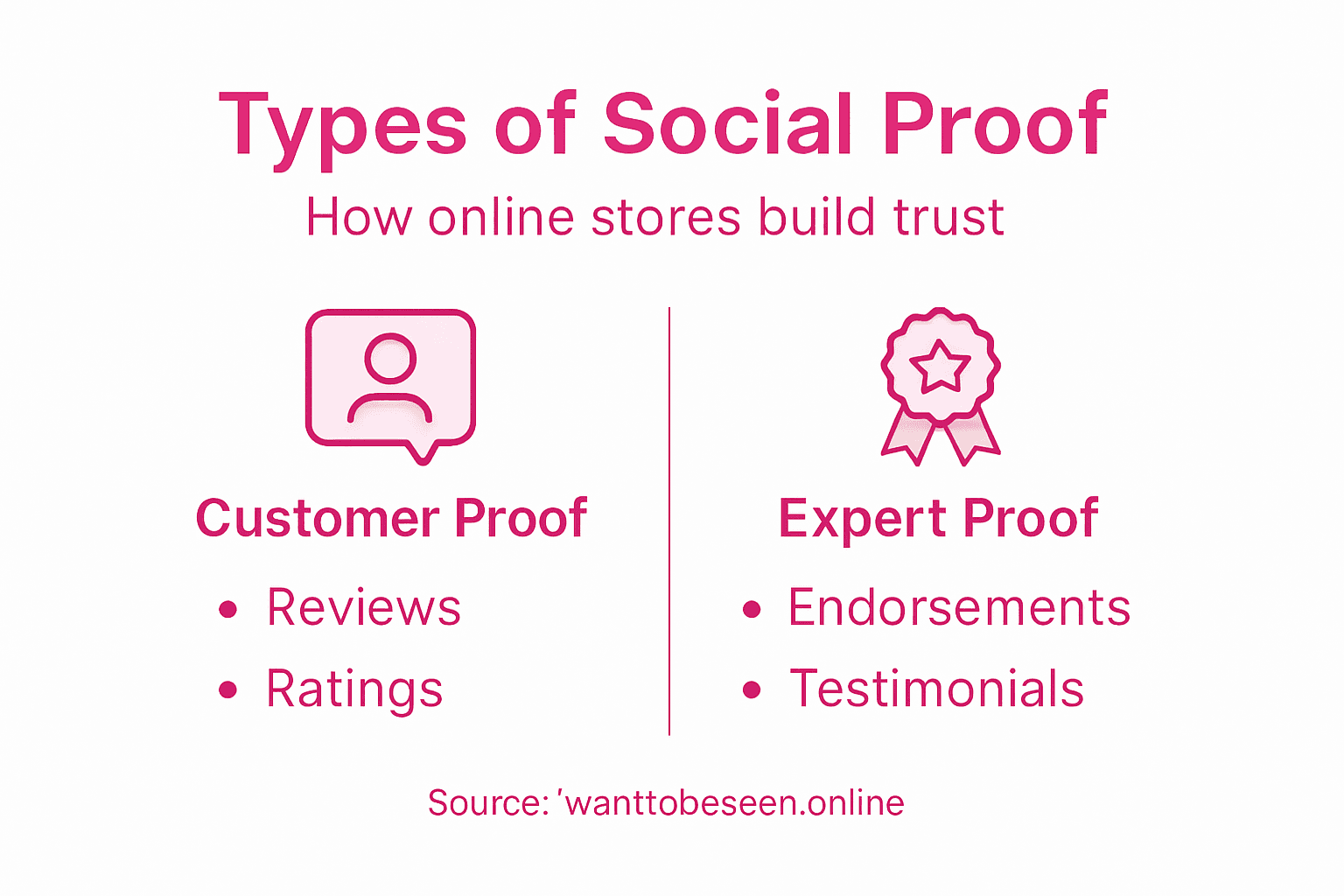
Main Types of Social Proof for Online Stores
Social proof represents a critical strategy for e-commerce platforms to build consumer confidence and drive purchasing decisions. Online retail social proof mechanisms encompass multiple powerful techniques that transform potential customers’ perception of products and brands.
The primary types of social proof for online stores include:
Customer Reviews: Authentic feedback from previous buyers
Expert Endorsements: Recommendations from industry professionals
Influencer Testimonials: Trusted personalities sharing product experiences
User-Generated Content: Real customer photos and videos
Certification Badges: Industry awards and quality indicators
Popularity Metrics: Total number of purchases or users
Customer reviews remain the most powerful form of social proof. When potential buyers see detailed, verified experiences from people similar to themselves, they feel more confident about making a purchase. These reviews provide transparent, unfiltered insights that traditional marketing cannot replicate.

Moreover, digital platforms have sophisticated ways of displaying social proof. Aggregated ratings, verified purchase badges, and real-time engagement metrics transform abstract recommendations into concrete purchasing signals that guide consumer behaviour. By strategically implementing these social proof elements, online stores can significantly reduce purchasing hesitation and build trust.
Here’s how social proof mechanisms enhance trust and business outcomes in digital commerce:
Mechanism | How It Builds Trust | Impact on Business |
User Reviews | Offers authentic feedback | Increases conversion rates |
Expert Endorsements | Signals recognised authority | Boosts brand credibility |
User-Generated Content | Shows genuine product use | Expands reach and engagement |
Certification Badges | Demonstrates quality standards | Reduces purchase hesitation |
Pro tip: Integrate multiple social proof elements across your product pages, ensuring they are genuine, recent, and diverse to maximise consumer confidence.
How Social Proof Builds Trust and Credibility
Digital trust mechanisms fundamentally transform how consumers perceive and interact with online brands. Trust is no longer built through traditional marketing, but through transparent, authentic experiences shared by real people who have direct interactions with products and services.
The core components of building credibility through social proof include:
Authentic Testimonials: Personal stories that reveal genuine product experiences
Verified Reviews: Detailed, credible feedback from confirmed purchasers
Expert Endorsements: Recommendations from recognised industry professionals
Transparent Performance Metrics: Clear demonstration of product effectiveness
Visual User Evidence: Real customer photos and video experiences
Consumers inherently seek validation from peers and trusted sources before making purchasing decisions. When potential buyers see detailed, unfiltered experiences from individuals similar to themselves, their purchasing confidence dramatically increases. The psychological principle underlying this phenomenon is simple: people trust recommendations from others more than direct brand communications.
Digital platforms have sophisticated methods of displaying social proof that go beyond simple star ratings. Aggregated reviews, detailed user experiences, contextual testimonials, and real-time engagement metrics transform abstract recommendations into concrete purchasing signals. By strategically implementing these elements, online businesses can systematically reduce consumer uncertainty and build robust trust ecosystems.
Pro tip: Prioritise collecting diverse, genuine testimonials that showcase real customer experiences across different user segments and use cases.
Best Practices for Using Social Proof Legally
Digital privacy considerations are paramount when implementing social proof strategies for e-commerce platforms. Businesses must navigate a complex landscape of legal and ethical requirements to ensure responsible use of customer testimonials, reviews, and user-generated content.
Key legal considerations for ethical social proof implementation include:
Consent Management: Obtain explicit permission before using customer content
Data Anonymisation: Remove personally identifiable information
Platform Compliance: Adhere to specific terms of service for each social media channel
Transparency: Clearly disclose how and where customer content will be used
Right to Withdrawal: Allow customers to request removal of their testimonials
Age Verification: Ensure content creators are legally able to provide testimonials
Authentic social proof requires a delicate balance between leveraging customer experiences and respecting individual privacy rights. Online businesses must implement robust consent mechanisms that provide clear options for customers to understand and control how their content might be used. This approach not only ensures legal compliance but also builds trust with potential consumers by demonstrating respect for personal boundaries.
Digital platforms must develop comprehensive policies that outline precise protocols for collecting, displaying, and managing social proof content. These policies should include detailed consent forms, transparent usage guidelines, and straightforward processes for customers to manage their shared experiences. By prioritising legal and ethical considerations, businesses can create powerful social proof strategies that protect both consumer rights and brand reputation.
Key differences between ethical and unethical use of social proof strategies:
Practice Type | Ethical Implementation | Unethical Implementation |
Content Generation | Uses real customer feedback | Relies on fabricated reviews |
Review Transparency | Shows both positive and critical feedback | Hides negative experiences |
Consent Management | Explicit user permission collected | No consent or misleading tactics |
Diversity of Voices | Represents multiple demographics | Promotes narrow or homogenous views |
Pro tip: Create a standardised consent template that clearly explains how customer testimonials will be used, ensuring legal compliance and building consumer trust.
Mistakes to Avoid When Leveraging Social Proof
Social proof tactics can quickly backfire when businesses fail to understand the nuanced psychological principles underlying consumer trust. Authentic engagement requires strategic, transparent approaches that respect consumer intelligence and autonomy.
Critical mistakes to avoid in social proof implementation include:
Fabricated Testimonials: Creating fake or misleading reviews
Selective Content Curation: Hiding negative feedback or experiences
Overwhelming Social Signals: Using excessive or intrusive social proof elements
Lack of Diversity: Presenting testimonials from a narrow demographic
Unverified Claims: Using endorsements without proper validation
Forced Urgency: Manipulating social proof to create artificial scarcity
Consumers have become increasingly sophisticated in detecting inauthentic marketing strategies. Businesses that attempt to manipulate social proof through deceptive practices risk significant reputation damage. Genuine social proof emerges from real customer experiences, transparent communication, and a commitment to showcasing both positive and constructive feedback.
Digital platforms must develop robust mechanisms that encourage genuine customer interaction while maintaining ethical standards. This means creating systems that welcome diverse perspectives, provide transparent review processes, and demonstrate a genuine commitment to customer satisfaction beyond mere marketing tactics.
Pro tip: Implement a comprehensive review verification system that validates customer experiences while maintaining transparency and authenticity.
Harness the Power of Social Proof to Boost Your eCommerce Success
Social proof is a game changer for eCommerce trust and sales as the article highlights. If you struggle with reducing purchase hesitation or building genuine consumer confidence through authentic user reviews and expert endorsements, you are not alone. Effective digital trust is built by showcasing verified customer experiences and diverse testimonials, but the challenge lies in implementing these strategies transparently and legally to avoid mistrust.
At iwanttobeseen.online, we specialise in tailored digital marketing services designed to amplify social proof’s impact across your SEO, Social Media, PPC, and AI-driven campaigns. With over 25 years of expertise scaling successful eCommerce brands, we understand how to integrate powerful social proof elements that create emotional trust triggers and convert browsers into loyal buyers.
Boost your brand credibility today with our expert guidance in creating authentic user-generated content and driving real customer engagement.

Ready to transform your eCommerce platform with proven social proof strategies that increase conversion rates and build lasting trust Visit iwanttobeseen.online now to discover how our specialised digital marketing solutions can help you win customer confidence in a competitive market.
Frequently Asked Questions
What is social proof in eCommerce?
Social proof in eCommerce refers to the psychological phenomenon where consumers make purchasing decisions based on the actions and recommendations of others. It builds digital trust and reduces uncertainty among potential buyers.
How can user reviews impact consumer trust?
User reviews provide authentic feedback from previous customers, which helps potential buyers feel more confident in making a purchase. They offer transparent insights that conventional marketing cannot replicate.
What are some effective types of social proof for online stores?
Effective types of social proof include customer reviews, expert endorsements, influencer testimonials, user-generated content, certification badges, and popularity metrics such as total purchases or user statistics.
What are common mistakes to avoid when using social proof?
Common mistakes include fabricating testimonials, hiding negative feedback, overwhelming consumers with excessive social proof elements, and failing to verify claims. These practices can damage a brand’s reputation and erode consumer trust.
Recommended
Comments