.png)
Schema markup explained: boost your e-commerce SEO now


TL;DR:
Schema markup provides search engines with detailed product information, enabling rich search results.
Prioritize implementing Product, Offer, AggregateRating, and FAQ schemas for maximum SEO benefit.
Regularly audit and update schema to maintain accurate, effective listings and long-term visibility.
Most e-commerce owners spend hours perfecting product photography and tweaking ad budgets, yet overlook the one technical detail that shapes how their listings appear in Google before anyone even clicks. Schema markup sits invisibly inside your website’s code, quietly telling search engines exactly what your products cost, how they’re rated, and whether they’re in stock. Structured data using Schema.org vocabulary helps search engines understand page content and unlock rich results. This guide explains what schema markup is, why it matters enormously for UK and Irish e-commerce sites, and how to implement and maintain it for lasting search visibility gains.
Table of Contents
Key Takeaways
Point | Details |
Schema markup explained | Adding structured data helps search engines showcase your products more attractively in results. |
Essential schema types | Product, review, offer and FAQ schema make e-commerce listings stand out with ratings and info. |
Implementation steps | Use JSON-LD format, validate before publishing, and avoid schema on hidden pages. |
Routine maintenance | Quarterly schema audits help keep data accurate and your search results competitive. |
Long-term SEO results | Consistent schema routine, rather than quick fixes, drives lasting gains for your site. |
What is schema markup and why does it matter?
Schema markup is a standardised language that you embed into your website’s HTML to give search engines richer, more precise information about your content. Think of it as a translation layer. Your product page might say “Blue Running Shoes, £79.99, 4.8 stars” in plain text, but without schema, Google has to guess what those numbers mean. With schema, you’re stating it explicitly: this is a price, this is a rating, this is a product name.
The vocabulary comes from Schema.org, a collaborative project founded by Google, Bing, Yahoo, and Yandex to standardise how structured data is written across the web. JSON-LD is the preferred format, sitting neatly inside a "

Understanding the SEO basics for e-commerce will help you see how schema fits into your broader strategy. Schema also works hand in hand with your content marketing and schema efforts, reinforcing the relevance signals you’re already building through blog posts and buying guides.
How to implement and validate schema effectively
Once you’ve chosen which schema to implement, you’ll need a clear process to ensure it’s done right without risking missed opportunities or errors. The good news is that JSON-LD makes implementation relatively straightforward, even if you’re not a developer.
Follow these steps to implement schema on your product pages:
Write your JSON-LD block using the Schema.org product type as your base. Include name, image, description, SKU, brand, offers, and aggregateRating where applicable.
Use @graph for multiple types on a single page. This tells Google that all the schema blocks are related, which is especially useful when combining Product, Offer, and BreadcrumbList schema.
Place the script tag in the <head> or <body> of your page. Google reads both, but <head> is considered best practice.
Test immediately using Google’s Rich Results Test tool. Paste your URL or code snippet and check for errors or warnings.
Monitor in Search Console under the Enhancements tab to see which pages have valid structured data and which have issues.
Pro Tip: For shops with hundreds or thousands of products, manual schema writing is impractical. Dynamic schema from the database is the recommended approach at scale, pulling live price, stock, and rating data directly into your schema output automatically.
Common pitfalls to avoid:
Schema on noindex pages: Google won’t process structured data on pages it can’t index. Always check your robots settings before adding schema.
Outdated price or stock data: If your schema says a product costs £49 but your page says £69, Google may penalise or ignore the markup.
Broken JSON syntax: A single missing comma or bracket breaks the entire block. Always validate before publishing.
This connects directly to website optimisation for schema, where technical hygiene underpins every structured data win. If you’re running dynamic remarketing campaigns alongside your SEO, accurate product data in your schema also reinforces consistency across channels.
Maintaining and auditing your schema for lasting SEO gains
Implementing schema is only the start; consistent upkeep unlocks its full long-term value for your visibility and conversions. Many e-commerce sites set up schema once and forget about it. Prices change, products go out of stock, new reviews come in, and the schema quietly falls out of sync with reality. That mismatch doesn’t just waste an opportunity. It can actively harm your standing with Google.
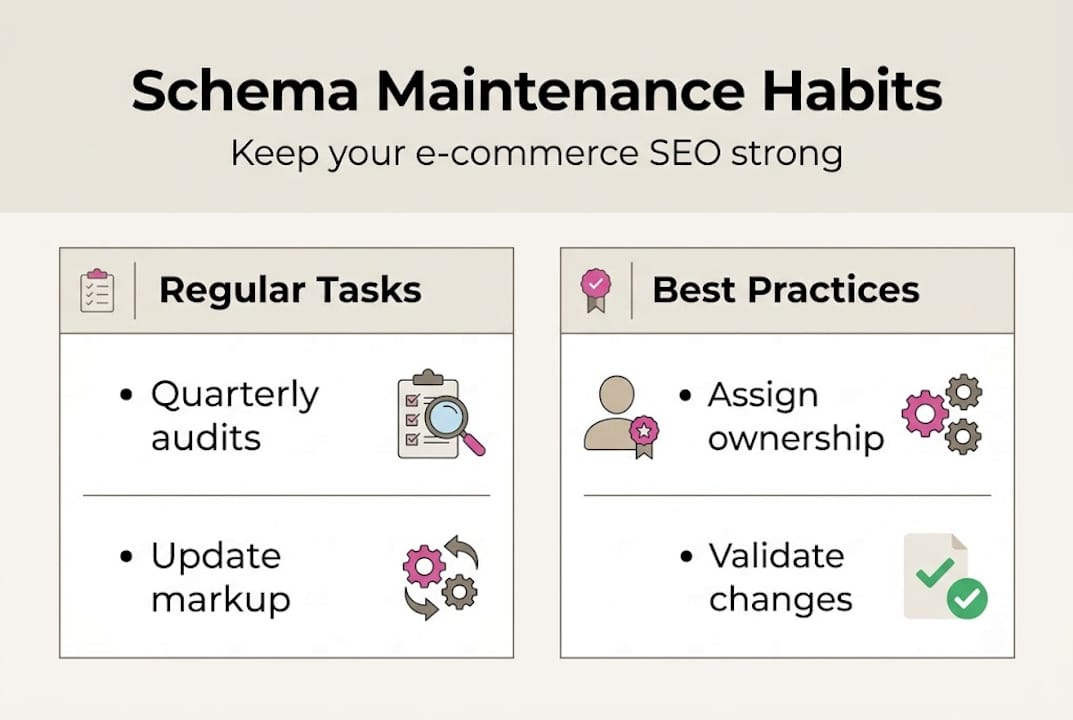
Auditing schema quarterly, ensuring live product availability sync, avoiding schema on noindex pages, and keeping structured data current are the habits that separate consistently high-performing sites from those that see their rich results disappear without warning.
Here’s what a quarterly schema audit should cover:
Validate all key product pages using Google’s Rich Results Test and check for new errors or warnings
Cross-reference prices and availability in your schema against your live product database
Check for noindex conflicts by crawling your site and flagging any pages with schema that are also set to noindex
Review Search Console for structured data errors, warnings, and any new enhancements Google has introduced
Update deprecated schema types as Schema.org occasionally retires or modifies properties
Pro Tip: Set up automated monitoring using a tool like Screaming Frog scheduled crawls or a custom script that flags schema changes after each site deployment. This catches accidental breakages before Google does.
Routine maintenance is what separates sites that consistently appear with rich results from those that see them come and go unpredictably.
Understanding why investing in SEO pays off long term makes it easier to justify the time spent on these audits. Schema maintenance isn’t glamorous, but it’s one of the highest-return activities available to an e-commerce owner who already has the markup in place.
Why schema success is often about small habits, not tech hacks
Here’s something we’ve observed across 25 years of scaling e-commerce brands: the sites that win consistently with schema aren’t the ones chasing every new markup type or installing the latest plugin. They’re the ones that treat schema like stock management. Methodical, routine, and owned by someone specific.
The pattern is clear. Sites that audit quarterly, assign schema ownership to one team member, and validate after every major site change maintain their rich results far more reliably than those that implement schema in a flurry of activity and then move on. The technology itself is straightforward. The discipline is the hard part.
This connects to a broader truth about sustainable SEO. Quick fixes produce quick results that fade. Process produces compounding returns. Schema is a perfect example because its value accumulates when your data stays accurate and your markup stays current. One missed update can wipe out months of rich result appearances.
The role of content marketing in e-commerce follows the same logic. Consistent, well-structured content signals authority over time. Schema reinforces that signal at the technical level. Together, they build the kind of search presence that doesn’t collapse when an algorithm update arrives.
Take your e-commerce SEO further with our expert support
Schema markup done well can genuinely transform how your products appear in search, but getting it right across a large catalogue, keeping it accurate, and staying ahead of Google’s evolving requirements is a significant undertaking.

At I Want To Be Seen, we specialise in exactly this kind of work for UK and Irish e-commerce businesses. With over 25 years of experience scaling e-commerce brands, we understand what it takes to turn structured data into real visibility and revenue. Whether you need a full schema audit, dynamic implementation support, or an ongoing SEO partnership, we’re here to help you make the most of every search opportunity. Get in touch for a personalised schema consultation today.
Frequently asked questions
What does schema markup actually do for my online shop?
Schema markup helps search engines display product details like prices and ratings directly in search results, making your listings stand out. Rich results such as ratings and prices in SERPs are only possible when schema is correctly implemented.
How often should I check or update my schema?
You should review and audit your schema data at least quarterly to keep it accurate and ensure best results. Auditing schema quarterly is the recommended standard for reliability and keeping structured data current.
Is schema markup necessary if I use structured product feeds?
Yes, because schema markup on your actual website pages helps search engines understand your products for rich results, complementing your feed data. Schema markup helps search engines understand page content and enable rich results independently of feed data.
Can schema markup improve my rankings in Google?
Schema doesn’t directly raise rankings, but it can greatly increase click-through rates by enhancing your listings with useful details. Schema enables rich results that increase visibility and attract more clicks from the same ranking position.
Recommended
Comments