.png)
Role of Content Marketing – Impact on Ecommerce Success


Over 60 percent of british online shoppers say they rely on valuable content before making a purchase. With so many options in the digital marketplace, standing out means more than just offering great products. Real connections are built when ecommerce brands focus on creating helpful information, relatable stories, and honest insights. This guide reveals how content marketing can turn browsing british consumers into loyal advocates by delivering the value they seek at every stage of their shopping journey.
Table of Contents
Key Takeaways
Point | Details |
Strategic Value of Content Marketing | Content marketing allows ecommerce brands to connect with customers through valuable information rather than direct selling. |
Audience Understanding | Successful content marketing requires deep knowledge of the target audience to create content that addresses their specific needs and challenges. |
Integration with SEO | Brands must combine high-quality content with effective SEO strategies to enhance online visibility and drive organic growth. |
Avoiding Common Pitfalls | Ecommerce brands should focus on authenticity and transparency in their content to build trust and avoid compromising customer engagement. |
Defining Content Marketing for Ecommerce Brands
Content marketing represents a strategic approach for ecommerce brands to connect with potential customers through valuable, relevant information. At its core, this technique focuses on creating and distributing content that attracts, engages, and retains a specific target audience without directly selling products.
For digital commerce, content marketing transcends traditional advertising by providing genuine value. Businesses can craft informative blog posts, engaging videos, insightful infographics, and compelling product narratives that address customer needs and pain points. By offering helpful resources, ecommerce brands establish trust and demonstrate expertise in their specific market segment.
The strategic objectives of content marketing for online retailers typically include:
Building brand awareness
Establishing industry credibility
Improving organic search visibility
Nurturing potential customer relationships
Providing educational content that supports purchasing decisions
Successful content marketing requires understanding your audience deeply. This means creating targeted content that speaks directly to specific customer personas, addressing their unique challenges and aspirations. By consistently delivering high-quality, relevant information, Content Marketing Strategy Guide for Ecommerce Success can transform casual browsers into loyal, long-term customers.
Key Types of Content Strategies in Retail
Retail brands have multiple content strategies to engage customers and drive sales. Content marketing strategies encompass diverse formats ranging from blogs and videos to podcasts and infographics, each designed to capture audience attention and provide valuable information.
In the digital commerce landscape, effective content approaches include:
Product Storytelling: Creating narrative-driven content that explains product origins, manufacturing processes, and unique value propositions
Educational Content: Developing tutorials, how-to guides, and informative articles that help customers make informed purchasing decisions
User-Generated Content: Showcasing customer reviews, testimonials, and real-world product experiences
Interactive Content: Designing quizzes, calculators, and personalised recommendation tools
High-quality information tailored to user needs remains crucial for establishing brand credibility. By understanding consumer motivations and crafting targeted digital advertising types, retailers can create compelling content that resonates with their specific audience segments.

Successful content strategies require continuous adaptation. Brands must analyse engagement metrics, track customer preferences, and remain agile in their content creation approach. By consistently delivering valuable, relevant information across multiple channels, ecommerce businesses can transform casual browsers into loyal customers.
How Content Drives the Ecommerce Buyer Journey
Content marketing significantly impacts brand awareness, guiding consumers through each critical stage of the purchasing process. The buyer journey is no longer a linear path but a complex, multi-touchpoint experience where strategic content plays a pivotal role in consumer decision-making.
The typical ecommerce buyer journey encompasses several key stages:
Awareness: Introducing potential customers to product solutions
Consideration: Providing detailed information to compare options
Decision: Offering compelling reasons to choose a specific product
Retention: Creating ongoing engagement and loyalty
Consumer engagement with brand-related content follows a sophisticated pattern of consumption, contribution, and creation. By understanding this framework, ecommerce brands can craft targeted content that resonates at each journey stage. Brand storytelling techniques become crucial in transforming passive browsers into active purchasers.
Successful content strategies recognise that modern consumers seek authentic, valuable information. They want more than sales pitches; they desire educational content, user experiences, and transparent insights that help them make informed purchasing decisions. By consistently delivering relevant, engaging content across multiple platforms, ecommerce brands can effectively guide potential customers from initial curiosity to committed loyalty.
Integrating SEO and Content for Online Growth
Marketing mix modeling reveals sophisticated strategies for connecting content creation with search engine performance. Modern ecommerce brands must view SEO and content as interconnected disciplines, where high-quality, strategically crafted content directly influences online visibility and organic growth.
Key integration strategies include:
Keyword Research: Identifying audience search patterns
Content Optimisation: Aligning content with search intent
Technical SEO: Ensuring content is easily discoverable
User Experience: Creating engaging, informative content
Performance Tracking: Measuring content effectiveness
Effective content marketing involves creating valuable content that simultaneously satisfies user queries and search engine algorithms. This means developing rich, contextually relevant materials that answer specific customer questions while incorporating strategic keyword placement. Complete Guide to SEO for E-Commerce emphasises the importance of understanding both human readers and search engine crawlers.
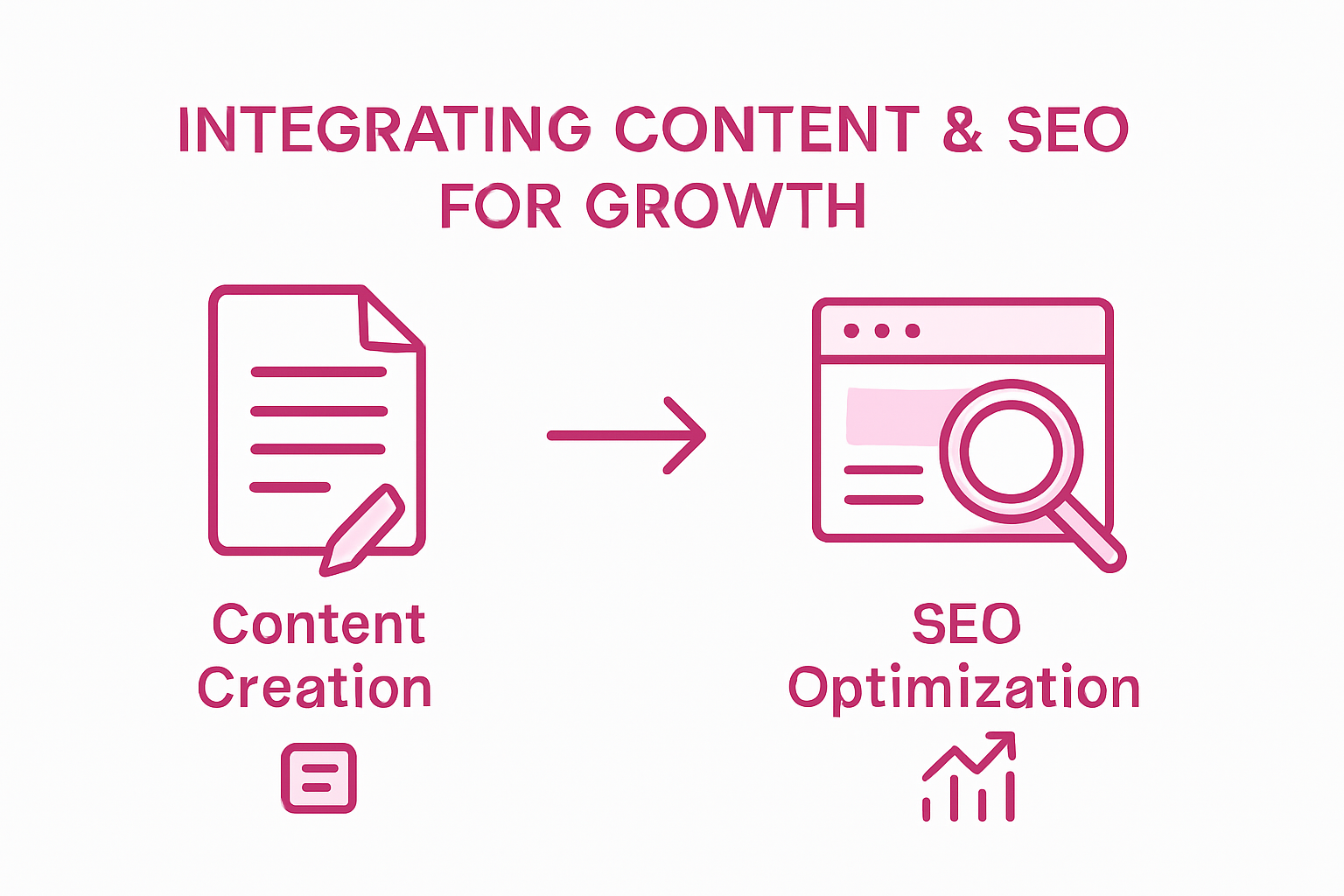
Successful integration requires a holistic approach. Brands must develop content that provides genuine value, answers user questions comprehensively, and demonstrates expertise. By consistently producing high-quality, optimised content across multiple platforms, ecommerce businesses can improve search rankings, attract targeted traffic, and ultimately drive online growth.
Common Pitfalls in Ecommerce Content Marketing
Challenges in content creation can significantly undermine ecommerce marketing strategies. Many brands inadvertently fall into traps that reduce content effectiveness, ultimately compromising their digital marketing efforts and customer engagement.
Key content marketing pitfalls include:
Lack of Authenticity: Creating generic, uninspired content
Inconsistent Messaging: Failing to maintain brand voice
Neglecting SEO Principles: Producing content without strategic optimisation
Ignoring Audience Insights: Not understanding customer preferences
Over-promotional Approach: Prioritising sales over value
Social media content transparency remains a critical concern for ecommerce brands. Research indicates that less than 10% of affiliate marketing content includes proper disclosures, which can erode consumer trust and lead to potential regulatory challenges. Digital marketing strategies must prioritise genuine, transparent communication.
Successful content marketing requires a nuanced approach. Brands must balance promotional objectives with genuine value, create content that truly resonates with their audience, and maintain transparency throughout their digital communication. By avoiding these common pitfalls and focusing on authentic, meaningful engagement, ecommerce businesses can develop more effective and trustworthy content strategies.
Elevate Your Ecommerce Success with Expert Content Marketing Support
The article highlights key challenges ecommerce brands face such as creating authentic content that builds trust, integrating SEO for organic growth, and avoiding common pitfalls like inconsistent messaging. If you are striving to transform casual visitors into loyal customers through strategic and valuable content, it is crucial to partner with experienced digital marketing specialists who truly understand these pain points.
At IWantToBeSeen.Online, we bring over 25 years of hands-on expertise in scaling successful ecommerce brands. We specialise in delivering tailored SEO, AI-powered solutions, Social Media strategies and PPC campaigns designed to amplify your content marketing efforts and enhance every stage of the buyer journey. Our approach ensures your brand stands out with genuine, educational content optimised for search engines and engaging your specific audience.
Ready to overcome content marketing challenges and drive remarkable ecommerce growth now?

Discover how our proven techniques can elevate your digital presence today by visiting our digital marketing services page. Take the first step to maximise your ecommerce potential with targeted strategies that convert browsers into loyal shoppers. Explore our Content Marketing Strategy Guide for deeper insights, and partner with us at IWantToBeSeen.Online to make your ecommerce brand unforgettable.
Frequently Asked Questions
What is the role of content marketing in ecommerce?
Content marketing plays a crucial role in ecommerce by providing valuable and relevant information that attracts, engages, and retains customers, ultimately guiding them through the buying journey without direct selling.
How does content marketing impact the buyer journey in ecommerce?
Content marketing supports the buyer journey by addressing each stage: raising awareness about products, providing detailed comparisons during consideration, offering compelling reasons for decision-making, and fostering retention through ongoing engagement.
What types of content strategies are effective for ecommerce brands?
Effective content strategies for ecommerce include product storytelling, educational resources like tutorials or guides, user-generated content showcasing customer experiences, and interactive content such as quizzes or personalised recommendations.
Why is SEO important in ecommerce content marketing?
SEO is essential in ecommerce content marketing because it helps improve online visibility and organic search performance. By optimising content for specific keywords and ensuring it satisfies user intent, brands can drive targeted traffic and enhance their overall marketing effectiveness.
Recommended
I found this to be a fairly clear and informative read, especially in the way the main points were presented without making the subject feel overly complicated. While looking through related sources, I also came across https://norskautanlicens.com which gave me another point of reference on the broader topic. Overall, the different approaches to explaining these subjects can be useful when trying to get a more complete picture.