.png)
Organic Reach Explained: Boosting eCommerce Visibility


Growing your brand on social media without a hefty ad budget can feel like an uphill struggle for many British and Irish ecommerce owners. As algorithms on networks from Facebook to TikTok change how content is seen, understanding exactly what ‘organic reach’ means could transform your whole visibility strategy. This guide clarifies organic reach—how it sets you apart from competitors, how different platforms treat your posts, and why getting it right builds trust and sustainable growth for your business.
Table of Contents
Key Takeaways
Point | Details |
Understanding Organic Reach | Organic reach refers to unique users who see content without paid promotion, relying on quality and engagement over advertising budgets. |
Distinction from Impressions | Organic reach measures unique views, while impressions count total views, including repeat exposures from the same users. |
Algorithm Influence | Social media algorithms prioritise content that engages users and keeps them on platforms longer, directly affecting organic visibility. |
Consistent Content Strategy | Regularly post high-quality, audience-centric content to maximise organic reach and adapt strategies based on performance metrics. |
Defining Organic Reach in Digital Marketing
Organic reach is simply the number of unique people who see your content without you paying for promotion. It’s determined entirely by how relevant and valuable your content is to your audience and how the platform’s algorithm decides to distribute it.
Unlike paid reach, which you control through advertising budgets, organic reach relies on content quality, audience engagement, and algorithmic favour. The distinction matters significantly for eCommerce businesses because it shapes your long-term visibility strategy.
What Separates Organic Reach from Other Metrics
Many business owners confuse organic reach with impressions, but they’re fundamentally different. Organic reach measures unique user views through unpaid channels like feeds, search results, and algorithm-driven recommendations, whilst impressions count total views including multiple exposures to the same person.
Consider this distinction:
Organic reach = 500 different people see your post
Impressions = 500 total views, possibly 200 people seeing it multiple times
For your eCommerce business, organic reach reveals your actual audience size, not inflated view counts.

Why Platform Algorithms Control Your Organic Reach
Social media platforms and search engines use algorithms to decide what content gets shown. They prioritise content that drives engagement, keeps users on the platform longer, and matches user interests.
This creates a real challenge: platforms increasingly favour paid content because advertising generates their revenue. However, organic reach still builds something money can’t easily buy—long-term trust and credibility with your audience.
When customers discover your products through organic search or social feeds, they perceive less sales pressure than with ads. This trust translates to higher customer lifetime value.
The Three Core Elements of Organic Reach
Distribution channels: Search results, social media feeds, profile visits, hashtag searches, and recommendations
Content quality: Relevance, value, authenticity, and alignment with audience needs
Algorithmic factors: Engagement patterns, posting frequency, user interactions, and platform signals
All three elements must work together. Excellent content in the wrong format gets limited reach. Proper distribution without quality content wastes effort.
Organic reach builds sustainable visibility that paid campaigns alone cannot replicate, creating a foundation for long-term eCommerce growth.
How Organic Reach Differs Across Platforms
Facebook, Instagram, TikTok, and search engines all calculate organic reach differently. Instagram prioritises video and Reels, whilst search engines weight content authority and relevance scores.
Understanding organic search’s impact on eCommerce growth helps you allocate resources effectively across channels.
Pro tip: Start by measuring organic reach on your primary platform—whether that’s Instagram, Google Search, or TikTok—then gradually expand to secondary channels once you understand what content resonates with your audience.
Types of Organic Reach Across Platforms
Every social media platform distributes organic reach differently. Facebook, Instagram, TikTok, LinkedIn, and Twitter all use distinct algorithms and content formats that determine how many people see your posts without paid promotion.
Understanding these differences is crucial for your eCommerce strategy. You cannot apply the same approach across all platforms and expect equal results.
To clarify how platforms differ, here is a comparison of organic reach factors across major social channels:
Platform | Typical Organic Reach | Key Content Types | Core Engagement Drivers |
c. 5.2% of followers | Video & live, discussions | Comments, shares, conversation | |
15-20% feed, higher for Reels | Reels, carousels | Saves, messages, quick engagement | |
TikTok | Unrestricted, high potential | Short-form video | Watch time, shares, replays |
5-15% of connections | Long-form, insights | Relevance, interaction, expertise | |
2-10% of followers | Threads, real-time tweets | Replies, retweets, immediacy |
Facebook Organic Reach
Facebook’s organic reach has declined significantly over the past decade. Currently, pages reach only approximately 5.2% of their followers organically, meaning a page with 10,000 followers reaches roughly 520 people per post without paid promotion.
The platform prioritises meaningful interactions—comments, shares, and genuine engagement—over vanity metrics like likes. Posts that spark conversation get boosted; promotional content gets buried.
Facebook’s algorithm favours:
Video content and live streams
Posts generating immediate engagement
Content from friends and family over brand pages
Longer watch time on videos
For eCommerce, this means your product announcements alone won’t reach many people. You need educational content, customer stories, or interactive posts that encourage discussion.
Instagram Organic Reach
Instagram operates with two distinct organic reach channels. Feed posts reach approximately 15-20% of your followers, whilst Reels receive far superior reach due to algorithmic prioritisation.
The platform heavily weighs engagement metrics and time spent watching. Posts that keep users scrolling longer get surfaced more frequently.
Instagram’s algorithm considers:
How quickly followers engage after posting
Time spent viewing your content
Saves, shares, and direct messages
Whether followers visit your profile
Content type and format
Reels are your biggest organic reach advantage on Instagram. A single Reel can reach thousands of non-followers through the Explore page, whilst a static feed post struggles to break through.
TikTok Organic Reach
TikTok’s organic reach is fundamentally different from other platforms. Rather than prioritising your existing followers, TikTok surfaces engaging content to entirely new audiences through its discovery-centric feed.
This creates unprecedented opportunity for eCommerce brands. A brand new TikTok account with zero followers can have a video reach millions of people if the content resonates.
TikTok evaluates:
Watch time and completion rate
Whether viewers rewatch content
Shares and comments
Sound and trend participation
Account activity patterns
The platform rewards authentic, entertaining content over polished advertising. Your best-performing TikTok videos often feel casual rather than overly produced.
LinkedIn Organic Reach
LinkedIn organic reach typically spans 5-15% of your connections, influenced heavily by content relevance and professional context. Posts sharing genuine insights, industry trends, or professional development perform significantly better than promotional content.
The platform prioritises:
Long-form thought leadership
Industry-specific expertise
Genuine professional conversations
Content from connections within your network
For B2B eCommerce or professional services, LinkedIn offers stronger organic reach than consumer-focused platforms.
Twitter Organic Reach
Twitter combines chronological timeline elements with algorithmic recommendations. Your tweets typically reach 2-10% of followers, though this varies dramatically based on retweets, replies, and quote tweets.
Engagement signals matter heavily. A tweet gaining immediate conversation gets amplified far beyond your follower base.
Platform-specific strategies matter more than platform-generic content; TikTok’s discovery algorithm differs entirely from Facebook’s engagement model.
Pro tip: Audit your top-performing content on each platform to identify which formats (video, carousel, static image, Reel) generate the highest organic reach, then allocate your content calendar accordingly rather than distributing identical posts across all channels.
How Algorithms Influence Organic Visibility
Algorithms are the gatekeepers of organic reach. Every social platform uses complex mathematical models to decide which content gets shown, to whom, and when—often without your input or control.
Understanding how these algorithms work is the difference between content that reaches thousands and content that disappears into the feed.
How Platforms Decide What Gets Shown
Social media algorithms manage content volume based on three core factors: relevance perception, post recency, and prior engagement history. The algorithm asks itself: Is this content relevant to this person? Is it recent? Have they engaged with similar content before?
This filtering happens instantly. When you post on Facebook, the algorithm analyses hundreds of signals before deciding whether to show it to your followers. Most content never reaches everyone who follows you.
Key algorithmic decisions include:
Assessing content relevance to individual users
Timing visibility based on post freshness
Predicting user engagement before showing content
Learning from past interaction patterns
Prioritising connection-based content
The Pay-to-Play Reality
Most social platforms now operate on a pay-to-play model. Organic reach gets restricted to create pressure for paid advertising investment.
Facebook, Instagram, and LinkedIn deliberately limit organic visibility for brand pages to encourage sponsored content spending. This isn’t accidental—it’s profitable.
The harsh truth: boosting organic visibility requires understanding how algorithms prioritise content. Without strategic content creation, your posts reach a fraction of your audience.
What Makes Content “Algorithmically Favourable”
Algorithms reward engagement and quality. Content that triggers immediate interactions gets amplified; content ignored gets buried.
Create content that algorithms favour:
Generates comments, shares, and saves within minutes
Keeps users watching or reading longer
Sparks conversation and debate
Uses trending sounds or hashtags
Matches audience interests precisely
Encourages user-generated responses
A post with 10 comments in the first hour outperforms a post with 50 likes scattered over days. Algorithms measure engagement speed and intensity, not just total volume.
Recency and Timing Matter
Feed algorithms favour recent content. Older posts, even highly engaging ones, gradually disappear from visibility as new content arrives.
This creates urgency. Posting when your audience is most active matters significantly. A perfectly crafted post published at 3am reaches far fewer people than the same post at 7pm.
Timing considerations:
Post when your audience actively browses the platform
Avoid posting when competitors flood feeds
Consider time zones if selling internationally
Test different posting times for your specific audience
Building Algorithmic Authority
Algorithms learn from your account history. Accounts with consistent engagement history get preferential treatment. Inactive accounts or those with sporadic posting patterns struggle.
Consistent posting signals active, valuable accounts. The algorithm rewards reliability and regular engagement.
Algorithms restrict organic reach by design, but creating genuinely engaging content that sparks conversation remains the most reliable way to overcome these restrictions.
Adjusting Your Strategy for Algorithm Changes
Algorithms change constantly. Platforms update their systems quarterly, sometimes monthly. What worked three months ago may perform differently today.
Successful eCommerce brands monitor performance metrics weekly and adjust content strategies accordingly. They test different formats, posting times, and messaging approaches to discover what algorithmic patterns favour their specific audience.
For B2B brands, holistic SEO strategies combined with social content create complementary visibility channels that reduce dependence on any single algorithm.
Pro tip: Monitor your top-performing posts weekly, identify which formats and topics generated the most engagement, then reverse-engineer your content calendar to emphasise those patterns—algorithms reward consistency with what your audience genuinely engages with.
Proven Strategies for Growing Organic Reach
Growing organic reach requires deliberate action, not luck. Your competitors aren’t sitting idle—they’re actively testing content, refining strategies, and capturing audience attention. You need a systematic approach to compete.
The good news: proven strategies exist that deliver measurable results when executed consistently.
Strategy 1: Create Content Your Audience Actually Wants
The foundation of organic reach is audience-centric content. Stop creating content about your products. Start creating content about your audience’s problems, questions, and interests.
Research what your target customers search for, discuss in forums, and ask on social media. Build your content around those genuine needs, not your sales goals.
Content that performs:
Answers specific questions your audience asks
Solves problems they face daily
Teaches skills relevant to their lives
Entertains or inspires your niche
Shares authentic behind-the-scenes stories
A furniture eCommerce brand posting “Buy our sofa today” gets minimal reach. That same brand posting “5 ways to arrange small living rooms” with product mentions reaches thousands organically.
Strategy 2: Post Consistently and Strategically
Algorithms reward consistency. Posting once monthly creates sporadic visibility. Posting three times weekly builds algorithmic authority.
But posting matters less than when you post. Analyse when your audience is most active, then schedule content accordingly. A Wednesday post at 7pm reaches far more people than a Saturday post at 2am.
Consistency framework:
Post at least 3 times weekly on your primary channel
Maintain same posting times to build audience habits
Schedule content in advance using platform tools
Adjust posting times based on analytics data
Never skip weeks—consistency signals value to algorithms
Strategy 3: Spark Genuine Engagement
Engagement is the currency of organic reach. Content with comments, shares, and saves gets amplified. Content with likes alone stays hidden.
Create content that invites response. Ask questions. Pose dilemmas. Encourage debate. Respond to every comment within the first hour—this signals engagement and keeps the post visible longer.
Social media growth strategies for eCommerce emphasise interaction over broadcasting. Successful brands treat social media as a conversation, not a megaphone.
Engagement drivers:
Open-ended questions requiring thought
Polls and surveys inviting participation
Controversial (but respectful) takes on industry topics
User-generated content contests
Rapid response to comments and messages
Strategy 4: Use Platform-Specific Formats
Each platform favours different content types. Instagram Reels outperform static posts. TikTok videos beat images. LinkedIn articles reach further than status updates.
Don’t create one piece of content and distribute identical versions everywhere. Tailor format to each platform’s algorithmic preferences.
Format recommendations:
Instagram: Reels and carousel posts over static images
TikTok: Authentic, casual video content
Facebook: Video content and community discussion
LinkedIn: Long-form articles and professional insights
Twitter: Conversational threads and real-time reactions
Strategy 5: Analyse and Optimise Relentlessly
Data reveals what works. Your analytics show exactly which posts reached most people, generated most engagement, and drove most clicks.
Review these metrics weekly. Identify patterns. Double down on what works. Abandon what doesn’t.
Organic reach grows through experimentation, measurement, and iteration—not through hoping your content resonates.
Pro tip: Export your platform analytics monthly, categorise posts by format and topic, calculate average reach and engagement rates for each category, then allocate 60% of your content calendar to your top-performing categories and 40% to testing new formats.
Organic Versus Paid Reach: Key Differences
Organic and paid reach are fundamentally different approaches to getting your content seen. Understanding their distinct advantages and limitations helps you allocate your budget and effort strategically.
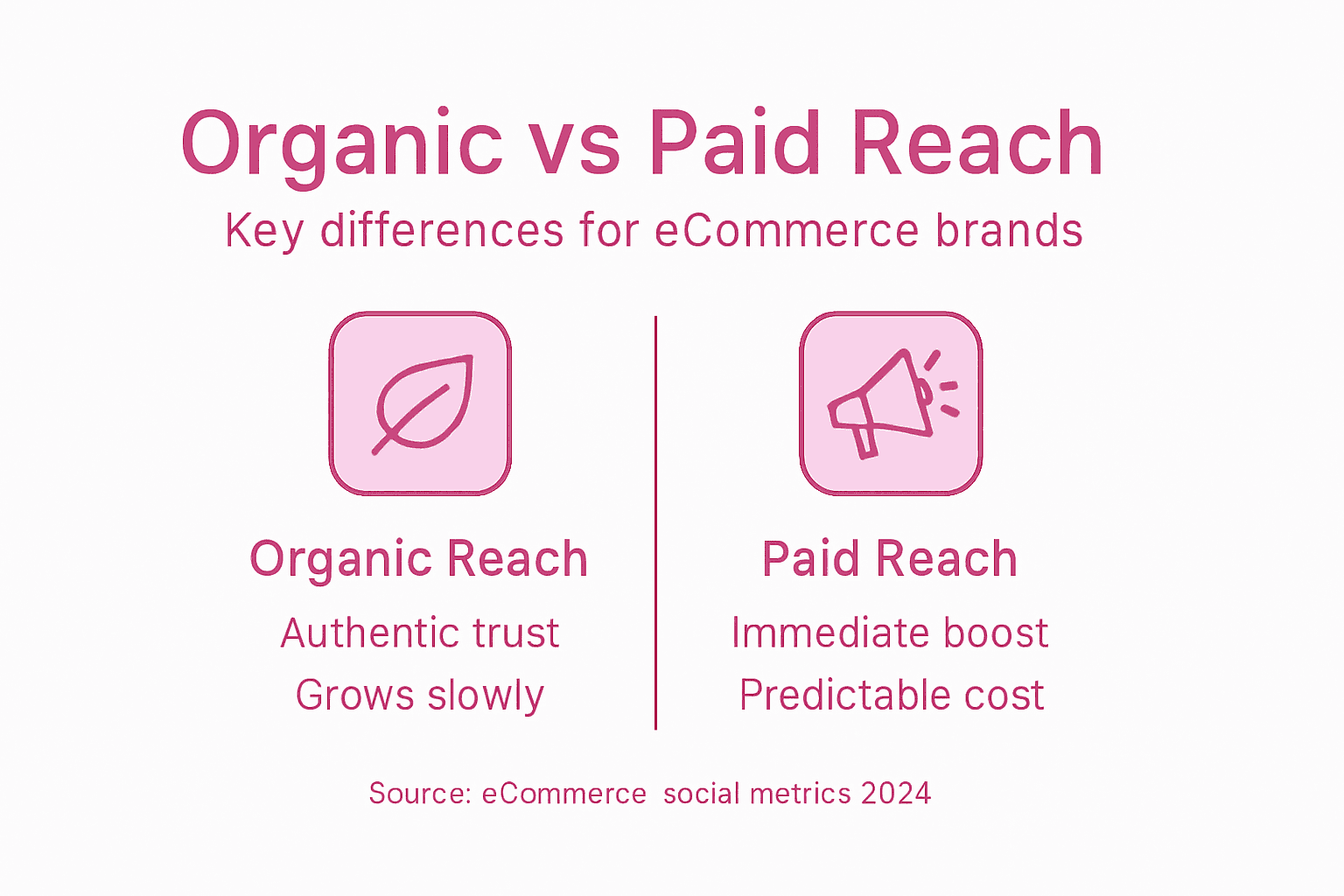
Think of organic reach as planting seeds; paid reach is buying fully-grown trees. Both have their place in a balanced eCommerce strategy.
This summary helps distinguish organic and paid reach for eCommerce planning:
Aspect | Organic Reach | Paid Reach |
Cost | Free, time-intensive | Budget dependent, fast |
Result Speed | Weeks to build, gradual growth | Immediate, direct scaling |
Trust Impact | High credibility, authentic relationships | Perceived as ads, less trusted |
Longevity | Compounds over time, lasting results | Ends when ad spend stops |
Algorithm Control | Vulnerable to algorithm changes | Guarantees reach for payment |
The Cost Factor
Organic reach costs nothing in advertising spend but requires significant time investment. Creating quality content, building audience relationships, and waiting for algorithmic amplification demands patience and consistent effort.
Paid reach costs money but delivers immediate visibility. You pay per impression, click, or conversion depending on your campaign structure. Results appear within hours, not weeks.
Cost comparison:
Organic: £0 advertising spend + 10+ hours weekly content creation
Paid: £500-£5,000+ monthly depending on goals + minimal time management
Speed and Predictability
Paid reach offers immediate, predictable results. Launch a campaign at 9am; your content reaches thousands by 10am. You control the budget, audience targeting, and timing precisely.
Organic reach is slower and unpredictable. A post might reach 100 people or 10,000 depending on algorithmic favour. You cannot guarantee results.
However, understanding paid search advantages for eCommerce growth reveals that paid channels complement organic strategies rather than replace them.
Speed characteristics:
Paid: Results within hours; scaling possible immediately
Organic: Results visible in weeks; slow, steady growth
Paid: Predictable reach and cost per result
Organic: Unpredictable but potentially lower cost per customer long-term
Trust and Credibility
Audiences perceive organic content differently than paid ads. Content appearing naturally in feeds feels more authentic, trustworthy, and relevant than sponsored posts.
Customers discovering your products through organic search or social recommendations trust those recommendations more than advertisements. This trust translates to higher conversion rates and customer lifetime value.
Paid content triggers skepticism. Customers know they’re being marketed to. Conversion rates exist, but customer loyalty remains lower.
Longevity and Sustainability
Paid reach stops the moment you stop paying. Switch off advertising and visibility disappears. You pay perpetually for continuous visibility.
Organic reach compounds over time. A well-performing post continues driving traffic months later. You build audience following and authority that requires no ongoing advertising investment.
For sustainable eCommerce growth, organic reach provides foundation whilst paid reach accelerates short-term goals.
Algorithmic Vulnerability
Organic reach remains vulnerable to platform algorithm changes. Facebook prioritises paid content deliberately, restricting organic visibility intentionally.
Paid reach bypasses these restrictions. Algorithms don’t restrict paid content the same way they restrict organic posts.
Organic reach builds long-term audience trust and credibility, whilst paid reach delivers immediate measurable results—the most successful eCommerce strategies use both.
The Hybrid Approach
Balanced eCommerce brands invest in both channels. They create outstanding organic content to build community and trust, then amplify top-performing posts with modest paid budgets.
This approach maximises organic reach through algorithm amplification whilst using paid reach to accelerate growth during critical periods.
Pro tip: Test organic content first to identify which topics, formats, and messaging resonate most with your audience, then allocate 20-30% of your marketing budget to paid promotion of your proven top-performers rather than boosting untested content.
Unlock Your eCommerce Growth by Mastering Organic Reach
Struggling to overcome the challenges of limited organic reach caused by ever-changing algorithms and pay-to-play social platforms is a common pain point. Your goal to build lasting trust and authentic customer relationships through content that truly resonates requires expert guidance and strategic execution. Concepts like algorithmic favourability, content quality, and platform-specific strategies are crucial to boosting your visibility without burning your budget on paid ads.
At iWantToBeSeen, we specialise in solving these exact issues. With over 25 years of experience scaling successful eCommerce brands, we harness the power of SEO, AI, Social Media, and PPC to amplify your organic reach while complementing it with high-impact paid campaigns. Imagine content that not only sparks genuine engagement but also keeps your brand top of mind long after posting.

Ready to break through the algorithm barriers and grow your eCommerce presence sustainably? Explore how our social media growth hacks and holistic SEO strategies align perfectly with your goals now by visiting iWantToBeSeen. Take the next step today and let’s build an organic reach strategy that turns browsers into loyal customers.
Frequently Asked Questions
What is organic reach in digital marketing?
Organic reach refers to the number of unique individuals who see your content without any paid promotion. It is influenced by content relevance, quality, and platform algorithms.
How does organic reach differ from impressions?
Organic reach measures the number of unique users who view your content, while impressions tally the total views, including multiple exposures from the same person. For instance, 500 organic reach means 500 different users see your post, but impressions could count the same users seeing it multiple times.
Why is understanding organic reach important for eCommerce?
Understanding organic reach is crucial for eCommerce since it helps businesses gauge their real audience size and informs long-term visibility strategies. It builds trust and credibility with customers, leading to higher customer lifetime value.
How can I improve my organic reach?
To improve organic reach, create audience-centric content that addresses their needs, post consistently at optimal times, engage genuinely with your audience, and tailor your content for each platform’s specific preferences.
Recommended
Comments