.png)
What Is Influencer Marketing for E-Commerce Brands


Finding the right way to connect with today’s online shoppers can quickly turn into guesswork for many British and Irish e-commerce business owners. Influencer marketing is no longer a niche experiment but a $24 billion global industry built on authentic audience engagement and trusted recommendations. If you want your brand message to stand out amid crowded feeds, understanding how real partnerships with the right content creators drive visibility and sales is a powerful step forward.
Table of Contents
Key Takeaways
Point | Details |
Influencer Marketing Is Strategic | Brands should partner with credible content creators that align with their ethos, not just focus on follower counts. |
Collaboration Models Are Diverse | Different types of influencer collaborations can enhance audience engagement and brand storytelling. |
Sales Mechanisms Are Complex | Effective campaigns harness social proof and storytelling to drive consumer purchases and foster loyalty. |
Compliance Is Critical | Adhering to legal guidelines for transparency and ethical conduct is essential to maintain consumer trust. |
Defining Influencer Marketing and Common Myths
Influencer marketing represents a strategic digital communications approach where brands collaborate with content creators who have established credibility and audience trust within specific niches. Emerging research highlights this marketing technique has transformed from an experimental strategy into a sophisticated $24 billion global industry driven by authentic audience connections.
Contrary to popular misconceptions, influencer marketing is not merely about celebrity endorsements or random social media posts. Instead, it involves carefully selected content creators who possess genuine engagement and expertise within their specific audience segments. Government communications guidelines clarify that influencers range from macro-level personalities with hundreds of thousands of followers to micro-influencers with highly targeted, niche audiences.
The core value of influencer marketing lies in its ability to create genuine, relatable content that resonates with specific consumer groups. Modern consumers increasingly seek authentic recommendations from individuals they perceive as trustworthy and knowledgeable, rather than traditional advertising. This shift means brands must focus on finding influencers who align not just numerically with their target demographic, but also philosophically and aesthetically.
Pro tip: When selecting influencers, prioritise engagement rates and audience alignment over raw follower numbers to ensure more meaningful marketing partnerships.
Key Types of Influencer Collaborations
E-commerce brands have multiple strategic pathways for collaborating with digital content creators, each offering unique advantages for reaching target audiences. Professional research reveals nine primary collaboration models that enable brands to engage with potential customers through authentic, targeted content strategies.
The most prevalent collaboration types include product seeding, where brands send complimentary products to influencers for potential reviews, and sponsored posts which involve direct financial compensation for content creation. Ambassador programmes represent a deeper commitment, establishing longer-term relationships where influencers consistently represent the brand across multiple content pieces. More innovative approaches like product co-creation allow influencers to directly shape brand offerings, providing unprecedented audience insights and genuine product development partnerships.
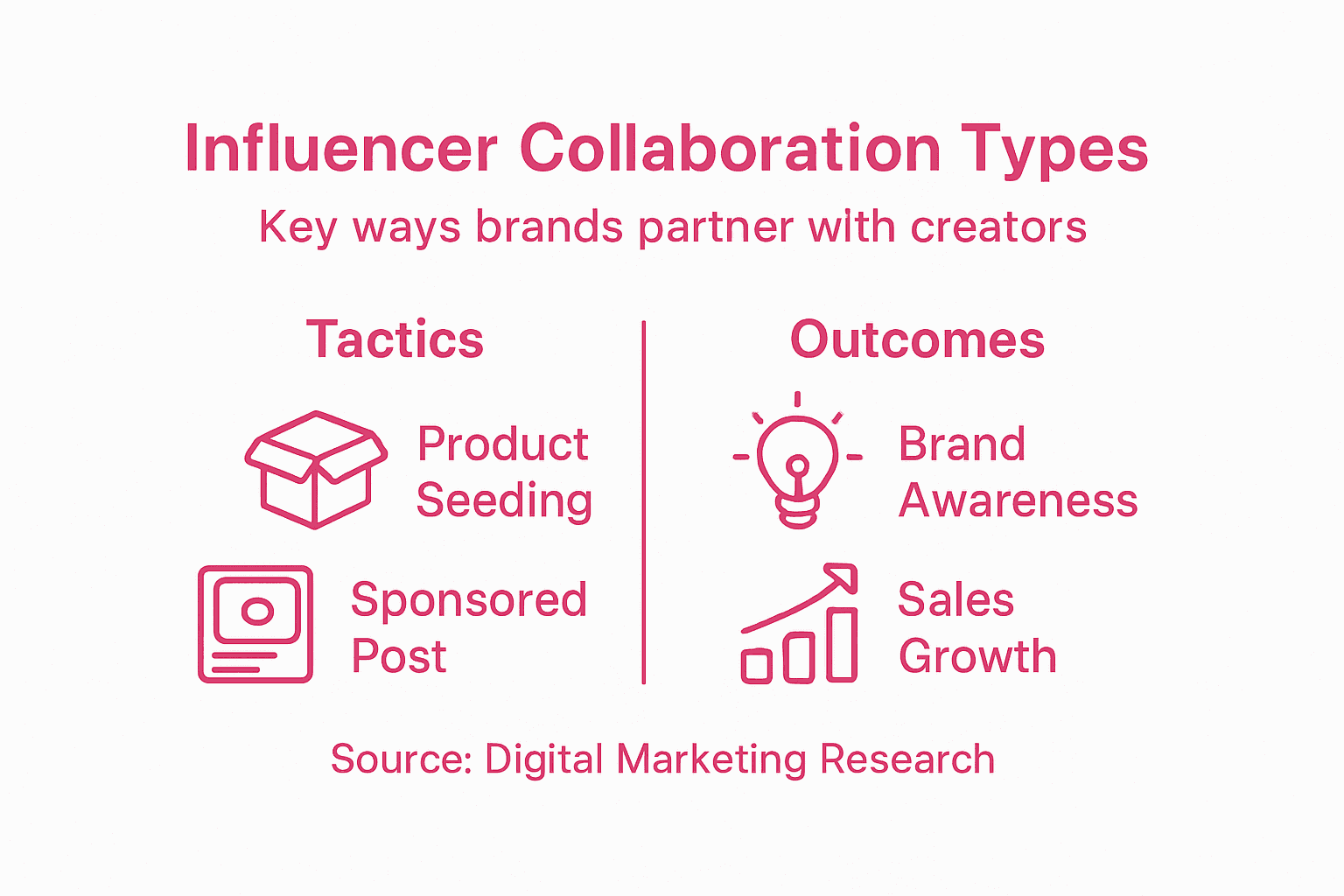
Government communication strategies further illuminate the nuanced landscape of influencer collaborations, highlighting how strategic partnerships can extend beyond traditional marketing into areas of cultural diplomacy and narrative development. For e-commerce brands, this means selecting collaboration types that align not just with immediate sales goals, but with broader brand storytelling and audience engagement objectives.
Pro tip: Develop a flexible collaboration framework that allows for multiple partnership models, enabling you to adapt influencer strategies based on specific campaign goals and audience segments.
Below is a summary comparing key influencer collaboration models and their business impact:
Collaboration Type | Description | Typical Outcomes |
Product Seeding | Gift products for potential review | Builds trust, authentic reviews |
Sponsored Posts | Paid content creation | Broad reach, quick visibility |
Ambassador Programmes | Long-term brand partnerships | Ongoing engagement, loyalty |
Product Co-Creation | Influencers help design offerings | Deep insights, unique products |
How Influencer Campaigns Drive E-Commerce Sales
Influencer marketing has transformed from a peripheral strategy to a powerful sales mechanism for e-commerce brands, creating direct pathways between audience engagement and purchasing behaviour. Systematic research reveals that successful influencer campaigns leverage multiple psychological triggers that convert audience interest into tangible sales outcomes.
The primary mechanisms driving sales through influencer campaigns include social proof, targeted reach, and authentic storytelling. When an influencer authentically demonstrates a product’s value, they create a compelling narrative that resonates more deeply than traditional advertising. Micro and macro-influencers can generate different sales impacts: micro-influencers typically produce higher engagement rates with niche audiences, while macro-influencers provide broader brand visibility and potential viral moments.
Key performance indicators for measuring influencer campaign effectiveness extend beyond simple sales metrics. Brands must analyse engagement rates, conversion tracking, audience sentiment, and long-term brand perception. This holistic approach allows e-commerce businesses to understand not just immediate transactional outcomes, but the broader impact of influencer partnerships on brand recognition and customer loyalty. Strategic collaboration involves selecting influencers who genuinely align with the brand’s values and target demographic, ensuring authenticity remains at the core of the marketing approach.
Pro tip: Implement comprehensive tracking systems that measure both direct sales conversions and indirect brand impact metrics to truly evaluate influencer marketing effectiveness.
UK Legal Obligations and Compliance Standards
Influencer marketing in the United Kingdom operates within a complex regulatory landscape that demands rigorous transparency and ethical communication. Government communications guidelines establish comprehensive standards for brands and content creators, ensuring public trust and protecting consumer interests through mandatory disclosure practices.
The primary legal obligations revolve around content transparency, sponsorship declaration, and clear commercial relationships. Influencers must explicitly disclose any financial arrangements, complimentary products, or commercial partnerships that might impact their content’s perceived authenticity. This means using clear hashtags like #ad or #sponsored, ensuring audiences can immediately recognise when content represents a paid collaboration. The Competition and Markets Authority (CMA) and Advertising Standards Authority (ASA) enforce these regulations, with potential significant penalties for non-compliance.
Beyond sponsorship declarations, e-commerce brands must navigate additional legal complexities including data protection regulations, consumer rights legislation, and platform-specific advertising guidelines. This requires meticulous documentation of influencer agreements, comprehensive contract frameworks that outline content ownership, usage rights, and performance expectations. Brands must also implement robust verification processes to ensure influencers genuinely align with advertising standards and maintain appropriate professional conduct.

Pro tip: Develop a comprehensive compliance checklist that covers sponsorship declarations, contract requirements, and platform-specific advertising guidelines to mitigate legal risks in influencer marketing campaigns.
Risks, Pitfalls, and Protecting Your Brand
Systematic research reveals that influencer marketing carries substantial risks requiring strategic management and proactive brand protection. The digital landscape is fraught with potential pitfalls that can rapidly undermine brand reputation, necessitating comprehensive risk mitigation strategies for e-commerce businesses engaging with content creators.
The primary risks confronting e-commerce brands include fake follower networks, inappropriate influencer associations, and content misalignment. Brands must conduct rigorous due diligence, verifying an influencer’s authentic engagement metrics, examining their historical content, and ensuring genuine audience alignment. Sophisticated brands implement multi-layered vetting processes that examine not just follower count, but engagement quality, audience demographics, and potential reputation risks.
Brand safety analyses highlight the critical importance of continuous monitoring and contractual clarity. This involves developing comprehensive agreements that outline content guidelines, conduct expectations, and clear mechanisms for immediate partnership termination if inappropriate behaviour occurs. Effective risk management demands ongoing social listening, real-time reputation tracking, and agile response protocols to protect brand integrity in an unpredictable digital environment.
Here is a comparison of major risks in influencer marketing and how to mitigate them:
Risk | Description | Mitigation Strategy |
Fake Follower Networks | Inflated or fraudulent audience figures | Conduct engagement and audit checks |
Inappropriate Associations | Potential reputational damage | Pre-screen influencer history |
Content Misalignment | Brand message inconsistency | Approve content and set guidelines |
Rapid Controversy | Fast-spreading negative events | Real-time monitoring & swift action |
Pro tip: Create a detailed influencer partnership agreement template that includes specific behavioural guidelines, content approval processes, and clear consequences for brand misalignment.
Unlock the True Potential of Influencer Marketing for Your E-Commerce Brand
Navigating the evolving landscape of influencer marketing can be overwhelming. From understanding the importance of authentic engagement to managing legal compliance and avoiding risks like fake follower networks, every step requires expert precision. If you want to build genuine connections, elevate brand storytelling, and drive meaningful sales through carefully crafted influencer collaborations, expert guidance is essential.

Discover how our digital marketing services specialising in SEO, AI, Social Media, and PPC can help you transform influencer strategies into powerful growth engines. With over 25 years of experience scaling successful e-commerce brands, we understand how to align influencer campaigns with your target audience and brand values while ensuring compliance and maximising impact. Don’t let your brand risk missteps or miss opportunities. Visit our landing page now to start crafting influencer marketing strategies that truly resonate and convert. Take control of your e-commerce success today with trusted digital marketing solutions.
Frequently Asked Questions
What is influencer marketing in the context of e-commerce?
Influencer marketing is a strategic approach where e-commerce brands collaborate with content creators who have established credibility within specific niches to promote their products and drive sales.
How do influencer collaborations impact sales for e-commerce brands?
Influencer collaborations create genuine content that resonates with audiences, leveraging social proof, targeted reach, and authentic storytelling to convert interest into sales.
What types of influencer collaborations are commonly used by e-commerce brands?
Common collaboration types include product seeding (sending free products for reviews), sponsored posts (paid content), ambassador programmes (long-term partnerships), and product co-creation (influencers helping design products).
What are the legal obligations for influencer marketing in e-commerce?
Legal obligations include content transparency, ensuring that influencers disclose any financial arrangements or free products clearly, and adhering to advertising standards set by regulatory authorities.
Recommended
Comments