.png)
How to Build Customer Loyalty for Ecommerce Brands


Facing constant competition in the British and Irish e-commerce space, even seasoned business owners know how fragile customer loyalty can be. Retaining valued customers is not just about discounts or quick fixes but about delivering a consistently excellent experience across every touchpoint. By focusing on a holistic customer experience strategy, you set your brand apart and create the foundation for meaningful, long-term loyalty in a crowded digital market.
Table of Contents
Quick Summary
Important Takeaway | Explanation |
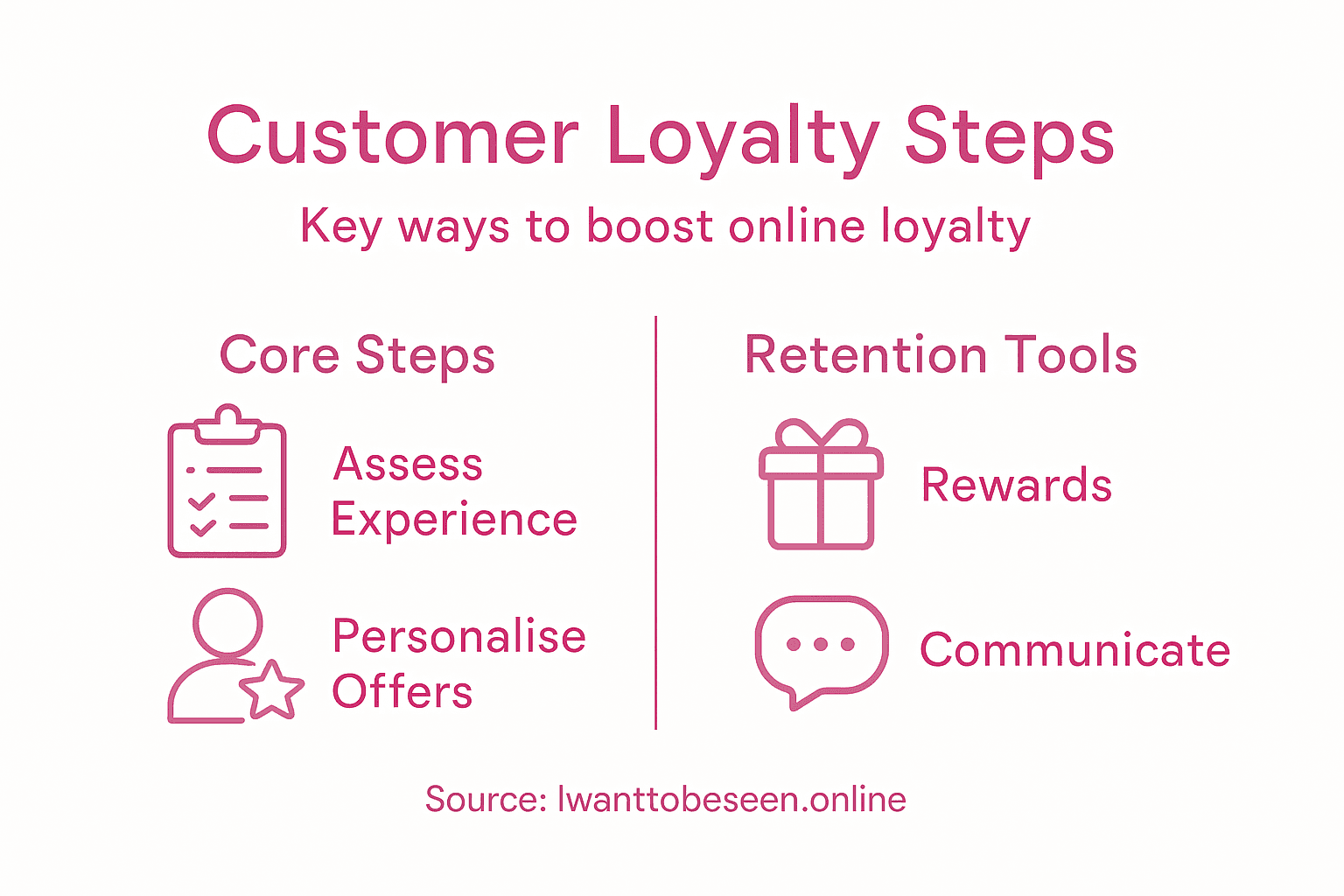
1. Assess Customer Experience Thoroughly | Evaluate all customer touchpoints from website to support for identifying satisfaction areas. |
2. Personalise Engagement Strategies Effectively | Implement customer segmentation to create tailored marketing communications, enhancing connection and engagement. |
3. Design Strategic Loyalty Programmes | Develop multipronged loyalty programmes that reward customers meaningfully to foster long-term loyalty. |
4. Optimise Multichannel Communication | Ensure consistent and personalised messaging across various platforms to enhance customer relationships. |
5. Continuously Measure and Refine Tactics | Establish performance metrics and adapt strategies based on data to drive improvements and sustain customer loyalty. |
Step 1: Assess your current customer experience
Understanding your current e-commerce customer experience is the critical first step towards building lasting customer loyalty. This process involves systematically evaluating how customers interact with your brand across multiple touchpoints, from initial website visit to post-purchase support.
To conduct a comprehensive assessment, start by mapping key customer journey metrics that reveal your current performance. Focus on these essential evaluation areas:
Website usability and navigation ease
Mobile responsiveness and loading speeds
Checkout process complexity
Customer support accessibility
Post-purchase communication quality
Utilise both quantitative and qualitative data collection methods to gain holistic insights. This might include:
Analysing website analytics for user behaviour
Reviewing customer feedback and support tickets
Conducting user experience surveys
Tracking key performance indicators like conversion rates and repeat purchase percentages
Effective customer experience assessment requires a data-driven approach that goes beyond surface-level metrics.
By systematically examining these dimensions, you’ll identify specific areas where your e-commerce brand can enhance customer satisfaction and build stronger loyalty.

Expert Recommendation: Implement a quarterly review process to continuously track and improve your customer experience metrics.
Step 2: Develop personalised engagement strategies
Transforming customer interactions requires a strategic approach to personalised marketing that goes beyond generic communication. Your goal is to create tailored experiences that make each customer feel uniquely valued and understood.
Begin by implementing customer segmentation techniques that allow you to craft precise, targeted engagement strategies. These strategies should leverage customer data intelligently to create meaningful connections:
Analyse purchase history
Track browsing behaviour
Examine demographic information
Review past customer interactions
Assess customer lifecycle stages
Collect comprehensive customer data
Use AI-driven analytics for deep insights
Develop targeted communication protocols
Create personalised product recommendations
Effective personalisation requires a delicate balance between data utilisation and customer privacy.
Unlock deeper engagement by implementing personalised marketing approaches that transform generic interactions into memorable brand experiences. This might include customised email campaigns, tailored product suggestions, and individualised communication that speaks directly to each customer’s preferences.
Here’s how common personalisation techniques compare in impact and complexity:
Technique | Customer Impact | Implementation Complexity |
Personalised emails | High engagement boost | Moderate setup |
Targeted product suggestions | Increased conversion rates | High (requires advanced data) |
Custom content recommendations | Enhanced user experience | Moderate to high |
Demographic-based offers | Improved relevancy | Low to moderate |
Expert Recommendation: Continuously refine your personalisation algorithms by regularly testing and measuring customer response rates to ensure ongoing relevance and effectiveness.
Step 3: Implement loyalty and rewards programmes
Building a successful loyalty programme requires strategic design that transforms occasional customers into dedicated brand advocates. Your ultimate goal is creating a reward system that genuinely motivates repeat purchases and emotional connection.
Designing effective loyalty strategies involves careful consideration of multiple engagement dimensions. Consider implementing these core programme elements:
Points-based reward systems
Tiered membership levels
Personalised milestone rewards
Exclusive member benefits
Flexible redemption options
Define clear programme objectives
Select appropriate reward structures
Create transparent earning mechanisms
Develop seamless redemption processes
Customer loyalty programmes must balance perceived value with sustainable business economics.
Pursue a multi-dimensional approach to rewards that goes beyond simple transactional exchanges. This might include surprise bonuses, birthday rewards, early access to sales, or unique personalised perks that make customers feel genuinely appreciated.
Below is a summary of key loyalty programme designs with their main benefits:
Programme Type | Main Benefit | Example Incentive |
Points-based | Encourages frequent purchases | Earn 1 point per £1 spent |
Tiered levels | Motivates long-term loyalty | Gold members get free shipping |
Milestone rewards | Celebrates customer achievements | Birthday voucher or gift |
Exclusive perks | Strengthens emotional connection | Early access to new products |
Expert Recommendation: Regularly analyse programme performance metrics and be prepared to adapt your reward structures based on actual customer engagement and feedback.
Step 4: Optimise communication across all channels
Effective e-commerce communication requires a holistic multichannel approach that connects with customers seamlessly across different platforms and touchpoints. Your objective is creating a consistent, personalised experience that feels intuitive and responsive.
Developing integrated communication strategies demands careful coordination across multiple digital and physical interaction points. Consider these essential communication channels:
Website messaging
Social media platforms
Email communications
Mobile app notifications
Customer support channels
Live chat functionality
Physical store interactions
Map your current communication ecosystem
Identify communication gaps
Standardise brand messaging
Implement cross-channel tracking
Consistent messaging builds trust and reinforces brand reliability across all customer interactions.
Unlock deeper engagement by implementing multichannel communication techniques that adapt to each platform’s unique characteristics. This requires understanding the nuanced communication preferences of your specific audience segments and tailoring your approach accordingly.
Expert Recommendation: Invest in integrated customer relationship management tools that enable real-time communication synchronisation and personalised tracking across all engagement channels.
Step 5: Evaluate performance and refine tactics
Successfully building customer loyalty requires continuous measurement and strategic adaptation. Your goal is to transform raw performance data into actionable insights that drive meaningful improvements in your e-commerce customer experience.
Developing comprehensive performance evaluation metrics involves systematically tracking key indicators that reveal the effectiveness of your loyalty strategies. Focus on these critical assessment dimensions:
Customer retention rates
Purchase frequency
Average order value
Customer lifetime value
Net promoter score
Engagement metrics
Conversion rates
Establish baseline performance benchmarks
Implement regular tracking mechanisms
Conduct comparative analysis
Identify improvement opportunities
Data-driven refinement is the cornerstone of sustainable customer loyalty strategies.
Unlock deeper insights by measuring marketing performance indicators that reveal the nuanced interactions between your loyalty initiatives and customer behaviour. This requires a holistic approach that combines quantitative metrics with qualitative feedback.
Expert Recommendation: Create a dynamic performance dashboard that provides real-time insights and enables rapid tactical adjustments based on emerging customer trends.
Elevate Your Customer Loyalty with Proven E-Commerce Marketing Solutions
Building deep and lasting customer loyalty requires personalised engagement, seamless multichannel communication and data-driven optimisation. If your brand struggles with transforming occasional buyers into dedicated advocates or needs to implement effective loyalty and rewards programmes this article outlines the core challenges e-commerce businesses face today.
At iwanttobeseen.online we combine over 25 years of hands-on experience scaling successful e-commerce brands with cutting-edge digital marketing strategies including SEO, AI-powered analytics and social media marketing designed specifically to boost your customer retention and lifetime value. Our expertise helps you unlock the full potential of personalised marketing, loyalty schemes and performance tracking through tailored campaigns that resonate deeply with your audience.

Ready to turn your customer loyalty challenges into growth opportunities Discover how our strategic approach can enhance your engagement and boost repeat purchases Contact us now at iwanttobeseen.online and start building the loyal customer base your brand deserves.
Frequently Asked Questions
How can I assess the current customer experience of my e-commerce brand?
You can assess your current customer experience by mapping key customer journey metrics, focusing on website usability, mobile responsiveness, and checkout processes. Collect data through website analytics, customer feedback, and user experience surveys to identify specific areas for improvement within 30–60 days.
What are personalised engagement strategies for e-commerce brands?
Personalised engagement strategies involve tailoring customer interactions based on data such as purchase history and browsing behaviour. Start by segmenting your customers and implementing targeted communication protocols to enhance customer satisfaction and loyalty.
How should I structure a loyalty programme for my e-commerce business?
A well-structured loyalty programme should include elements like points-based rewards, tiered levels, and exclusive member benefits. Define clear objectives, create transparent earning mechanisms, and adapt your programme based on customer feedback to improve retention rates over time.
What communication channels should I optimise for better customer interaction?
You should optimise multiple communication channels, including website messaging, social media, and email. Map your current communication ecosystem and standardise brand messaging across platforms to create a seamless, consistent customer experience.
How do I evaluate the effectiveness of my customer loyalty strategies?
Evaluate your loyalty strategies by tracking key performance indicators such as customer retention rates and average order values. Establish baseline performance benchmarks and regularly analyse these metrics to identify opportunities for improvement within your loyalty programmes.
Recommended
Comments