.png)
Dynamic Remarketing: Driving eCommerce Re-Engagement


Finding new ways to reconnect with shoppers who leave without buying is a familiar challenge for Ecommerce business owners in the UK and Ireland. Dynamic remarketing matters because it goes beyond simple reminders, creating highly personalised ads that follow potential customers across digital channels. This article explores how combining advanced data analytics techniques and intelligent campaign strategies can help you achieve stronger customer re-engagement and more relevant conversions.
Table of Contents
Key Takeaways
Point | Details |
Effective Audience Targeting | Dynamic remarketing allows for precise audience segmentation and personalised ads based on user behaviour, enhancing conversion rates. |
Data Privacy Compliance | Adopting robust consent management and ensuring compliance with regulations like GDPR is essential for successful campaigns. |
Performance Optimisation | Regularly monitor ad performance and refresh creatives to avoid fatigue and ensure sustained engagement. |
Multi-Channel Integration | Integrating remarketing efforts across email, social media, and other platforms ensures a cohesive customer journey. |
Dynamic Remarketing Explained for eCommerce
Dynamic remarketing represents a sophisticated digital marketing strategy designed specifically for eCommerce businesses seeking to re-engage potential customers who have previously shown interest in their products. Advanced data analytics techniques enable businesses to create highly personalised advertising experiences that dramatically improve conversion rates.
At its core, dynamic remarketing leverages intelligent tracking technologies to monitor user behaviour across digital platforms. When a potential customer visits an online store, browses specific products, or abandons a shopping cart, this strategy allows businesses to display targeted advertisements featuring the exact items that initially captured their interest. These personalised ads follow users across various websites and social media platforms, maintaining brand visibility and encouraging potential buyers to return and complete their purchase.
The key components of an effective dynamic remarketing strategy include:
Data Collection: Gathering comprehensive user interaction data from website visits, product views, and cart activities
Audience Segmentation: Categorising users based on their specific browsing behaviours and purchase intentions
Personalised Ad Creation: Developing visually appealing advertisements that showcase previously viewed products
Cross-Platform Targeting: Displaying remarketing ads across multiple digital channels
Performance Tracking: Continuously monitoring ad engagement and conversion metrics
By implementing dynamic remarketing, eCommerce businesses can significantly enhance their marketing efficiency. These intelligent campaigns typically achieve higher click-through rates and conversion percentages compared to traditional advertising methods, as they speak directly to individual customer interests and preferences.
Here’s how dynamic remarketing compares to traditional remarketing strategies:
Aspect | Dynamic Remarketing | Traditional Remarketing |
Personalisation Level | Highly tailored advertisements | Generic, broad targeting |
Data Usage | Real-time product interactions | Simple site visit history |
Ad Content | Product-specific messaging | One-size-fits-all banners |
Conversion Potential | Increased likelihood | Moderate improvement |
Pro tip: Configure your remarketing tags precisely and segment your audience meticulously to maximise the potential of your dynamic advertising campaigns.
How Dynamic Remarketing Campaigns Work
Dynamic remarketing campaigns represent a cutting-edge approach to digital advertising that transforms how eCommerce businesses reconnect with potential customers. Adaptive marketing strategies leverage advanced machine learning techniques to create highly personalised advertising experiences.

The technical mechanics of dynamic remarketing involve several sophisticated tracking and targeting processes. When a user visits an online store, tiny pieces of code called tracking pixels capture detailed information about their browsing behaviour, product interactions, and specific items viewed. These digital footprints allow marketers to build comprehensive user profiles, enabling the creation of hyper-targeted advertisements that appear across multiple digital platforms, including social media, display networks, and partner websites.
Key operational components of dynamic remarketing include:
Data Collection: Capturing granular user interaction data
Audience Segmentation: Categorising users based on behaviour patterns
Personalisation Engine: Generating tailored ad content
Cross-Platform Tracking: Monitoring user interactions across different digital environments
Real-Time Bidding: Dynamically adjusting ad placement and pricing
The campaign workflow typically follows these strategic steps:
User visits an eCommerce website
Tracking mechanism records specific product interactions
User leaves the website without purchasing
Personalised ads featuring viewed products are displayed across various platforms
Targeted re-engagement attempts encourage return and conversion
By implementing intelligent remarketing techniques, businesses can significantly improve their conversion rates and customer re-engagement strategies. These campaigns create a persistent yet non-intrusive reminder of products that originally captured a potential customer’s interest, effectively bridging the gap between initial browsing and final purchase.
Pro tip: Configure your remarketing tags with granular precision and continuously refine audience segmentation to maximise campaign performance and reduce unnecessary ad spend.
Personalisation Types and Channel Integration
Personalisation in dynamic remarketing goes far beyond simple product recommendations. AI-driven personalisation techniques enable eCommerce businesses to create deeply tailored marketing experiences that adapt to individual customer behaviours and preferences.
The complexity of modern personalisation involves multiple sophisticated approaches, ranging from basic demographic targeting to advanced predictive modelling. By analysing historical browsing patterns, purchase history, and real-time interactions, marketers can segment audiences with unprecedented precision. This granular approach allows for the creation of hyper-targeted advertisements that speak directly to a customer’s specific interests, dramatically increasing the likelihood of conversion.
Key personalisation strategies include:
Behavioural Targeting: Tracking user actions and preferences
Contextual Personalisation: Adapting content based on current user context
Predictive Personalisation: Using machine learning to anticipate future interests
Demographic Segmentation: Tailoring messages to specific age, gender, or location groups
Purchase History Analysis: Recommending products based on previous buying patterns
Channel integration represents another critical dimension of effective personalisation. Modern remarketing strategies must seamlessly synchronise across multiple platforms:
Email marketing campaigns
Social media advertising
Mobile push notifications
Display network advertisements
Retargeting website banners
By implementing a holistic approach that combines advanced personalisation techniques with intelligent channel integration, businesses can create a cohesive and compelling customer journey that feels intuitive and responsive to individual needs.
Pro tip: Develop a comprehensive data integration strategy that allows real-time information sharing across all marketing channels to maximise personalisation effectiveness.
Setup Essentials and Compliance in 2026
Dynamic remarketing setup requires meticulous attention to technical configuration and legal compliance. Configuring tracking events and parameters represents a critical foundation for successful eCommerce remarketing strategies that align with evolving digital privacy regulations.
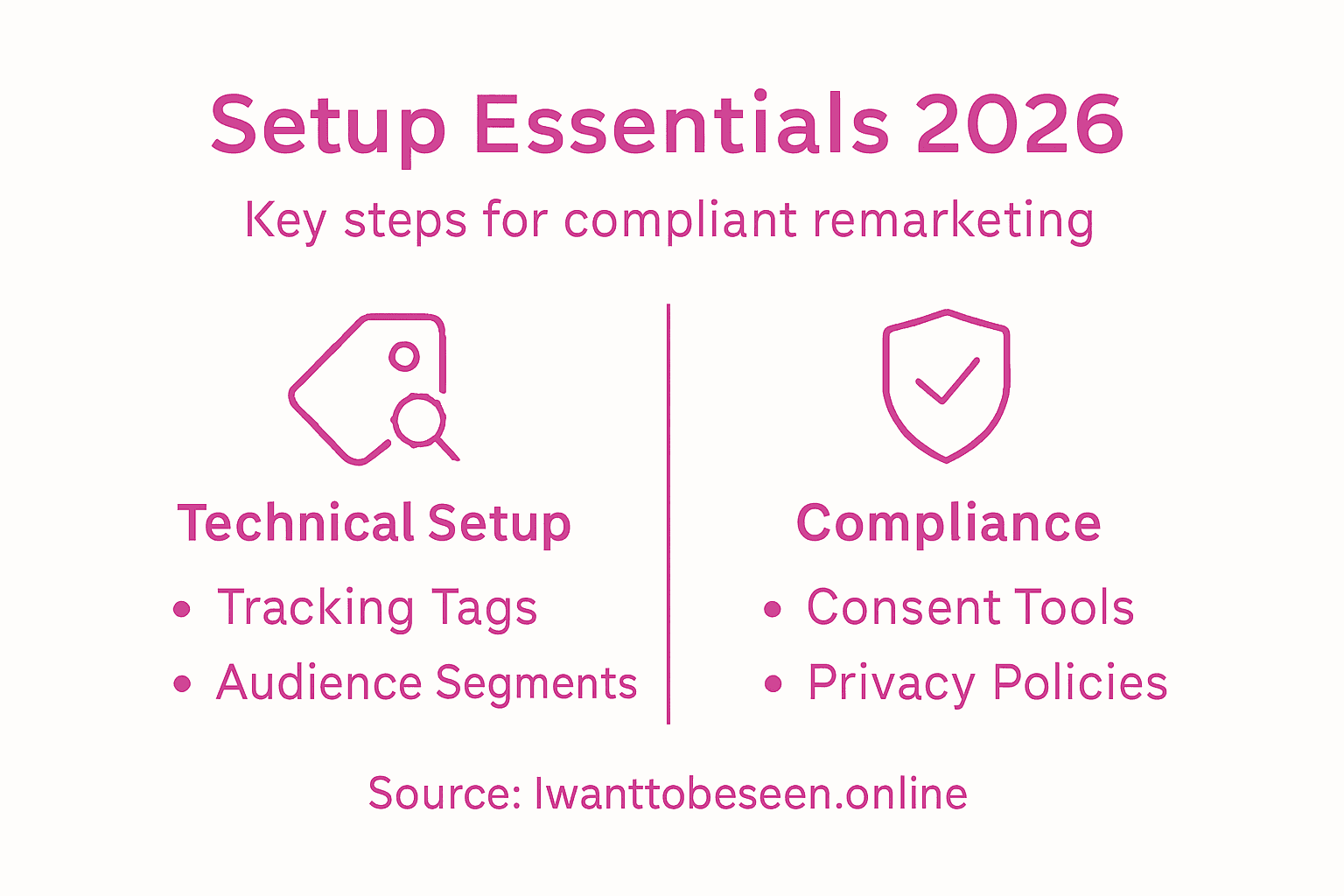
The landscape of digital marketing compliance continues to grow increasingly complex, with stringent data protection requirements emerging globally. eCommerce businesses must navigate a sophisticated ecosystem of regulations including GDPR in Europe, CCPA in California, and emerging international data privacy frameworks. This demands a proactive approach to consent management, transparent data handling, and robust user tracking mechanisms that respect individual privacy while delivering personalised marketing experiences.
Key setup essentials for dynamic remarketing in 2026 include:
Google Tag Configuration: Precise implementation of tracking mechanisms
Consent Management: Transparent user permission frameworks
Data Privacy Alignment: Compliance with international regulations
Event Parameter Standardisation: Consistent tracking across platforms
User Consent Tracking: Documented opt-in/opt-out mechanisms
Critical compliance steps involve:
Implement comprehensive user consent interfaces
Develop clear data usage policies
Enable granular privacy controls
Maintain transparent data collection practices
Regularly audit tracking and remarketing systems
Successful implementation requires a holistic approach that balances marketing effectiveness with robust user privacy protections. Businesses must view compliance not as a constraint, but as an opportunity to build trust and demonstrate commitment to ethical data practices.
Pro tip: Invest in advanced consent management platforms that provide real-time compliance monitoring and automatically adapt to changing international privacy regulations.
Risks, Common Mistakes, and Optimisation Tips
Dynamic remarketing campaigns require strategic navigation to avoid potential pitfalls that can undermine marketing effectiveness. Identifying critical remarketing campaign mistakes becomes essential for maintaining efficient and cost-effective advertising strategies that deliver genuine value to eCommerce businesses.
The landscape of digital advertising is fraught with potential risks that can quickly erode marketing budgets and customer engagement. Common challenges include ad fatigue, where repeated advertisements become increasingly ineffective, and poorly targeted campaigns that waste valuable resources by displaying irrelevant content to disinterested audiences. Sophisticated marketers must develop nuanced approaches that balance persistent visibility with respectful, targeted communication.
Key risks and potential mistakes in dynamic remarketing include:
Ad Frequency Overload: Bombarding users with repetitive advertisements
Imprecise Audience Targeting: Displaying ads to inappropriate demographic segments
Budget Mismanagement: Overspending without tracking precise campaign performance
Creative Stagnation: Using identical ad designs across multiple campaigns
Neglecting Performance Analytics: Failing to monitor and adapt campaign strategies
Optimisation strategies for mitigating these risks involve:
Implement sophisticated audience segmentation techniques
Develop diverse, personalised ad creative variations
Set strict frequency caps to prevent advertisement fatigue
Continuously monitor and analyse campaign performance metrics
Regularly refresh targeting parameters and audience groups
Successful dynamic remarketing demands a dynamic, adaptive approach that prioritises user experience and marketing efficiency. By understanding potential pitfalls and implementing strategic safeguards, eCommerce businesses can create remarketing campaigns that genuinely resonate with potential customers.
Below is a summary of common risks and actionable mitigation tactics for dynamic remarketing campaigns:
Risk | Underlying Cause | Optimisation Tactic |
Ad fatigue | Excessive ad frequency | Set frequency caps |
Budget wastage | Poor targeting and analytics | Refine segmentation, monitor KPIs |
Creative stagnation | Reused or outdated visuals | Refresh creatives regularly |
Compliance breaches | Inadequate privacy processes | Update consent management tools |
Pro tip: Develop a systematic approach to campaign monitoring, using automated tools that provide real-time performance insights and enable immediate strategic adjustments.
Unlock the Power of Dynamic Remarketing for Your eCommerce Growth
Struggling with ad fatigue, poor targeting, or compliance concerns as you try to re-engage your online shoppers Dynamic remarketing offers highly personalised solutions that address these exact challenges by delivering product-specific ads tailored to user behaviour and preferences. With precise audience segmentation, real-time data tracking, and cross-platform targeting you can dramatically increase conversions while respecting customer privacy.
Discover how our expert digital marketing services at iwanttobeseen.online combine SEO, AI, Social Media, and PPC strategies to create dynamic remarketing campaigns that maximise your ad spend. Benefit from our 25 years of experience scaling successful eCommerce brands and avoid common mistakes with continuous optimisation and compliance support.

Take the first step to transforming your eCommerce remarketing today Visit https://iwanttobeseen.online and explore our proven digital marketing solutions. Find out how we tailor personalised campaigns that keep your brand top of mind and guide customers smoothly from browsing to purchase with expert PPC management and AI-driven insights. Don’t miss the opportunity to elevate your online store’s performance with trusted specialists by your side.
Frequently Asked Questions
What is dynamic remarketing in eCommerce?
Dynamic remarketing is a digital marketing strategy that re-engages potential customers by displaying personalised ads featuring the products they previously viewed or expressed interest in, thus encouraging them to return and complete their purchases.
How does dynamic remarketing work?
Dynamic remarketing works by using tracking technologies to monitor user behaviour on eCommerce websites. It captures data such as product views and abandoned carts, enabling businesses to serve targeted advertisements across various digital platforms, showcasing the exact items users interacted with.
What are the key components of a successful dynamic remarketing strategy?
The key components include data collection of user interactions, audience segmentation based on behaviour, personalised ad creation that reflects users’ interests, cross-platform targeting for ad display, and performance tracking to monitor engagement and conversion metrics.
What common mistakes should businesses avoid in dynamic remarketing?
Common mistakes include excessive ad frequency that can lead to ad fatigue, imprecise audience targeting resulting in irrelevant ads, and neglecting performance analytics, which can hinder optimisation efforts. Businesses should also refresh ad creative regularly to maintain user interest.
Recommended
Comments