.png)
Brand Consistency: Building Trust in eCommerce


Nearly 90 percent of british shoppers say brand trust influences what they buy online. For eCommerce brand managers in the UK and Ireland, achieving brand consistency is more than a design challenge. It’s the foundation for lasting customer trust and loyalty. This guide explores the essential steps to unify your message, visuals, and experience so your digital marketing stands out and resonates with customers every time.
Table of Contents
Key Takeaways
Point | Details |
Brand Consistency is Essential | Maintaining a cohesive brand identity is crucial for building trust and lasting customer relationships in eCommerce. |
Elements of Consistency | Key elements include visual identity, tone of voice, messaging alignment, and core values, all of which must be harmonised across channels. |
Impact on Customer Trust | Consistent branding fosters predictability and emotional connection, leading to greater customer confidence and loyalty. |
Mitigating Pitfalls | Implementing comprehensive brand guidelines and regular audits helps avoid organisational pitfalls and ensures a unified brand presentation. |
What Is Brand Consistency and Why It Matters
Brand consistency represents the strategic approach of delivering a uniform message, visual identity, and customer experience across all communication channels and touchpoints. In the competitive digital marketplace, maintaining a cohesive brand identity has become crucial for eCommerce businesses seeking to build lasting customer relationships.
At its core, brand consistency involves creating a reliable and recognisable brand presence that resonates with customers on multiple levels. This means ensuring that your visual elements, messaging tone, values, and overall communication remain harmonised whether customers interact with your website, social media platforms, email marketing, or customer service channels. Research indicates that consistent branding can significantly boost brand recognition, trust, and ultimately, customer loyalty.
The fundamental elements of brand consistency extend beyond mere visual aesthetics. Brand voice, colour palette, messaging style, and core values must align seamlessly across all platforms. When businesses fail to maintain this uniformity, they risk creating confusion, diluting their brand’s perceived reliability, and potentially losing customer trust. A disjointed brand experience can signal unprofessionalism and undermine the credibility that eCommerce businesses work hard to establish.
Here’s a summary of how key brand consistency elements impact eCommerce businesses:
Brand Element | Influence on Customer Perception | Impact on Business Performance |
Visual Identity | Enhances brand recall | Drives recognition and conversion |
Tone of Voice | Builds authenticity and trust | Strengthens customer relationships |
Messaging Alignment | Reduces confusion and doubt | Fosters clarity and reliability |
Core Values | Signals credibility and stability | Supports long-term loyalty and growth |
Expert Tip: Conduct a quarterly brand audit to ensure all your digital touchpoints maintain a consistent visual and communicative approach.
Types of Brand Consistency Across Channels
Brand consistency manifests through several critical dimensions that shape a company’s overall digital presence. Managing brand consistency requires a holistic approach across multiple communication channels, encompassing far more than simple visual design elements.
The primary types of brand consistency include visual identity, tone of voice, messaging alignment, and customer experience. Visual identity represents the most tangible aspect, involving consistent use of logos, colour palettes, typography, and graphic design elements across all platforms. This visual uniformity helps customers instantly recognise and connect with a brand, whether they encounter it on social media, websites, email communications, or physical marketing materials.
Beyond visual elements, brand consistency deeply involves communication style and emotional resonance. Tone of voice must remain uniform across all channels, reflecting the brand’s personality whether communicating through customer service, marketing copy, social media posts, or product descriptions. This consistency helps create an authentic and reliable brand persona that customers can trust and relate to. Successful eCommerce brands understand that every interaction is an opportunity to reinforce their core brand values and build meaningful customer relationships.
Expert Tip: Create a comprehensive brand style guide that details exact specifications for visual and communication elements, ensuring all team members can maintain consistent brand representation.
Key Elements of a Consistent eCommerce Brand
Consistent marketing strategies play a fundamental role in building robust digital commerce brands, with several key elements working together to create a cohesive and recognisable brand experience. Strategic brand consistency goes far beyond superficial design choices, requiring a comprehensive approach that integrates multiple aspects of brand communication.
The primary elements of a consistent eCommerce brand include visual identity, brand messaging, value proposition, and customer interaction strategy. Visual identity encompasses more than just logos and colour schemes; it involves creating a comprehensive visual language that communicates brand personality across all digital touchpoints. This means ensuring that every graphic, image, and design element reflects the brand’s core aesthetic principles, from website layouts to social media graphics and email templates.

Brand messaging and tone of voice represent another critical element of consistency. Successful eCommerce brands develop a unique communication style that remains uniform across all channels, reflecting the brand’s personality and core values. This consistency helps build trust and emotional connection with customers, making the brand feel authentic and reliable. Whether communicating through product descriptions, customer service interactions, or marketing campaigns, the brand’s fundamental message and emotional tone must remain coherent and recognisable.
Expert Tip: Develop a comprehensive brand guidelines document that provides detailed instructions on visual, verbal, and interactive brand elements for all team members and external partners.
How Brand Consistency Drives Customer Trust
Consumer belief in brand identity profoundly influences purchase decisions and long-term loyalty, demonstrating the critical role of trust in eCommerce interactions. When brands maintain a predictable and reliable presence across all digital touchpoints, they create a psychological safety net that encourages customers to feel confident in their purchasing decisions.
Trust emerges through multiple interconnected mechanisms within brand consistency. Predictability becomes the foundation, where customers develop expectations about how a brand will look, communicate, and perform. When these expectations are consistently met, consumers develop a sense of reliability that transcends individual transactions. This means every interaction – from website design to customer service communication – must reflect the same core brand personality and values, reinforcing the brand’s commitment to delivering a uniform experience.
Emotional connection plays an equally significant role in building trust through brand consistency. By presenting a coherent narrative and visual identity, brands create a sense of familiarity that resonates on a deeper psychological level. Customers feel more comfortable engaging with brands that appear stable, professional, and authentic. Inconsistent branding, by contrast, can trigger subconscious doubts about a company’s credibility, potentially deterring potential buyers and undermining hard-earned customer relationships.
Expert Tip: Conduct regular brand audits across all digital platforms to ensure every customer touchpoint maintains your established visual and communicative standards.
Pitfalls and Best Practices for Maintaining Consistency
Maintaining brand consistency across multiple teams and digital platforms presents significant coordination challenges, requiring strategic approaches to prevent communication fragmentation. The complexity of modern digital marketing means that even minor inconsistencies can undermine a brand’s credibility and customer trust.
The primary pitfalls in brand consistency stem from organisational complexity and communication gaps. Decentralised teams, inconsistent messaging, and lack of clear guidelines often create fragmented brand experiences. Different departments may inadvertently develop their own communication styles, visual interpretations, or strategic approaches, leading to a disjointed brand presentation. This inconsistency can confuse customers, diminish brand recognition, and erode the carefully constructed trust that businesses work diligently to establish.
To mitigate these risks, successful organisations implement comprehensive brand management strategies. This involves creating detailed brand guidelines that go beyond superficial design elements to encompass tone of voice, communication philosophy, and core values. Effective brand consistency requires ongoing training, regular brand audits, and establishing centralised asset management systems that ensure every team member understands and can implement the brand’s core identity. Technology can play a crucial role, with digital asset management platforms helping to standardise and distribute approved brand materials across all communication channels.
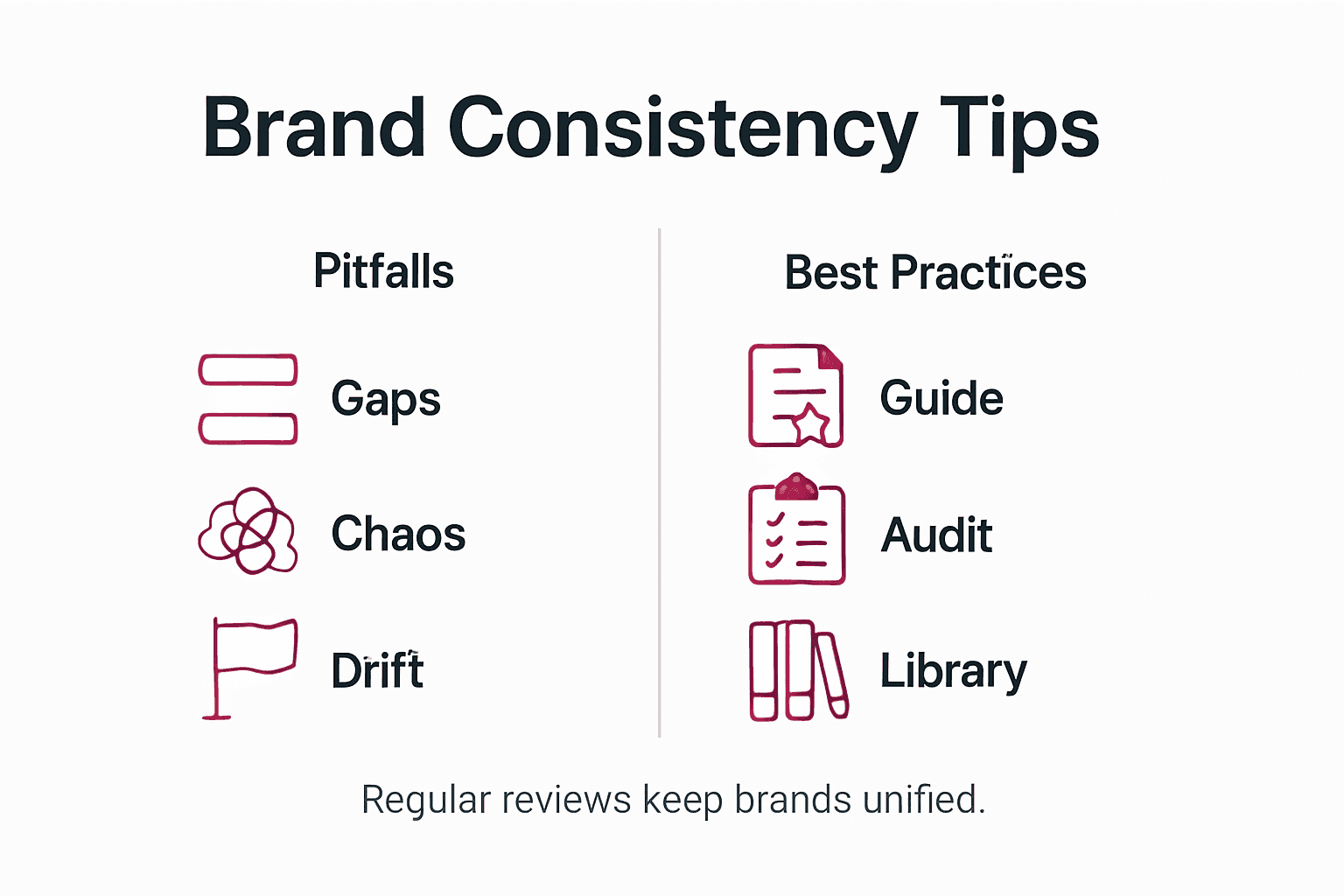
Below is a comparison of common pitfalls versus best practices in maintaining brand consistency:
Challenge | Pitfall Example | Best Practice Alternative |
Organisational Structure | Decentralised branding efforts | Centralised brand management |
Communication | Inconsistent messaging | Unified guidelines and audits |
Asset Management | Outdated brand materials | Digital asset libraries with version control |
Team Training | Lack of consistency awareness | Ongoing training and documentation |
Expert Tip: Develop a centralised digital asset library with clear version control and usage guidelines to ensure all team members access the most current brand materials.
Elevate Your eCommerce Brand with Consistent Digital Marketing
Building trust through brand consistency requires focused strategies that unify your visual identity, messaging, and customer experience across all channels. If your challenge is maintaining this crucial harmony to strengthen customer loyalty and boost recognition, our tailored digital marketing services are designed to solve exactly that. With over 25 years of proven success in scaling leading eCommerce brands, we specialise in SEO, AI-driven insights, Social Media, and PPC campaigns that ensure your brand is presented reliably and authentically at every touchpoint.

Take control of your brand’s future now by partnering with experts who understand the importance of brand consistency. Discover how our dedicated approach can transform your online presence by visiting iwanttobeseen.online. Explore strategic solutions crafted specifically for eCommerce businesses ready to build real customer trust and outshine competition. Act today to maintain your brand’s credibility and start growing with confidence.
Frequently Asked Questions
What is brand consistency in eCommerce?
Brand consistency in eCommerce refers to the uniform presentation of a brand across all digital touchpoints, ensuring that visual elements, messaging tone, and customer experience are harmonised.
Why is brand consistency important for online businesses?
Brand consistency is crucial for online businesses as it helps build trust, boosts brand recognition, and fosters customer loyalty, making customers feel confident in their purchasing decisions.
How can I maintain brand consistency across different channels?
You can maintain brand consistency by developing clear brand guidelines that include specifications for visual identity, tone of voice, and messaging. Regular audits and training for team members can also help ensure adherence to these standards.
What are the key elements of a consistent eCommerce brand?
The key elements of a consistent eCommerce brand include visual identity, brand messaging, value proposition, and customer interaction strategy, all of which should be coherent across various channels.
Recommended
Comments