.png)
Brand Awareness Explained: Driving Ecommerce Success


Getting your brand noticed online is tougher than ever for Ecommerce marketing managers across the United Kingdom and Ireland. Competition grows daily, and simple logo placement no longer guarantees results. Brand awareness is much more than visual recognition—it hinges on genuine recall, emotional connection, and trust, all essential for driving real sales. This article clarifies the deeper definition of brand awareness, uncovers common misconceptions, and spotlights proven strategies every Ecommerce business can apply for lasting impact.
Table of Contents
Key Takeaways
Point | Details |
Understanding Brand Awareness | It encompasses brand recognition and recall, requiring emotional engagement and storytelling for effective consumer connections. |
Types of Brand Awareness | Aided, unaided, and top-of-mind awareness are crucial for eCommerce, influencing consumer decisions significantly. |
Influence on Consumer Behaviour | Brand awareness shapes purchasing behaviour through cognitive and emotional pathways, necessitating trust and connection. |
Avoiding Common Pitfalls | Consistent messaging and authenticity across digital platforms are essential to maintain brand integrity and customer trust. |
Brand Awareness Defined and Common Myths
Brand awareness represents the foundational recognition and recall consumers have about a specific brand, encompassing far more than simple visual identification. Comprehensive understanding of brand perception reveals a nuanced landscape of consumer interactions that extend well beyond superficial recognition.
At its core, brand awareness involves two critical dimensions: brand recognition and brand recall. Recognition means consumers can identify a brand when prompted, while recall represents the ability to spontaneously remember a brand without external cues. This distinction matters significantly for e-commerce businesses seeking to establish meaningful connections with potential customers. Multidimensional brand equity models demonstrate that true brand awareness involves emotional engagement, trust, and persistent memory.
Common myths surrounding brand awareness often mislead marketers. Many incorrectly assume that simply being known equates to guaranteed sales or that visual logos represent the entirety of brand perception. In reality, brand awareness requires deep, contextual understanding that integrates storytelling, emotional resonance, and consistent messaging across multiple consumer touchpoints.
Pro tip: Develop a comprehensive brand narrative that goes beyond visual elements, focusing on creating genuine emotional connections with your target audience.
Types of Brand Awareness in Ecommerce
Ecommerce businesses navigate a complex landscape of brand awareness types, each playing a crucial role in consumer perception and engagement. Digital brand awareness metrics reveal nuanced approaches to understanding how consumers recognise and interact with online brands across different touchpoints.
The primary types of brand awareness in ecommerce include aided awareness, unaided awareness, and top-of-mind awareness. Aided awareness occurs when consumers can recognise a brand when prompted with visual or verbal cues, such as logos or product descriptions. Unaided awareness represents consumers’ ability to recall a brand spontaneously without external prompts, demonstrating a deeper level of brand connection. Consumer behaviour perspectives highlight how these awareness types critically influence purchasing decisions in virtual retail environments.
Top-of-mind awareness represents the pinnacle of brand recognition, where a specific brand becomes the first thought when consumers consider a product category. This advanced level of brand awareness is particularly challenging in ecommerce, where digital competition is intense and consumer attention spans are remarkably short. Successfully achieving this requires consistent messaging, memorable brand storytelling, and strategic digital marketing approaches that create lasting impressions.
Here’s a summary of core brand awareness types and their business impact:
Type of Awareness | Typical Consumer Reaction | Business Impact |
Aided Awareness | Brand recognised when prompted | Improves campaign targeting |
Unaided Awareness | Brand recalled without cues | Indicates strong market loyalty |
Top-of-Mind Awareness | Brand is first recalled in category | Drives preference and sales |
Pro tip: Develop a multi-channel digital strategy that reinforces your brand across different platforms, creating multiple touchpoints for consistent brand recall and recognition.
How Brand Awareness Influences Consumer Behaviour
Consumer behaviour in the digital marketplace is fundamentally shaped by brand awareness, creating complex psychological pathways that drive purchasing decisions. Consumer-brand engagement research demonstrates how brands transform from mere visual identities into powerful emotional triggers that guide consumer interactions and choices.
At its core, brand awareness operates through multiple cognitive and emotional mechanisms. Trust emerges as a critical component, with consumers more likely to purchase from brands they recognise and feel connected to. Sustainable consumption patterns reveal how brand awareness particularly influences younger generations, who seek deeper connections beyond transactional relationships. For Generation Z consumers, a brand’s perceived values and digital experience play pivotal roles in determining their purchasing intentions.

The psychological journey from awareness to purchase involves several intricate stages. Initial brand recognition triggers curiosity, which develops into familiarity, then trust, and ultimately drives consumer loyalty. This progression is particularly nuanced in ecommerce, where visual and experiential cues are limited compared to physical retail environments. Brands must strategically craft digital experiences that compensate for these limitations, creating immersive narratives that resonate emotionally and rationally with potential customers.
Pro tip: Invest in creating multi-sensory digital brand experiences that communicate your brand’s unique story and values across different online touchpoints.
Measuring Brand Awareness for Online Stores
Measuring brand awareness for online stores requires a sophisticated approach that goes beyond traditional metrics. Consumer behaviour research reveals multiple sophisticated techniques for tracking how customers perceive and interact with digital brands across various online platforms.
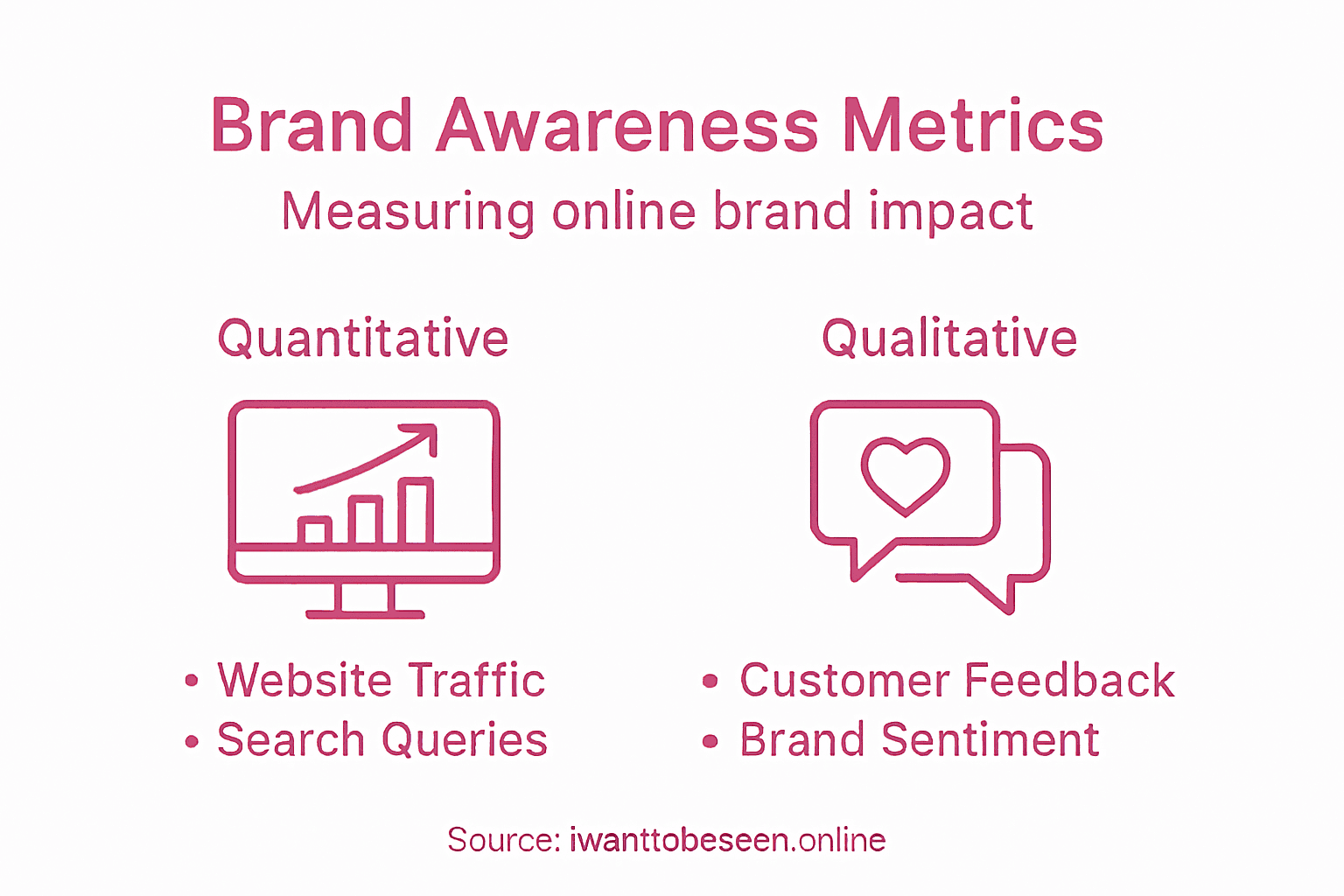
The primary measurement strategies include quantitative and qualitative methods. Quantitative approaches involve tracking metrics such as website traffic, social media engagement, search volume, and direct brand mentions. Aided and unaided awareness surveys provide critical insights into brand recognition, while digital tools like Google Analytics and social listening platforms offer granular data about brand perception. Brand recognition databases now provide comprehensive frameworks for systematically evaluating brand familiarity across different consumer segments.
Moreover, modern brand awareness measurement integrates advanced digital indicators beyond traditional metrics. These include sentiment analysis, user-generated content interactions, customer review patterns, and conversion rates. Online stores must consider both numerical data and emotional engagement, understanding that brand awareness is a nuanced construct involving rational and emotional consumer responses. By combining multiple measurement techniques, ecommerce businesses can develop a holistic understanding of their brand’s digital footprint and consumer perception.
Below is a comparison of quantitative and qualitative methods for measuring brand awareness:
Method Type | Example Metric | Insight Provided | Best Use Case |
Quantitative | Website visits | Tracks reach and engagement | Monitoring campaign growth |
Qualitative | Customer interviews | Reveals emotional connection | Understanding loyalty drivers |
Pro tip: Implement a multi-dimensional measurement strategy that combines quantitative metrics with qualitative insights to gain a comprehensive view of your brand’s digital performance.
Effective Strategies for Building Recognition
Building brand recognition requires a strategic and multifaceted approach that goes beyond traditional marketing techniques. Building brand trust demands consistent authenticity and meaningful engagement with target audiences across digital platforms.
Successful recognition strategies encompass several key dimensions. Firstly, brands must develop a compelling and consistent narrative that resonates with their target demographic. This involves crafting unique visual identities, developing distinctive communication styles, and creating content that genuinely reflects brand values. User-generated content and social proof play critical roles in establishing credibility, allowing potential customers to see real experiences and testimonials that validate brand promises.
Digital channels offer unprecedented opportunities for building brand recognition. Social media platforms, content marketing, influencer collaborations, and targeted advertising enable brands to create multiple touchpoints with potential customers. The most effective strategies focus on creating meaningful interactions rather than merely increasing visibility. This means developing content that provides genuine value, demonstrating expertise, and showing authentic engagement with customer needs and challenges.
Pro tip: Create a consistent brand storytelling strategy that combines visual branding, authentic messaging, and genuine customer interactions across all digital platforms.
Common Pitfalls and How to Avoid Them
Brand awareness strategies are fraught with potential missteps that can undermine even the most well-intentioned marketing efforts. Internet meme marketing pitfalls demonstrate the delicate balance between creative engagement and potential brand damage.
One significant pitfall involves inconsistent brand messaging across different digital platforms. Many businesses accidentally dilute their brand identity by presenting contradictory narratives or tones across social media, websites, and advertising channels. This inconsistency confuses potential customers and erodes trust. Additionally, consumer engagement measurement challenges reveal that brands often struggle to accurately understand and interpret customer interactions, leading to misguided marketing strategies.
Another critical mistake is over-reliance on trendy content without considering brand authenticity. While internet memes and viral content can generate quick engagement, they can also backfire spectacularly if they do not align with the brand’s core values and target audience’s expectations. Successful brands understand that genuine connection trumps momentary popularity, requiring a nuanced approach that balances creativity with consistent brand storytelling.
Pro tip: Develop a comprehensive brand guidelines document that ensures consistent messaging and tone across all digital platforms, preventing fragmentation of your brand identity.
Elevate Your Ecommerce Brand Awareness With Expert Marketing Solutions
Building strong brand awareness is essential for ecommerce success yet many brands struggle with inconsistent messaging, low recall, and weak emotional connections. This article highlights the challenges of creating top-of-mind awareness and crafting authentic digital experiences that resonate deeply with consumers. Your brand deserves a strategy that not only improves recognition but also drives meaningful engagement through proven digital marketing techniques like SEO, AI, social media, and PPC.
At iwanttobeseen.online, we combine over 25 years of experience scaling successful ecommerce brands with tailored marketing services designed to increase aided and unaided awareness. We help you develop consistent narratives and immersive campaigns that meet your audience where they are.
Are you ready to transform fleeting consumer attention into lasting loyalty?
Unlock your brand’s full potential today

Discover personalised digital strategies with iwanttobeseen.online that build trust, reinforce your identity, and maximise your online presence. Visit us now and start turning brand awareness into genuine ecommerce growth.
Frequently Asked Questions
What is brand awareness in ecommerce?
Brand awareness in ecommerce refers to the recognition and recall that consumers have of a brand, encompassing both brand recognition (identifying a brand when prompted) and brand recall (spontaneously thinking of a brand without cues).
Why is brand awareness important for online businesses?
Brand awareness is vital for online businesses as it builds trust, enhances consumer connection, and influences purchasing decisions. High brand awareness can lead to increased customer loyalty and higher sales conversions.
What are the different types of brand awareness?
The main types of brand awareness are aided awareness, where consumers recognize a brand when prompted, unaided awareness, where consumers recall a brand spontaneously, and top-of-mind awareness, where a brand is the first thought when considering a product category.
How can I measure brand awareness for my online store?
Brand awareness can be measured using a mix of quantitative methods, such as website traffic and social media engagement metrics, as well as qualitative methods like customer interviews and surveys to gather insights into emotional connections and brand perception.
Recommended
Comments