.png)
Black Hat SEO – How It Harms eCommerce Brands
- Darren Burns
- Jan 10
- 8 min read


Most british eCommerce managers underestimate the true threat Black Hat SEO poses to their online business. With over 43% of penalised websites never fully recovering search visibility, the risk for UK and Ireland retailers is both real and devastating. Understanding these manipulative tactics is crucial, not just for compliance but for safeguarding your brand’s future. This article helps demystify Black Hat SEO, equipping you to spot dangers early and protect your store’s reputation.
Table of Contents
Key Takeaways
Point | Details |
Understanding Black Hat SEO | Black Hat SEO employs unethical techniques that violate search engine guidelines, risking severe penalties and long-term damage to a website’s credibility. |
Consequences of Manipulative Tactics | Engaging in Black Hat practices can lead to substantial financial losses and permanent removal from search engine results, devastating an eCommerce brand’s visibility. |
Importance of Ethical Practices | Committing to White Hat SEO strategies ensures sustainable growth, fosters user trust, and aligns with long-term digital marketing objectives. |
Regular SEO Audits | Conducting comprehensive SEO audits is crucial to identify and rectify any potentially harmful optimisation tactics before they escalate into significant issues. |
What Is Black Hat SEO? Core Definition
Black Hat SEO represents a range of unethical and manipulative search engine optimisation techniques designed to artificially boost website rankings through tactics that directly violate established search engine guidelines. These practices prioritise short-term gains over long-term digital marketing sustainability, often risking severe penalties from search platforms like Google. While understanding white hat SEO principles helps businesses grow ethically, Black Hat techniques represent the dangerous opposite end of the digital marketing spectrum.
The core characteristics of Black Hat SEO include deliberate attempts to deceive search engine algorithms by exploiting technical loopholes and manipulating ranking factors. Common strategies involve keyword stuffing, creating hidden text, generating low-quality duplicate content, purchasing backlinks, and using automated content generation tools to produce mass volumes of irrelevant webpages. These techniques might temporarily improve search visibility, but they fundamentally undermine the integrity of organic search results and risk permanent damage to a website’s reputation.
For eCommerce brands specifically, Black Hat SEO poses catastrophic risks beyond simple ranking penalties. Search engines like Google can completely delist websites discovered using these unethical practices, effectively destroying online visibility overnight. This means potential revenue loss, damaged brand credibility, and potentially years of digital marketing efforts rendered useless. Professional eCommerce platforms must understand these risks and commit to transparent, guidelines-compliant search engine optimisation strategies.
Pro tip: Conduct regular SEO audits using reputable tools to identify and immediately remove any potentially manipulative optimisation tactics that could compromise your website’s long-term digital marketing performance.
Here is a comparison of Black Hat and White Hat SEO approaches for eCommerce brands:
Aspect | Black Hat SEO Approach | White Hat SEO Approach |
Tactics Used | Manipulative, guideline-violating | Ethical, guideline-compliant |
Long-Term Outcome | Risk of penalties and delisting | Sustainable growth |
User Experience | Deceptive, often poor | User-focused and valuable |
Brand Reputation | Risk of severe damage | Builds digital trust |
Financial Impact | Potential for catastrophic losses | Increased customer retention |
Common Black Hat SEO Tactics Explained
Black Hat SEO encompasses a range of deceptive techniques designed to manipulate search engine rankings through unethical means. Keyword stuffing and cloaking represent two of the most prevalent strategies that directly undermine search engine guidelines. Keyword stuffing involves excessively cramming web content with repetitive keywords, creating text that reads unnaturally and provides little genuine value to readers. This technique aims to artificially inflate keyword density, tricking search algorithms into believing the content is more relevant than it actually is.
Another critical Black Hat SEO tactic involves creating hidden or invisible text, where website owners deliberately conceal text by matching its colour to the background or positioning it off-screen. These techniques attempt to include additional keywords or links without compromising the visible page design. Doorway pages represent another manipulative approach, where multiple low-quality pages are created to target specific keyword variations, ultimately redirecting users to a single destination page. Such practices fundamentally undermine the user experience and violate search engine transparency principles.

Purchasing backlinks and generating automated, low-quality content represent additional dangerous Black Hat SEO strategies. Websites might engage link farms or purchase mass quantities of irrelevant backlinks to artificially boost domain authority. Automated content generation tools can quickly produce thousands of meaningless articles designed solely to manipulate search rankings. These approaches not only risk immediate penalties but can result in permanent search engine banishment, effectively destroying a brand’s digital marketing infrastructure.
Pro tip: Implement regular comprehensive SEO audits using reputable tools to proactively identify and eliminate any potentially manipulative optimisation tactics before they compromise your website’s long-term search engine reputation.
How Black Hat Methods Impact Rankings
Black Hat SEO tactics create a dangerous illusion of rapid search ranking improvements that ultimately devastate a website’s long-term digital presence. Search engine algorithms quickly detect manipulation and respond with increasingly sophisticated penalty mechanisms designed to protect search result integrity. These penalties can range from gradual ranking reductions to complete removal from search index, effectively rendering an eCommerce website invisible to potential customers.
The ranking impact extends far beyond immediate search visibility. When search engines identify Black Hat techniques, they implement punitive measures that can permanently damage a website’s domain authority and credibility. Algorithmic penalties might reduce keyword rankings, diminish organic traffic, and create substantial barriers to future search performance recovery. eCommerce brands using these tactics risk not just temporary setbacks, but potentially years of reputational damage that can critically undermine their digital marketing investments.
Moreover, the consequences of Black Hat SEO manipulation are particularly severe for online retailers. Search engines like Google have developed intricate machine learning algorithms capable of detecting even subtle attempts to game the system. These advanced detection mechanisms mean that short-term ranking gains are invariably outweighed by long-term strategic losses. The digital marketplace demands authenticity, and websites employing deceptive optimisation strategies will find themselves progressively marginalised, with reduced visibility, diminished user trust, and potentially permanent exclusion from meaningful search results.
Pro tip: Invest in regular, comprehensive SEO audits that systematically evaluate your website’s optimisation strategies, ensuring complete alignment with current search engine guidelines and ethical marketing practices.
Google Penalties and Legal Ramifications
Search engines have developed sophisticated mechanisms to combat manipulative SEO practices, with Google penalties representing serious consequences for websites engaging in Black Hat tactics. These penalties can range from subtle ranking reductions to complete removal from search results, effectively destroying an eCommerce brand’s digital visibility. Manual reviews and algorithmic detection systems work continuously to identify and penalise websites attempting to circumvent established search engine guidelines, creating substantial risks for businesses that pursue unethical optimisation strategies.
The legal ramifications of Black Hat SEO extend beyond search engine penalties, potentially exposing eCommerce businesses to significant commercial and reputational damage. Deliberate attempts to manipulate search rankings can violate consumer protection regulations, potentially leading to legal challenges from competitors or regulatory bodies. Intellectual property laws may also come into play when Black Hat techniques involve copying content, creating fraudulent websites, or misrepresenting business information. These actions can trigger civil litigation, substantial financial penalties, and permanent damage to a company’s market credibility.
For eCommerce brands, the cumulative impact of Google penalties can be catastrophic. Algorithmic penalties might reduce organic traffic by 60-90%, with recovery potentially taking months or even years. The financial implications are profound: reduced search visibility directly translates to diminished sales opportunities, customer trust erosion, and potential long-term brand reputation destruction. Professional digital marketing requires a commitment to ethical practices, understanding that short-term ranking manipulations invariably result in more significant long-term strategic losses.
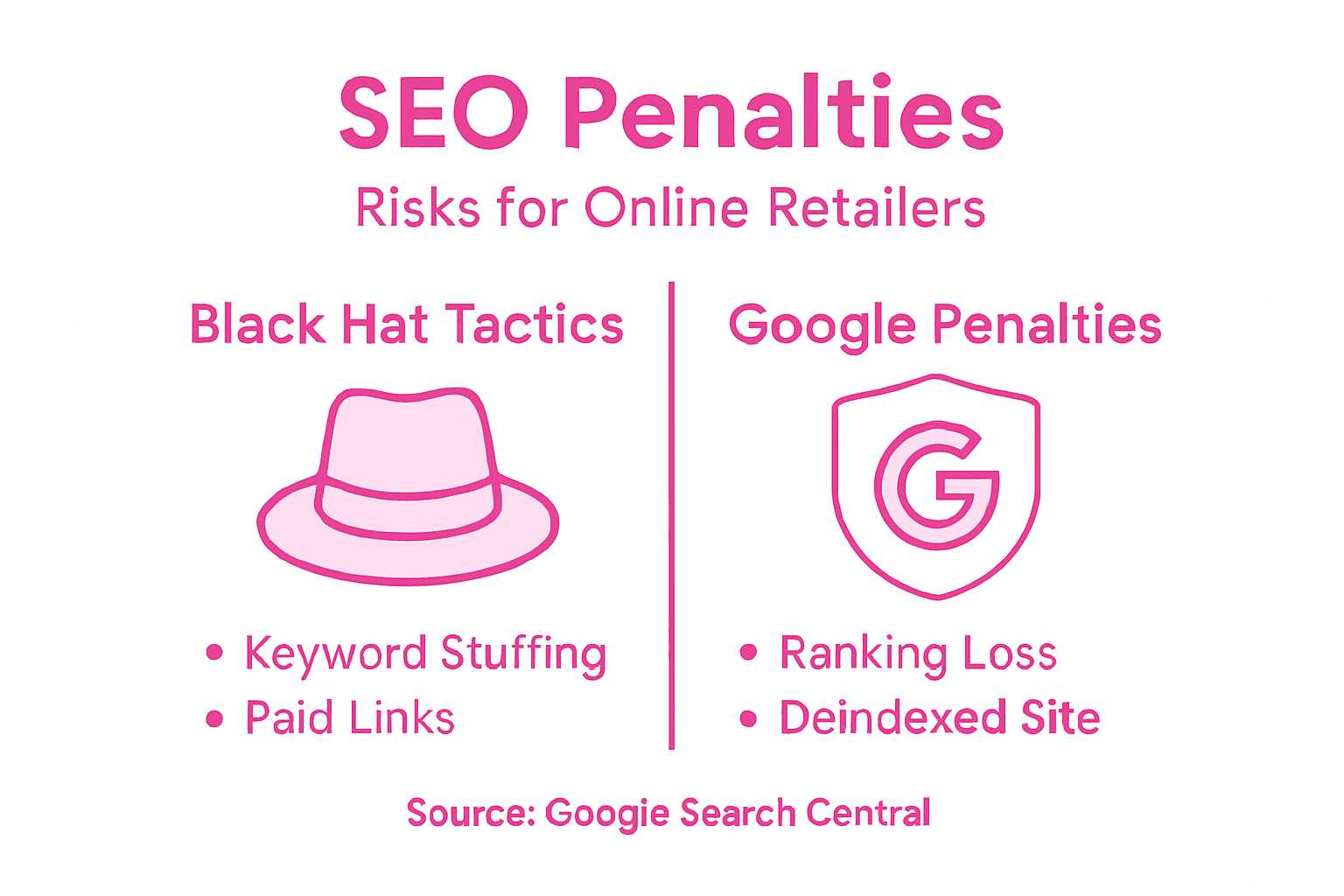
Pro tip: Develop a comprehensive digital compliance strategy that prioritises transparent, ethical SEO practices and includes regular independent audits to proactively identify and mitigate potential guideline violations.
Below is a summary of common Google penalties and their business implications:
Penalty Type | Potential Cause | Business Impact |
Algorithmic Demotion | Keyword stuffing, link schemes | Reduced search visibility |
Manual Action | Intentional guideline violations | Loss of traffic and sales |
Complete Delisting | Repeated or severe manipulation | Brand disappears from search |
Legal Action | Copyright or fraud violations | Lawsuits, fines, reputation loss |
Protecting Your Brand from SEO Penalties
Shielding an eCommerce brand from SEO penalties requires a strategic, proactive approach centred on understanding and consistently implementing ethical digital marketing practices. Comprehensive SEO audit strategies are essential for identifying and mitigating potential risks before they escalate into significant ranking challenges. These audits involve systematically reviewing website content, backlink profiles, technical infrastructure, and optimisation techniques to ensure complete alignment with current search engine guidelines.
Successful brand protection demands a multifaceted approach that goes beyond simple technical compliance. eCommerce websites must develop a robust content strategy emphasising original, high-quality material that provides genuine value to users. This means creating comprehensive product descriptions, informative blog posts, and engaging multimedia content that naturally attracts organic traffic. Building natural, authoritative backlinks through genuine industry relationships and producing genuinely useful resources can significantly reduce the risk of algorithmic penalties and enhance overall digital credibility.
Proactive monitoring represents another critical component of SEO penalty prevention. eCommerce brands should implement regular tracking mechanisms that immediately flag potential guideline violations, unusual traffic patterns, or suspicious backlink acquisitions. Maintaining detailed documentation of all SEO activities, keeping meticulous records of content changes, and developing rapid response protocols for potential penalty notifications can help minimise potential damage. Professional digital marketing teams must cultivate a culture of transparency, continuously educating themselves about evolving search engine algorithms and adapting strategies accordingly.
Pro tip: Establish a quarterly SEO compliance review process that systematically evaluates your website’s optimisation strategies, identifying and immediately addressing potential risk factors before they compromise your digital marketing performance.
Safeguard Your eCommerce Brand from Black Hat SEO Risks
Understanding the severe consequences of Black Hat SEO tactics is crucial for any eCommerce business aiming for sustainable growth and a strong online reputation. The dangers such as penalties, delisting, and financial losses can devastate your brand’s visibility and credibility. Protecting your website with ethical optimisation strategies ensures long-term success and builds genuine digital trust with your customers.

Take control now by partnering with experts who bring over 25 years of proven experience in scaling successful eCommerce brands. At iwanttobeseen.online, we specialise in transparent, guideline-compliant SEO, AI-driven insights, Social Media, and PPC services tailored specifically for eCommerce websites. Don’t risk your brand’s future with manipulative tactics. Visit our digital marketing solutions today and discover how we can help you grow ethically, increase your organic traffic, and protect your business from costly search engine penalties.
Frequently Asked Questions
What is Black Hat SEO and how does it affect eCommerce brands?
Black Hat SEO involves unethical tactics that violate search engine guidelines to manipulate website rankings. For eCommerce brands, these practices can lead to severe penalties, including being delisted from search results, which can result in significant revenue loss and damage to brand credibility.
What are some common Black Hat SEO tactics used by websites?
Common Black Hat SEO tactics include keyword stuffing, hidden text, doorway pages, purchasing backlinks, and generating low-quality content automatically. These techniques deceive search engines to gain short-term ranking advantages, but they can harm the site’s reputation long-term.
How can Black Hat SEO impact search rankings?
Engaging in Black Hat SEO can lead to algorithmic penalties that reduce rankings, diminish organic traffic, and even result in complete removal from search indexes. Such actions create barriers to recovery, potentially damaging a website’s domain authority and credibility permanently.
What strategies can eCommerce brands implement to avoid SEO penalties?
To avoid SEO penalties, eCommerce brands should conduct regular SEO audits, focus on creating high-quality and original content, and ensure the use of ethical optimisation practices. Engaging in proactive monitoring and maintaining transparency can help mitigate the risk of guideline violations.
Recommended
Comments