.png)
Affiliate Marketing Explained: Boosting E-Commerce Profits


More than 80 percent of British ecommerce brands now view affiliate marketing as a reliable way to grow online revenue. With digital competition rising in the United Kingdom and Ireland, finding trusted partners to promote your products is crucial. This article reveals how affiliate marketing works for ecommerce, outlines common partnership types, and offers practical tips to help business owners overcome costly mistakes and legal risks.
Table of Contents
Key Takeaways
Point | Details |
Affiliate Marketing as a Revenue Channel | Affiliate marketing provides a performance-based strategy where businesses pay partners for driving sales, making it a cost-effective approach to increase online revenue. |
Partnership Models | There are three main affiliate marketing types: unattached, related, and involved, each with varying levels of connection and conversion potential. |
Compliance is Crucial | Adhering to legal regulations, especially in the UK and Ireland, is vital to avoid penalties and ensure transparent marketing practices. |
Monitoring and Auditing | Regular audits of affiliate programmes are essential to identify risks, track performance, and maintain compliance with regulations. |
Defining Affiliate Marketing for E-Commerce
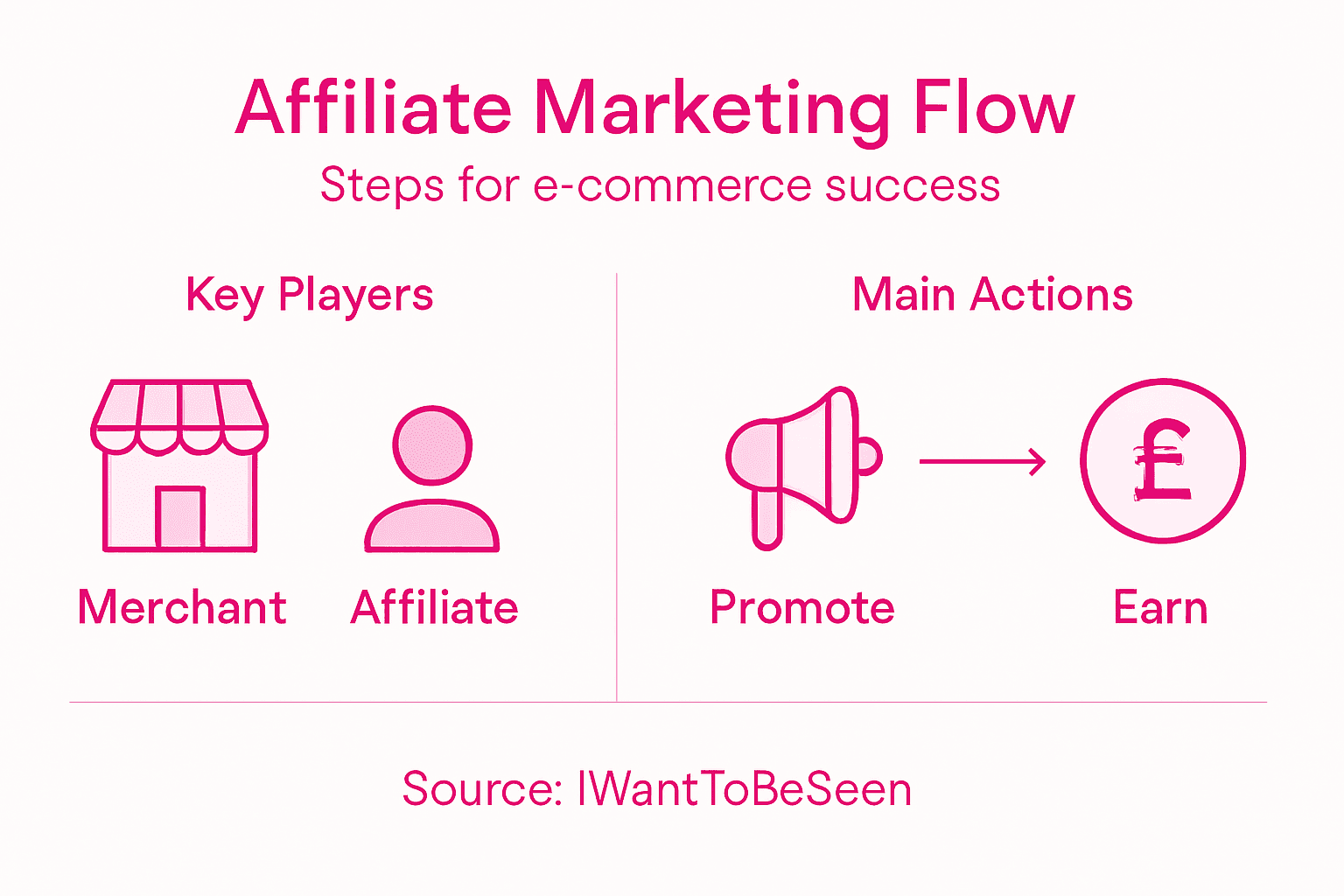
Affiliate marketing represents a strategic performance-based digital marketing approach where businesses collaborate with external partners to generate sales and expand their online revenue streams. At its core, this marketing model enables online merchants to leverage third-party promoters who earn commissions by driving traffic and sales to their products.
In the e-commerce landscape, affiliate marketing functions as a powerful sales channel where independent marketers (affiliates) promote a company’s products through unique tracking links. These affiliates might include bloggers, social media influencers, content creators, and niche website owners who earn a percentage of each sale they generate. The model provides businesses with a low-risk, high-reward marketing strategy that only requires payment upon successful conversion.
The fundamental mechanics of affiliate marketing involve several key components. Affiliates receive personalised tracking codes that enable merchants to monitor their referral performance accurately. When a potential customer clicks an affiliate’s unique link and completes a purchase, the affiliate earns a predetermined commission rate. These rates typically range between 5% to 30% depending on the product category and industry standards, making it an attractive proposition for digital entrepreneurs seeking alternative income streams.
Pro tip: Start by identifying niche affiliates whose audience closely matches your target market to maximise conversion potential and ensure more authentic product recommendations.
Types of Affiliate Partnerships Available
Affiliate marketing encompasses several distinct partnership models, each offering unique advantages for e-commerce businesses. Affiliate marketing partnerships can be broadly categorised into three primary types: unattached, related, and involved affiliate marketing, each representing a different level of connection between the affiliate and the product being promoted.
In unattached affiliate marketing, the affiliate has no direct connection or expertise in the product’s niche. These affiliates typically leverage paid advertising channels like Google Ads or social media platforms to drive traffic, focusing purely on generating sales through broad marketing techniques. This model requires minimal personal investment from the affiliate and allows for quick scaling across multiple product categories.
The related affiliate marketing approach involves promoters who have some credibility or audience connection within the product’s industry, even if they don’t personally use the product. These affiliates might be bloggers, content creators, or industry commentators who can leverage their existing audience’s trust. Their marketing approach feels more authentic, as they typically promote products that align with their content’s general theme, increasing the likelihood of successful conversions.
Involved affiliate marketing represents the most personal and credible partnership type. Here, affiliates promote products they genuinely use and believe in, often sharing detailed personal experiences and comprehensive reviews. This approach typically generates the highest conversion rates, as the affiliate’s personal recommendation carries significant weight with their audience. Influencers and niche content creators excel in this model, using their established reputation to drive meaningful engagement.
Here is a comparison of the main affiliate partnership types and their typical characteristics:
Type of Partnership | Affiliate Connection Level | Promotional Method | Conversion Potential |
Unattached Affiliate | No niche expertise | Paid advertising, wide reach | Lowest |
Related Affiliate | Industry credibility | Content aligned with niche | Moderate |
Involved Affiliate | Personal product use | Authentic reviews, tutorials | Highest |
Pro tip: Prioritise building relationships with affiliates who demonstrate genuine enthusiasm and expertise in your product’s specific market segment.
How Affiliate Marketing Works in Practice
Affiliate marketing operates through a structured process that transforms digital content creators into revenue-generating partners for e-commerce businesses. Unique tracking links form the core mechanism by which merchants monitor and reward affiliate performance, enabling precise attribution of sales and conversions.

The practical workflow begins with affiliates selecting a specific niche and joining relevant affiliate programmes. These programmes provide affiliates with distinctive tracking URLs that can be embedded within their content, such as blog posts, social media updates, product reviews, or email newsletters. When a potential customer clicks the personalised link and completes a purchase, the affiliate’s unique identifier ensures they receive the appropriate commission, typically ranging from 5% to 30% of the total sale value.
Successful affiliate marketers develop comprehensive strategies that go beyond simply sharing links. They create valuable, informative content that naturally integrates product recommendations, building trust with their audience. This might involve detailed product comparisons, in-depth reviews, tutorial videos, or contextually relevant mentions that demonstrate genuine utility and understanding of the product’s benefits. The most effective affiliates understand their audience’s needs and align their promotional efforts with those specific interests.
Tracking and reporting systems play a crucial role in this ecosystem, providing transparency for both merchants and affiliates. Advanced affiliate networks offer real-time dashboards that display click-through rates, conversion metrics, and earned commissions, allowing participants to continuously refine their marketing approaches.
Pro tip: Focus on creating high-quality, value-driven content that genuinely helps your audience, rather than treating affiliate links as mere transactional tools.
Legal Regulations for UK and Irish Businesses
Affiliate marketing in the United Kingdom and Ireland operates within a complex regulatory framework designed to protect consumers and ensure transparent digital marketing practices. Consumer protection laws mandate strict guidelines for affiliate marketers, requiring comprehensive disclosure of commercial relationships and preventing potentially misleading advertising strategies.
In the UK, the Advertising Standards Authority’s CAP Code and the Consumer Protection from Unfair Trading Regulations establish critical compliance requirements for affiliate marketing. Businesses must ensure that all affiliate content clearly indicates the commercial relationship, with explicit declarations about commission-based recommendations. This transparency extends to presenting honest, verifiable product information and avoiding exaggerated claims that might manipulate consumer decision-making.
Irish regulatory frameworks similarly emphasise consumer protection, with the Competition and Consumer Protection Commission closely monitoring digital marketing practices. Data privacy becomes a crucial consideration, particularly under General Data Protection Regulation (GDPR) guidelines. Affiliate marketers must obtain explicit consent for data collection, provide clear information about how consumer data will be used, and maintain robust mechanisms for data protection and individual privacy rights.
Penalties for non-compliance can be substantial, ranging from significant financial fines to potential legal actions that could damage business reputation. E-commerce businesses must implement comprehensive compliance strategies, including regular audits of affiliate marketing materials, transparent tracking of marketing communications, and ongoing education for affiliate partners about regulatory requirements.
Pro tip: Develop a comprehensive compliance checklist for your affiliate marketing programme, including mandatory disclosure templates and regular training sessions on legal requirements.
Risks, Costs and Common Mistakes to Avoid
Affiliate marketing presents numerous potential pitfalls that can significantly impact e-commerce businesses’ financial performance and brand reputation. Affiliate marketing risks encompass a broad spectrum of challenges that require strategic management and proactive monitoring.
Financial implications represent a critical consideration for businesses entering affiliate partnerships. Technology infrastructure investments for tracking sales and managing payouts can be substantial, with costs extending beyond simple commission payments. Potential expenses include sophisticated tracking software, affiliate management platforms, compliance monitoring systems, and resources dedicated to vetting and managing affiliate relationships. Poorly managed programmes can result in paying commissions for fraudulent or low-quality traffic, dramatically reducing marketing efficiency and return on investment.
Compliance and reputational risks emerge as particularly significant concerns in affiliate marketing strategies. Unscrupulous affiliates might engage in misleading promotional tactics, make exaggerated product claims, or utilise deceptive advertising techniques that could trigger regulatory investigations. These practices not only risk substantial financial penalties but can also cause long-term damage to brand credibility. E-commerce businesses must implement rigorous screening processes, establish clear contractual guidelines, and maintain continuous monitoring of affiliate marketing activities.
Common mistakes frequently undermine affiliate marketing success, including inadequate partner selection, unclear commission structures, and insufficient performance tracking. Businesses often struggle with defining precise agreement terms, creating ambiguous compensation models, and failing to establish robust mechanisms for verifying sales attribution. Developing comprehensive affiliate agreements, implementing transparent tracking technologies, and maintaining open communication channels can mitigate these fundamental challenges.
The following table summarises key risks and recommended mitigation strategies for e-commerce affiliate marketing:
Risk Type | Business Challenge | Mitigation Strategy |
Financial | Paying for low-quality traffic | Implement strict tracking and vetting |
Compliance | Violating advertising regulations | Regular legal training, clear policies |
Reputational | Brand damage from rogue affiliates | Monitor content, enforce contracts |
Pro tip: Conduct quarterly comprehensive audits of your affiliate programme, reviewing individual affiliate performance, compliance adherence, and overall programme effectiveness to rapidly identify and address potential risks.
Unlock Your E-Commerce Brand’s Full Potential with Expert Affiliate Marketing Support
Affiliate marketing offers a promising way to boost profits by partnering with affiliates who can drive quality traffic and authentic sales. However, challenges like managing compliance risks, ensuring accurate tracking, and building genuine affiliate relationships can overwhelm even experienced e-commerce businesses. If you want to avoid common pitfalls such as low-quality leads, unclear commission models, and regulatory issues, you need tailored strategies that align perfectly with your brand goals.
At IWantToBeSeen, we specialise in transforming your digital marketing efforts with over 25 years of proven experience scaling successful e-commerce brands. Our expertise in SEO, AI, social media, and PPC allows us to design affiliate marketing programmes that prioritise authentic partnerships and regulatory compliance. We help you implement robust tracking systems and create value-driven content strategies that convert visitors into loyal customers.
Explore our solutions and learn how to build a compliant and high-converting affiliate network.

Stop risking wasted spend and brand damage. Partner with experts who understand the nuances of affiliate marketing for e-commerce. Visit IWantToBeSeen now to start maximising your affiliate channel and secure your long-term growth.
Frequently Asked Questions
What is affiliate marketing?
Affiliate marketing is a performance-based digital marketing strategy where businesses partner with external promoters (affiliates) to drive sales and revenue. Affiliates earn commissions for referring customers who make purchases through unique tracking links.
How do commissions work in affiliate marketing?
In affiliate marketing, affiliates earn commissions ranging typically from 5% to 30% of each sale they generate through their unique tracking links. The exact commission rate depends on the product category and the specific agreements made between the merchant and the affiliate.
What types of affiliate partnerships exist?
Three main types of affiliate partnerships are: unattached, related, and involved. Unattached affiliates have no specific connection to the products; related affiliates possess some credibility in the industry; and involved affiliates promote products they personally use, often resulting in the highest conversion rates.
What are the key risks associated with affiliate marketing?
Key risks include financial implications from poor-quality traffic, compliance issues with advertising regulations, and reputational damage from rogue affiliates. Businesses should implement strict tracking, regular legal training, and monitoring practices to mitigate these risks.
Recommended
Comments