.png)
What Is Social Selling? Complete Expert Guide


Over 60 percent of british businesses now rely on social media for connecting with customers and building lasting relationships. The rise of digital platforms has completely changed how companies interact with their audiences, making social selling a vital part of growth and success. This approach offers clear ways to develop trust and credibility within the digital marketplace, giving readers practical insight into strategies that shape modern sales.
Table of Contents
Key Takeaways
Point | Details |
Understanding Social Selling | Social selling focuses on building meaningful relationships through social media, shifting from traditional sales tactics to personalised engagement. |
Key Platforms | Major platforms like LinkedIn, Twitter, and Instagram are essential for implementing effective social selling strategies. |
Benefits for Retailers | Online retailers can gain targeted insights, enhance customer interactions, and improve conversion rates through strategic social selling. |
Common Mistakes | Avoid over-reliance on digital channels, lack of personalisation, and neglecting performance metrics to ensure successful social selling efforts. |
Defining Social Selling And Core Concepts
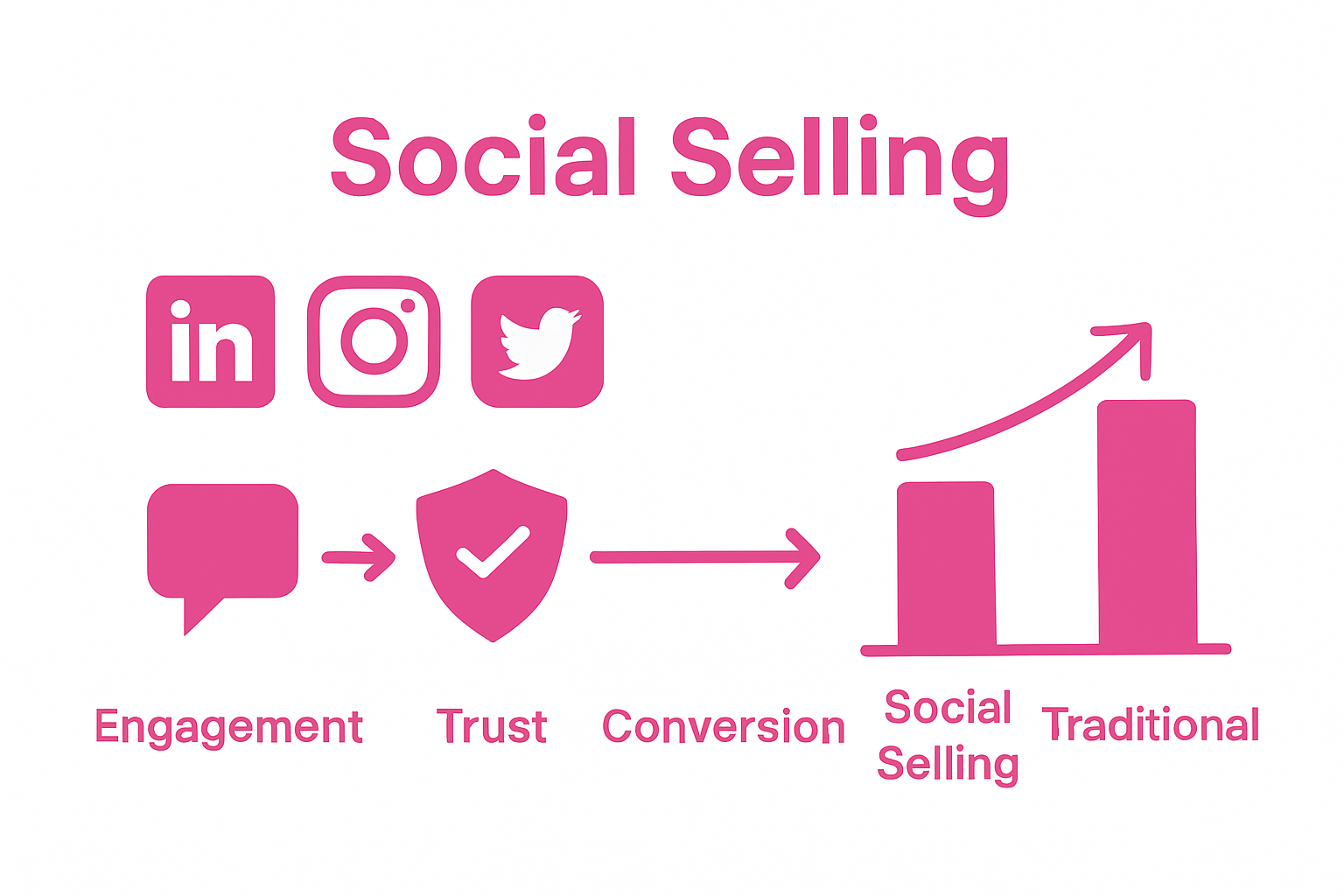
Social selling represents a strategic approach to sales that leverages social media platforms and digital networks to build meaningful business relationships. According to ScienceDirect, social selling involves leveraging digital channels to connect with potential customers, understand their needs, and engage them through personalised interactions.
At its core, social selling transforms traditional sales methodologies by integrating digital marketing principles into personal selling techniques. Digital Marketing Institute highlights that this approach goes beyond conventional sales strategies by focusing on relationship-building through social platforms. Key characteristics include:
Utilising professional social networks like LinkedIn
Sharing valuable, relevant content
Engaging directly with potential clients
Demonstrating expertise and credibility
Developing trust through consistent digital interactions
The fundamental philosophy of social selling centres on understanding customer contexts, preferences, and pain points through digital interactions. Instead of aggressive selling tactics, it prioritises genuine connection, knowledge sharing, and providing tailored solutions that address specific customer challenges. By adopting this approach, sales professionals can create more meaningful, long-term relationships that extend beyond transactional exchanges.
For those looking to understand the broader context of digital sales strategies, our guide on the role of social media in ecommerce provides additional insights into how digital platforms are transforming business interactions.
Key Platforms And Social Selling Methods
Social media platforms provide the critical infrastructure for modern social selling strategies. According to ScienceDirect, multiple digital channels are essential for effectively implementing social selling techniques, with each platform offering unique opportunities for business engagement.
The primary platforms for social selling include:
LinkedIn: The premier professional networking platform
Twitter: Ideal for real-time engagement and industry insights
Facebook: Offers extensive targeting and community-building capabilities
Instagram: Perfect for visual storytelling and brand personality
YouTube: Enables in-depth content and demonstration videos
As Digital Marketing Institute highlights, successful social selling requires strategic methods beyond mere platform presence. These methods include sharing relevant content, directly engaging with potential buyers, and consistently building a professional brand narrative.
To maximise social selling effectiveness, businesses must develop a nuanced approach that combines platform-specific strategies with personalised engagement techniques. This involves understanding each platform’s unique audience, creating tailored content, and maintaining an authentic digital presence. Professionals can leverage social media tools for ecommerce to streamline their social selling processes and track engagement metrics effectively.
How Social Selling Works For eCommerce
Social selling fundamentally transforms eCommerce by integrating social interactions directly into the purchasing journey. According to arXiv, instant messaging platforms have revolutionised how consumers discover, recommend, and purchase products within their social networks, creating a seamless connection between social interaction and commercial transactions.
The mechanics of social selling in eCommerce typically involve several key strategies:
Personal Recommendation: Leveraging existing social connections
Trust-Based Marketing: Using authentic, peer-to-peer product endorsements
Direct Engagement: Enabling real-time conversations about products
Content-Driven Sales: Sharing valuable, informative content about offerings
Targeted Social Advertising: Utilising platform-specific targeting capabilities
arXiv research highlights an innovative model where individual users become active sellers, promoting products directly to their social connections. This approach transforms traditional sales models by converting social relationships into potential economic opportunities. The process allows businesses to tap into existing trust networks, where recommendations from friends or respected connections carry significantly more weight than traditional advertising.

Understanding these dynamics is crucial for eCommerce businesses seeking to implement effective social selling strategies. By exploring our comprehensive guide to social commerce, businesses can gain deeper insights into leveraging social platforms for enhanced sales performance.
Major Benefits For Online Retailers
Social selling offers transformative advantages for online retailers seeking to modernise their sales approach. According to ScienceDirect, the strategic use of digital channels enables enhanced customer engagement and significantly improves relationship-building capabilities for eCommerce businesses.
The primary benefits of social selling for online retailers include:
Targeted Customer Insights: Deeper understanding of customer preferences
Cost-Effective Marketing: Reduced acquisition expenses compared to traditional advertising
Authentic Brand Positioning: Building genuine connections with potential customers
Enhanced Conversion Rates: Leveraging trust-based recommendations
Personalised Customer Interactions: Creating more meaningful engagement
Digital Marketing Institute research highlights that effective social selling strategies can dramatically increase brand visibility and customer conversion potential. By transforming traditional sales approaches, retailers can tap into sophisticated digital networks that enable more direct, personalised, and responsive customer interactions.
To gain a comprehensive understanding of how digital strategies can further enhance online retail performance, businesses might find valuable insights in our ecommerce SEO guide, which complements social selling techniques with broader digital marketing approaches.
Common Risks And Mistakes To Avoid
Social selling requires a nuanced approach, and understanding potential pitfalls is crucial for success. According to ScienceDirect, online retailers frequently encounter risks related to over-reliance on digital channels without maintaining meaningful personal engagement.
Common mistakes in social selling include:
Channel Overload: Spreading efforts too thinly across multiple platforms
Lack of Personalisation: Using generic, impersonal communication
Inconsistent Messaging: Failing to maintain a coherent brand narrative
Neglecting Metrics: Not tracking and analysing social selling performance
Aggressive Sales Tactics: Prioritising sales over genuine relationship building
Digital Marketing Institute research emphasises the critical importance of providing genuine value to potential customers. Many businesses fall into the trap of treating social platforms as mere sales channels, overlooking the fundamental need for authentic, meaningful interactions that build long-term trust and credibility.
To develop a more sophisticated approach to digital marketing strategies, businesses can explore our guide to ecommerce SEO, which offers comprehensive insights into holistic online marketing techniques.
Elevate Your Social Selling Strategy with Proven Digital Expertise
Mastering social selling means overcoming key challenges such as building authentic connections, personalising customer engagement, and maintaining a consistent brand narrative as highlighted in the expert guide. If you are looking to transform social platforms into powerful sales channels while avoiding common pitfalls like impersonal messaging or channel overload it is essential to partner with professionals who understand how to harness these core social selling concepts effectively.

Discover how our digital marketing services specialising in SEO, AI, Social Media and PPC can help you unlock the full potential of social selling for your eCommerce business. With over 25 years of experience scaling multiple successful e-Commerce brands and clients, we offer tailored strategies to enhance trust, drive conversions and deliver meaningful customer interactions. Start reshaping your social commerce approach today by visiting our website for personalised solutions and explore our social commerce guide to deepen your understanding. Take the next step now to ensure your online retail success by choosing expertise that turns social connections into loyal customers.
Frequently Asked Questions
What is social selling?
Social selling is a sales strategy that utilises social media platforms and digital networks to build relationships with potential customers, understand their needs, and engage them through personalised interactions.
How does social selling differ from traditional selling?
Unlike traditional selling, which often relies on aggressive sales tactics, social selling focuses on building genuine connections, demonstrating expertise, and sharing valuable content to engage potential clients.
What platforms are most effective for social selling?
The most effective platforms for social selling include LinkedIn, Twitter, Facebook, Instagram, and YouTube, each providing unique opportunities for business engagement and customer interaction.
What are the main benefits of social selling for online retailers?
The primary benefits of social selling for online retailers include improved customer insights, cost-effective marketing, authentic brand positioning, enhanced conversion rates, and personalised customer interactions.
Recommended
Comments