.png)
What Is Content Marketing: Impact On Ecommerce Success


Over 90 percent of british businesses now invest in content marketing as a core part of their digital strategy. With customers turning to online searches and reviews for almost every purchase, understanding the true purpose behind content marketing has never been more crucial. This breakdown reveals what sets effective content apart, why british brands prioritize it, and how it can shape stronger connections and drive lasting results in a crowded marketplace.
Table of Contents
Key Takeaways
Point | Details |
Strategic Value Creation | Content marketing focuses on delivering valuable information to build strong connections with customers, moving away from traditional direct sales tactics. |
Content Diversity | Utilising various content formats, such as blogs, videos, and social media, enhances engagement and addresses customer needs effectively. |
Performance Measurement | Businesses must implement comprehensive metrics to assess content success and its impact on ROI, ensuring alignment with strategic goals. |
Avoiding Common Pitfalls | Understanding audience insights and maintaining consistent quality over quantity are crucial in developing effective content strategies. |
Defining Content Marketing And Its Purpose
Content marketing represents a strategic approach where businesses create and distribute valuable, relevant content designed to attract and engage a specific audience. Unlike traditional advertising that directly promotes products, this method focuses on building meaningful connections through informative, helpful resources.
According to the Content Marketing Institute, content marketing is a deliberate strategy centred on producing consistent, targeted content that drives profitable customer actions. This approach goes beyond simple promotion, aiming to provide genuine value that addresses audience needs, challenges, and interests.
At its core, content marketing serves multiple critical purposes for ecommerce businesses. These include:
Building Brand Authority: Establishing expertise through high-quality, insightful content
Increasing Customer Engagement: Creating resources that genuinely help potential customers
Improving Search Engine Visibility: Generating keyword-rich, valuable content that ranks well
Nurturing Customer Relationships: Developing trust through consistent, helpful information
Successful content marketing requires understanding your specific audience, their pain points, and delivering precisely targeted information that resonates with their needs. By focusing on creating meaningful content rather than direct sales pitches, businesses can develop deeper, more sustainable connections with potential customers.
Types Of Content In Ecommerce Strategies
Ecommerce businesses have multiple content marketing formats available to engage and attract potential customers. Content marketing strategies in digital commerce encompass diverse channels designed to provide valuable information and build meaningful customer relationships.
The primary types of content for ecommerce strategies include:
Blog Posts: Detailed articles addressing customer questions, industry trends, and product insights
Social Media Content: Short-form updates, engaging visuals, and interactive posts
Product Videos: Demonstrative clips showcasing product features and benefits
Infographics: Visual representations of complex information
Customer Testimonials: Real-world experiences and success stories
Email Newsletters: Personalised communications with targeted promotional content
Podcasts: Audio content discussing industry trends and expert interviews
Webinars: Interactive online presentations providing in-depth knowledge
Successful ecommerce content requires a strategic approach that balances informative material with subtle product promotion. By understanding audience preferences and delivering high-quality, relevant content across multiple platforms, businesses can effectively attract, engage, and convert potential customers.

The most effective content marketing strategies integrate multiple formats to create a comprehensive, engaging narrative that resonates with target audiences. Businesses should continuously analyse performance metrics and adapt their content approach to maximise customer engagement and drive sales growth.
How Content Marketing Drives Online Sales
Content marketing strategies represent a powerful mechanism for driving online sales by creating meaningful connections with potential customers. Unlike traditional advertising, this approach focuses on delivering genuine value through informative, engaging content that addresses specific audience needs and challenges.
The primary ways content marketing generates sales include:
Building Customer Trust: Establishing credibility through high-quality, expert information
Improving Search Engine Rankings: Creating keyword-rich content that attracts organic traffic
Nurturing Customer Relationships: Developing ongoing engagement through relevant, helpful resources
Educating Potential Buyers: Providing in-depth insights that support purchasing decisions
Demonstrating Product Value: Showcasing practical applications and benefits
Successful content marketing transforms potential customers’ purchasing journeys by addressing their specific pain points and providing solutions. By creating content that genuinely helps rather than directly selling, businesses can develop deeper connections that naturally lead to increased sales and customer loyalty.
The most effective content marketing strategies integrate multiple formats and channels, creating a comprehensive approach that meets customers at different stages of their buying process. This multi-dimensional strategy ensures businesses can effectively communicate their value proposition, build trust, and ultimately drive online sales through meaningful, targeted content.
Measuring ROI And Assessing Success
Content marketing performance evaluation requires a strategic approach that goes beyond simple vanity metrics. Ecommerce businesses must develop comprehensive measurement frameworks that capture the nuanced impact of their content marketing initiatives.
Key performance indicators for measuring content marketing success include:
Conversion Rate: Tracking the percentage of content consumers who complete desired actions
Website Traffic: Monitoring visitor numbers and engagement from content sources
Lead Generation: Quantifying new potential customer contacts originating from content
Sales Revenue: Directly attributing sales increases to specific content pieces
Customer Retention: Measuring repeat purchase rates and loyalty metrics
Engagement Metrics: Analysing time spent, social shares, and interaction rates
Successful ROI assessment involves setting clear, measurable objectives before content creation and implementing robust tracking mechanisms. Businesses should use analytics tools to correlate content performance with specific business outcomes, understanding that the most valuable content often drives long-term customer relationships rather than immediate sales.
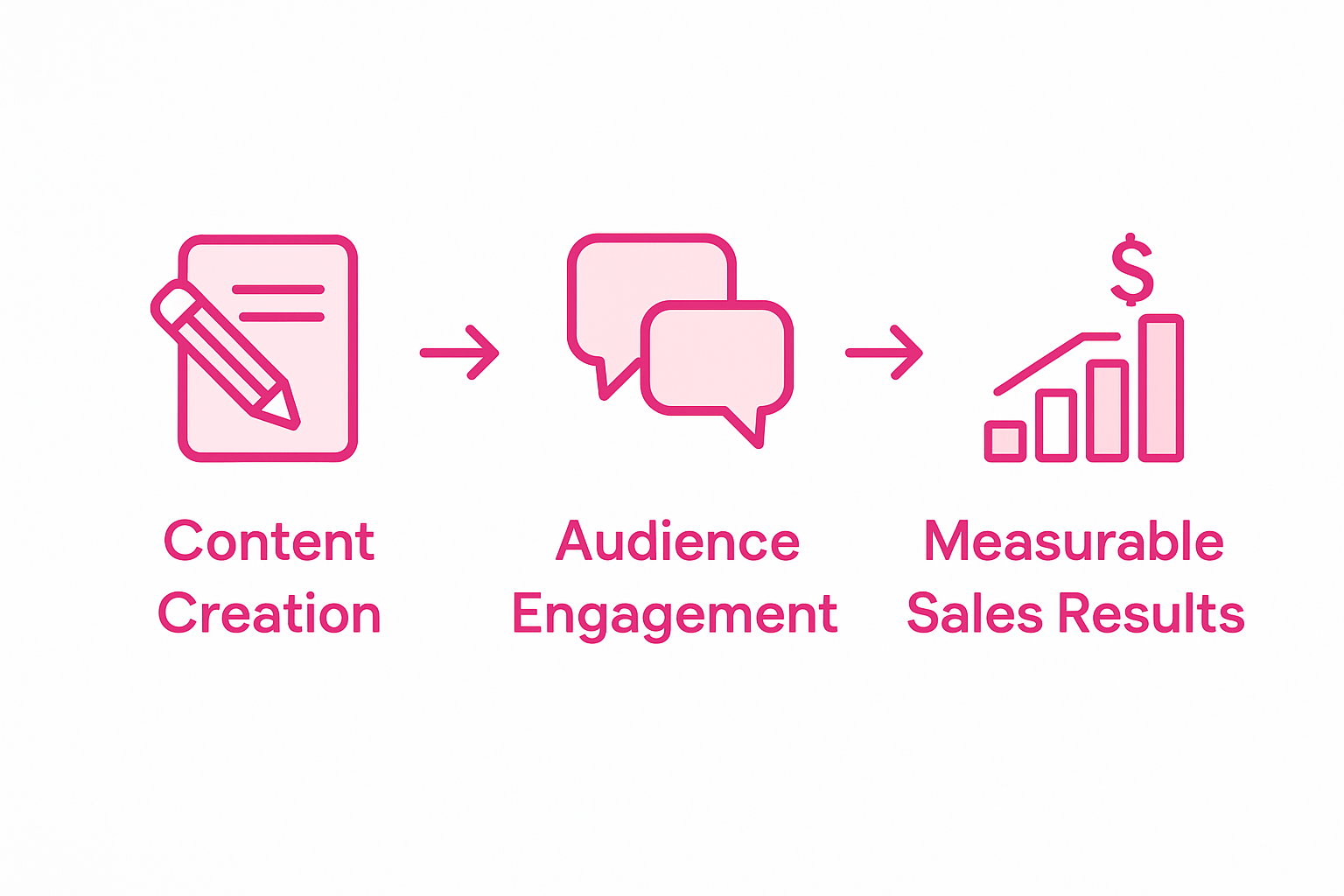
Advanced content marketing measurement strategies require continuous refinement. By systematically analysing performance data, businesses can iteratively improve their content approach, identifying which topics, formats, and channels generate the most significant return on investment and align most closely with overall marketing objectives.
Common Pitfalls And How To Avoid Them
Understanding content marketing challenges requires recognising the most frequent obstacles that ecommerce businesses encounter. Successful content strategies demand proactive planning and strategic approach to overcome inherent limitations.
Common pitfalls in content marketing include:
Inconsistent Content Production: Failing to maintain regular publishing schedules
Lack of Audience Understanding: Creating content without deep customer insights
Overlooking Quality for Quantity: Prioritising volume over meaningful, valuable content
Ignoring Performance Metrics: Not tracking or analysing content effectiveness
Narrow Content Formats: Relying on limited types of content delivery
Neglecting SEO Principles: Creating content without strategic keyword integration
Preventing these challenges requires a comprehensive approach. Businesses must invest time in developing detailed buyer personas, creating diverse content formats, and establishing robust content planning processes that align with audience expectations and organisational goals.
The most successful content marketing strategies embrace continuous learning and adaptation. By remaining flexible, regularly reviewing performance data, and maintaining a commitment to delivering genuine value, ecommerce businesses can transform potential pitfalls into opportunities for growth and customer engagement.
Elevate Your Ecommerce Success with Strategic Content Marketing
Content marketing is a powerful way to build trust, boost search engine visibility and nurture lasting customer relationships. Yet many ecommerce brands struggle with consistent content production and aligning their messaging to truly resonate with their audience. If you’re seeking to overcome these challenges and turn insightful content into measurable sales growth you need expert support.
Discover our proven digital marketing services specialising in SEO, AI, Social Media and PPC tailored specifically for ecommerce businesses. With over 25 years of experience scaling successful brands we understand how to create valuable, targeted content that captivates and converts. Whether you need compelling product videos, engaging blog posts or effective social campaigns, our team delivers strategies designed to maximise impact.

Take control of your content marketing journey now by partnering with experts who know what works. Visit us at iwanttobeseen.online to learn more and start growing your ecommerce brand today. Explore our specialised services at digital marketing solutions and see how tailored content marketing can drive your online sales forward.
Frequently Asked Questions
What is content marketing in ecommerce?
Content marketing in ecommerce is a strategic approach that involves creating and distributing valuable, relevant content to attract and engage a specific audience. It focuses on building connections through helpful resources rather than direct product promotion.
How does content marketing improve search engine visibility?
Content marketing improves search engine visibility by generating keyword-rich, valuable content that ranks well on search engines. This attracts organic traffic and increases the chances of converting visitors into customers.
What types of content are effective for ecommerce strategies?
Effective types of content for ecommerce strategies include blog posts, social media updates, product videos, infographics, customer testimonials, email newsletters, podcasts, and webinars. These formats can engage audiences at various touchpoints throughout their buying journey.
How can I measure the success of my content marketing efforts?
To measure the success of content marketing efforts, you should track key performance indicators such as conversion rates, website traffic, lead generation, sales revenue, customer retention, and engagement metrics. This will help you assess the impact of your content initiatives on your business outcomes.
Recommended
Comments