.png)
Technical SEO – Impact on Ecommerce Growth and Revenue


Most british ecommerce sites lose out on valuable traffic due to overlooked technical SEO issues. Search engines rely on a website’s structure, speed, and mobile friendliness to determine visibility, directly impacting online sales. Focusing on technical optimisation is not just a digital trend—over 80 percent of successful online businesses credit their growth to strong site infrastructure. Understanding these core principles helps british retailers stand out in a crowded online marketplace.
Table of Contents
Key Takeaways
Point | Details |
Importance of Technical SEO | Technical SEO is essential for ecommerce sites, enhancing search engine visibility and user experience through optimised site infrastructure. |
Core Components to Optimise | Fundamental areas of focus include website architecture, mobile responsiveness, page speed, and structured data implementation. |
Advanced SEO Strategies | Ecommerce platforms should utilise sophisticated optimisation techniques and continuous performance monitoring to adapt to evolving digital standards. |
Common Mistakes to Avoid | Key errors such as neglecting mobile responsiveness and slow loading speeds can severely impact search visibility and should be proactively addressed. |
Defining Technical SEO for Ecommerce Sites
Technical SEO represents the critical backbone of digital performance for online stores, focusing on optimising a website’s underlying infrastructure to enhance search engine visibility and user experience. At its core, technical SEO involves fine-tuning a website’s technical elements to ensure search engines can efficiently crawl, index, and understand the site’s content. For ecommerce platforms, this process is particularly nuanced, requiring meticulous attention to technical optimisation strategies.
The fundamental components of technical SEO for ecommerce sites encompass several key areas. These include website architecture, page speed, mobile responsiveness, and structured data implementation. Research indicates that technical optimisation focuses on enhancing a website’s underlying structure to facilitate easier crawling and indexing by search engine algorithms. Specific elements include crafting clear URL structures, generating comprehensive XML sitemaps, implementing schema markup, ensuring proper canonicalisation, and maintaining robust mobile compatibility.

Advanced technical SEO strategies go beyond basic infrastructure optimisation. They involve complex interactions between website code, server configurations, and search engine algorithmic requirements. Ecommerce sites must prioritise elements like secure HTTPS protocols, minimising server response times, reducing unnecessary code complexity, and creating a seamless crawling experience for search engine bots. Performance metrics such as page load speed directly impact user engagement and search ranking potential, making technical refinement a critical pathway to improved online visibility and potential revenue growth.
Core Elements of Technical Site Optimisation
Technical site optimisation involves a comprehensive approach to enhancing a website’s digital infrastructure, targeting multiple interconnected performance dimensions. Core technical optimization strategies require systematic assessment of website architecture, performance metrics, and search engine compatibility. These strategies aim to create a robust digital ecosystem that supports seamless user experience and maximises organic search visibility.
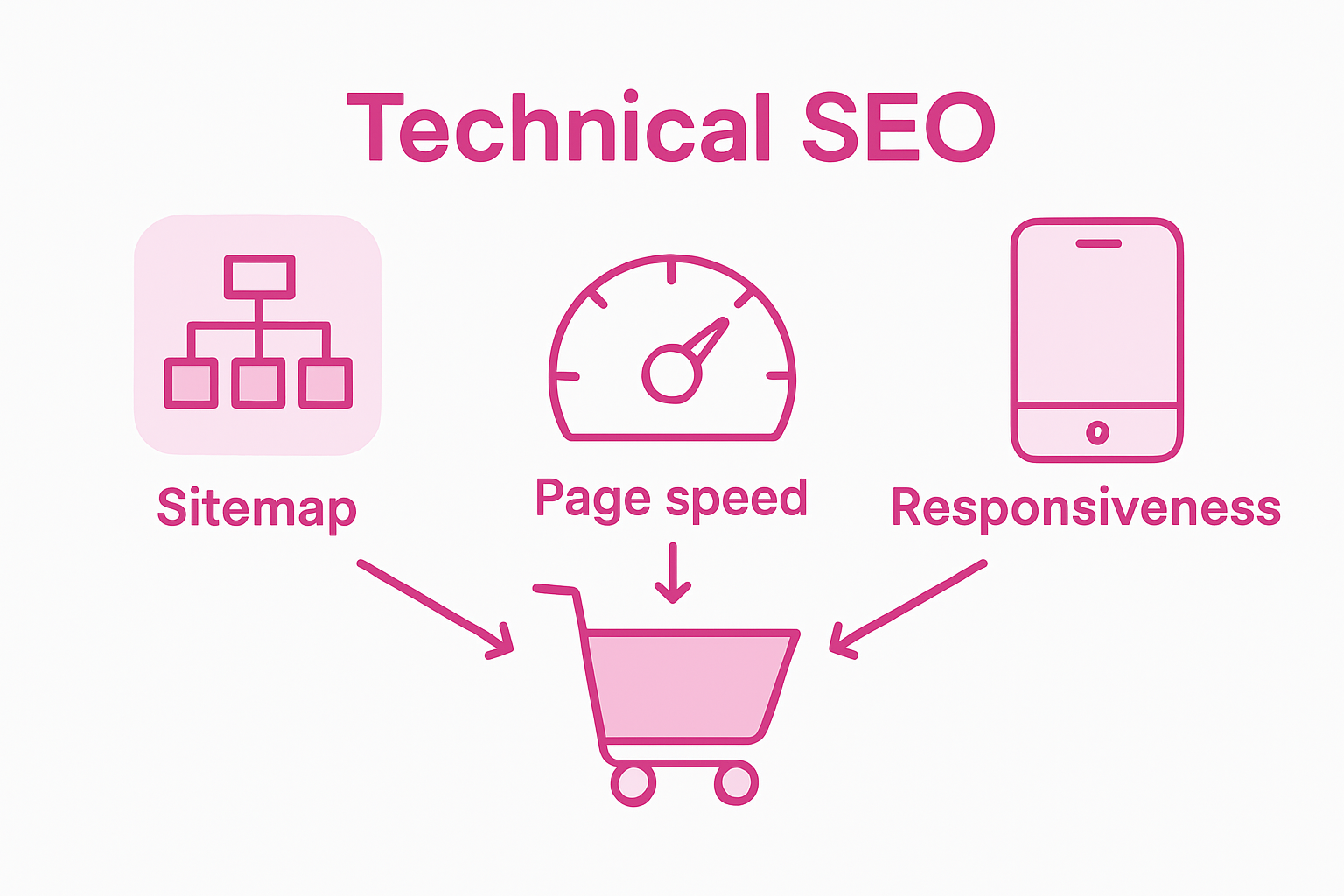
Research highlights several critical elements fundamental to technical site optimisation. Website optimization encompasses key components including responsive design, user experience considerations, site speed optimization, mobile compatibility, and robust performance measurement. Specific technical elements demand meticulous attention: implementing SSL security protocols, developing a strategic backlink profile, integrating comprehensive keyword research, and creating a structured content strategy that aligns with search engine algorithmic requirements.
Advanced technical optimization extends beyond fundamental infrastructure improvements. Ecommerce websites must develop sophisticated approaches that integrate complex technical elements with strategic digital marketing objectives. This involves continuous performance monitoring using advanced tools like Google Analytics and SEMrush, ensuring real-time insights into website performance, user interaction patterns, and potential optimization opportunities. By maintaining a holistic approach to technical refinement, online platforms can create resilient digital architectures that adapt dynamically to evolving search engine algorithms and user expectations.
Types of Technical SEO Issues and Solutions
Technical SEO challenges represent significant obstacles for ecommerce websites seeking optimal digital performance. Comprehensive website audits reveal multiple interconnected technical issues that can dramatically impede search engine visibility and user experience. Understanding these challenges requires a systematic approach to identifying, diagnosing, and resolving complex technical impediments that prevent websites from achieving their full digital potential.
Technical SEO issues encompass a wide range of potential performance barriers. Common problems include slow page load times, non-responsive design, improper URL structures, inadequate SSL security, and inefficient internal linking strategies. Specific solutions demand targeted interventions: optimising image and code performance to enhance site speed, implementing responsive design frameworks, developing logical URL architectures, securing websites with robust HTTPS protocols, and creating sophisticated internal linking structures that improve both user navigation and search engine crawlability.
Advanced technical SEO solutions extend beyond surface-level corrections, requiring holistic digital infrastructure management. Ecommerce platforms must develop proactive strategies that anticipate potential technical limitations, continuously monitoring website performance through advanced diagnostic tools. This involves regular technical audits, performance benchmarking, and adaptive optimization techniques that respond dynamically to evolving search engine algorithms and emerging digital technologies. By maintaining a comprehensive approach to technical SEO, online businesses can create resilient digital platforms that consistently deliver exceptional user experiences while maximising search engine visibility.
Site Architecture and Crawling Best Practice
Site architecture represents the foundational framework determining a website’s search engine performance and user experience. Comprehensive site structure strategies require meticulous planning to ensure seamless navigation, logical content organisation, and optimal search engine crawlability. The intricate relationship between website design and digital discoverability demands a strategic approach that balances technical precision with intuitive user interaction.
Effective e-commerce site architecture involves creating a clear hierarchical structure that enables both users and search engine algorithms to navigate content efficiently. Critical elements include developing intuitive navigation pathways, constructing URL structures that reflect logical content categorisation, and implementing canonical tags to prevent potential duplicate content challenges. Successful implementations require careful consideration of content depth, internal linking strategies, and maintaining a flat site structure that minimises unnecessary clicks and maximises content accessibility.
Advanced crawling best practices extend beyond basic structural considerations, demanding sophisticated technical interventions. Ecommerce platforms must develop dynamic architectural frameworks that accommodate complex product catalogues, seasonal variations, and evolving inventory management requirements. This involves creating flexible URL structures, implementing intelligent internal linking mechanisms, and ensuring comprehensive XML sitemaps that provide search engines with complete, real-time insights into website content. By developing a holistic approach to site architecture, online businesses can create robust digital ecosystems that simultaneously optimise user experience and search engine performance.
Common Technical SEO Mistakes to Avoid
Technical SEO challenges can significantly undermine an ecommerce website’s digital performance, creating invisible barriers that prevent optimal search engine visibility. Understanding core technical SEO fundamentals requires a proactive approach to identifying and mitigating potential performance impediments that could compromise online business success.
Frequent technical SEO errors can dramatically impact website performance. Critical mistakes include neglecting mobile responsiveness, tolerating slow loading speeds, allowing duplicate content, and implementing canonical tags incorrectly. These technical shortcomings can create substantial obstacles for search engine algorithms, preventing proper indexing and reducing overall organic search visibility. Successful mitigation demands comprehensive strategies that address mobile compatibility, performance optimization, content uniqueness, and precise technical implementation.
Advanced technical SEO management extends beyond simple error correction, requiring a holistic approach to digital infrastructure development. Ecommerce platforms must continuously evolve their technical strategies, implementing sophisticated diagnostic tools and adaptive optimization techniques. This involves regular performance audits, proactive technical interventions, and maintaining a dynamic approach that anticipates emerging search engine algorithmic requirements. By developing a comprehensive technical SEO framework, online businesses can create resilient digital platforms that consistently deliver exceptional user experiences while maximising search engine potential.
Unlock Your Ecommerce Growth with Expert Technical SEO Support
Technical SEO challenges like slow page speed, poor site architecture and ineffective crawling can silently block your store’s potential to attract and convert customers. This article highlights how these issues impact ecommerce revenue by limiting search engine visibility and degrading user experience. If you struggle with optimising your site’s underlying structure or want to avoid common technical SEO mistakes, taking action now is vital to boost your online performance.

Discover how our specialised digital marketing services can help you overcome these hurdles with precision. With over 25 years of experience scaling multiple successful ecommerce brands, our team delivers tailored SEO, AI, Social Media and PPC solutions that align with advanced technical optimisation strategies. Don’t let technical barriers hold your business back. Visit iwanttobeseen.online today and take the first step towards a faster, more visible and revenue-ready ecommerce site.
Frequently Asked Questions
What is technical SEO and why is it important for ecommerce sites?
Technical SEO involves optimising the underlying infrastructure of a website to enhance its visibility on search engines and improve user experience. For ecommerce sites, it is critical as it enables search engines to efficiently crawl, index, and understand product listings, ultimately driving more traffic and potential sales.
How can site architecture affect my ecommerce website’s performance?
A well-planned site architecture facilitates intuitive navigation for users and efficient content access for search engine bots. This improves user experience and search engine crawlability, which can significantly enhance organic search rankings and increase conversion rates for ecommerce sites.
What common technical SEO issues should ecommerce websites avoid?
Common technical SEO issues include slow page loading speeds, non-responsive design, duplicate content, and poorly structured URLs. These issues can hinder search engine indexing and negatively impact user experience, leading to decreased traffic and revenue for ecommerce businesses.
How does mobile responsiveness impact ecommerce growth?
Mobile responsiveness is crucial for ecommerce growth as a significant portion of online shopping occurs on mobile devices. A responsive design ensures that users have a seamless shopping experience on any device, which can lead to higher engagement, lower bounce rates, and ultimately, increased sales.
Recommended
Comments