.png)
Step by Step Branding Process for eCommerce Success


Over half of british eCommerce startups miss the mark by failing to define who their ideal customer truly is. When brands overlook this foundational step, marketing feels scattered and customer loyalty fades fast. Understanding your specific audience and brand values is the secret behind every successful online store, helping you attract attention and build lasting trust in a crowded digital marketplace.
Table of Contents
Quick Summary
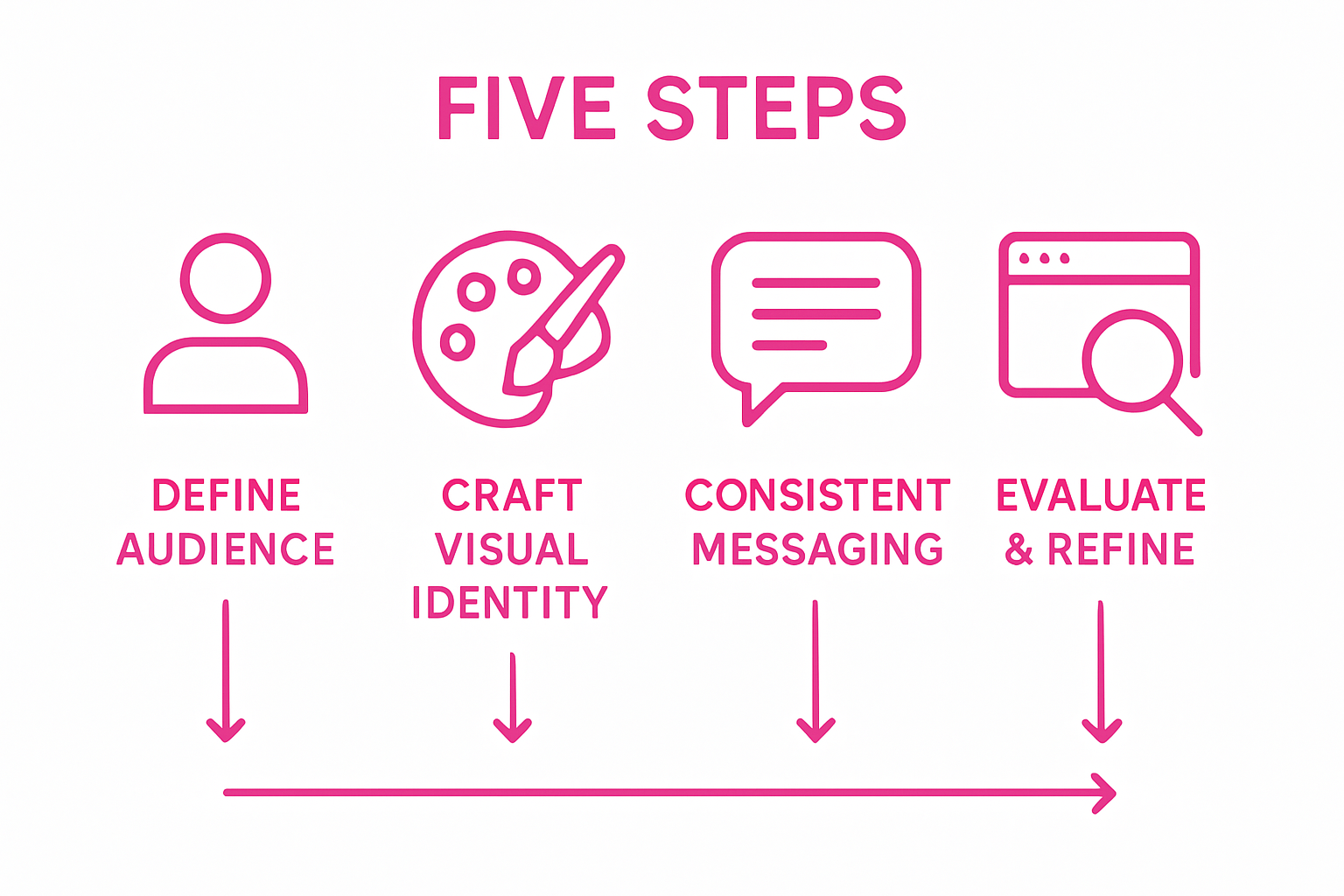
Important Insight | Explanation |
1. Define your target audience carefully | Understand demographic and psychographic details to create effective marketing strategies that resonate with customers. |
2. Create a unique brand identity | Develop a comprehensive brand kit with visual elements that reflect your values and connect emotionally with customers. |
3. Ensure consistent messaging | Maintain a unified brand voice across all platforms to foster trust and recognition in your communications. |
4. Implement branding on your eCommerce site | Integrate your brand’s visual language throughout your website for a seamless and engaging user experience. |
5. Evaluate brand impact regularly | Collect and analyse customer feedback and performance metrics to refine strategies and maintain relevance and connection. |
Step 1: Define your target audience and brand values
Defining your target audience and brand values is the strategic foundation that transforms an ordinary eCommerce business into a compelling market presence. This crucial step will help you create laser-focused marketing strategies that resonate deeply with potential customers.
To craft a precise target audience profile, start by gathering comprehensive demographic information. Look beyond basic age and gender statistics. Explore psychographic details like lifestyle preferences, purchasing behaviours, online browsing habits, and personal motivations. The University of Houston’s Small Business Development Center recommends developing detailed buyer personas that go far deeper than surface-level characteristics.
Begin by creating a systematic approach to understanding your potential customers. Map out their pain points, aspirations, and the specific problems your eCommerce brand solves. Consider conducting surveys, analysing website analytics, and reviewing customer feedback to build a nuanced understanding. Your brand values should directly align with these insights - showing customers you genuinely understand and care about their needs.
Pro Tip: A buyer persona is not just a demographic snapshot, but a narrative that brings your ideal customer to life.
Once you’ve developed your target audience profile and brand values, you’ll be perfectly positioned to craft marketing messages that speak directly to your ideal customers. The next step involves translating these insights into a compelling brand narrative that attracts and retains your target market.
Step 2: Craft a unique brand identity and visual style
Building a distinctive brand identity is your opportunity to transform your eCommerce business from a generic online store into a memorable, compelling digital experience. This step will help you create a visual language that speaks directly to your target audience and sets you apart from competitors.

The journey from chaos to cohesion begins with understanding that your visual identity is more than just a logo. Drawing inspiration from design research in luxury brand strategies, focus on developing a comprehensive brand kit that encompasses colour palettes, typography, imagery styles, and consistent design elements that tell your unique story. Your visual identity should reflect your brand’s personality, values, and the emotional connection you want to establish with customers.
Start by creating a mood board that captures the essence of your brand. Select colours that evoke the right emotional response, choose typography that communicates your brand’s character, and develop a visual style guide that ensures consistency across all platforms. Consider how your visual elements will appear on product pages, social media, email marketing, and packaging. Each touchpoint is an opportunity to reinforce your brand’s narrative.
Pro Tip: Your visual identity should be flexible enough to evolve but consistent enough to be instantly recognisable.
Once you’ve crafted your unique visual identity, you’ll be ready to create marketing materials that not only look professional but also deeply resonate with your target audience. The next step involves translating these visual guidelines into compelling marketing communications that capture attention and build brand loyalty.
Step 3: Develop consistent messaging across all platforms
Creating a unified brand voice that resonates consistently across every digital and physical touchpoint is critical for building trust and recognition in your eCommerce business. This step will transform your communication strategy from fragmented noise into a harmonious brand narrative that speaks directly to your audience.
Consistent messaging principles are fundamental to establishing a strong brand identity. Drawing insights from comprehensive communication strategies, develop a brand messaging framework that maintains a cohesive tone, language, and emotional resonance across all platforms. This means ensuring your website, social media channels, email communications, product descriptions, and customer service interactions all reflect the same core personality and values.
Start by creating a detailed brand messaging guide that outlines your unique voice characteristics. Define your brand personality traits detailed communication guidelines that cover everything from word choice and sentence structure to emotional tone and key messaging pillars. Consider creating a set of approved phrases, key messages, and communication principles that every team member can reference when creating content or interacting with customers.
Pro Tip: Your brand voice should feel like a conversation with a trusted friend your customers want to hear from.
Once you’ve established a robust messaging framework, you’ll be ready to create marketing materials that feel authentically connected and compelling. The next step involves implementing these guidelines across your entire customer communication ecosystem.
Step 4: Implement your branding across your eCommerce site
Transforming your unique brand identity into a compelling online experience requires strategic and thoughtful implementation across every digital touchpoint of your eCommerce platform. This step will help you create a seamless visual and emotional journey that connects with your customers from the moment they land on your website.
Drawing insights from comprehensive branding strategies for digital platforms, focus on integrating your brand’s visual language consistently throughout your eCommerce site. This means aligning your colour palette, typography, imagery style, and tone of voice across homepage, product pages, about section, and checkout process. Effective brand implementation techniques suggest creating a holistic visual narrative that tells your brand’s story at every interaction point.
Begin by auditing your current website design and identifying opportunities to infuse your brand personality. Review your product descriptions, ensuring they reflect your unique voice. Examine your website’s colour scheme, ensuring it matches your brand palette. Update imagery to align with your brand’s visual identity, from product photography to background graphics. Consider how each element contributes to a cohesive brand experience that feels authentic and engaging.
Pro Tip: Your website should feel like a natural extension of your brand’s personality not just a transactional platform.
Once you’ve meticulously implemented your branding across the eCommerce site, you’ll have created a powerful digital presence that distinguishes you from competitors. The next step involves bringing this brand experience to life through strategic marketing and customer engagement.
Step 5: Evaluate brand impact and refine strategies
Measuring the effectiveness of your eCommerce brand is not just about numbers it is about understanding the emotional connection you have created with your audience. This critical step involves a comprehensive analysis of how your brand resonates with customers and identifying opportunities for strategic improvement.
Personalization strategies and audience insights are fundamental to understanding your brand’s true impact. Drawing from sophisticated marketing research methodologies, begin by collecting comprehensive data from multiple sources. Analyse website analytics, customer feedback, social media engagement metrics, conversion rates, and customer retention statistics to build a holistic view of your brand performance.
Develop a systematic approach to measuring brand perception. Create surveys that dig deeper than surface level responses. Look for qualitative insights that reveal how customers truly feel about your brand. Pay attention to emotional responses, not just transactional data. Track key performance indicators that reflect both quantitative success and emotional engagement. This might include metrics like repeat purchase rates, average customer lifetime value, brand sentiment analysis, and net promoter scores.
Pro Tip: Real brand success is measured by the stories customers tell about you not just the sales you generate.
Once you have gathered and analysed your brand impact data, you will be equipped to make informed strategic refinements. The continuous process of evaluation and adaptation ensures your brand remains dynamic, relevant, and deeply connected to your target audience.
Elevate Your eCommerce Brand with Expert Digital Marketing Support
The article highlights how defining your target audience, crafting a unique brand identity, and implementing consistent messaging are essential yet challenging steps for eCommerce success. Many businesses struggle with translating these strategic insights into measurable results across all digital platforms. Common pain points include creating a cohesive brand voice, building emotional connections with customers, and effectively showcasing your brand on your website.
At iwanttobeseen.online, we understand these challenges and offer specialised digital marketing services tailored to eCommerce brands. With over 25 years of experience scaling top-performing eCommerce stores, we leverage SEO, AI, Social Media, and PPC to amplify your unique brand story and ensure it resonates powerfully with your target customers. Our approach directly supports your goals to develop a compelling brand narrative and dynamic online presence — turning your strategy into real growth.
Discover how to transform the step-by-step branding process into an impactful marketing success

Take control of your brand’s future today by partnering with experts dedicated to making your eCommerce brand seen and heard. Visit iwanttobeseen.online to explore our solutions and start scaling your brand with confidence.
Frequently Asked Questions
How do I define my target audience for my eCommerce brand?
To define your target audience, gather detailed demographic and psychographic information about potential customers. Create buyer personas by focusing on their lifestyle, purchasing behaviours, and motivations to ensure your marketing strategies resonate with them.
What are the key elements of a unique brand identity for eCommerce?
A unique brand identity includes a cohesive colour palette, typography, and imagery style that reflects your brand’s values and personality. Start by developing a mood board that captures these elements and ensures consistency across all marketing materials.
How can I create consistent messaging for my brand?
Create a brand messaging guide that outlines your brand voice, tone, and key messaging pillars. Ensure all communication across your website, social media, and customer interactions reflects this framework to build trust and recognition with your audience.
What steps should I take to implement branding on my eCommerce site?
Audit your existing website to align visual elements such as colour scheme and typography with your brand identity. Update product descriptions and imagery to create a seamless and engaging user experience that connects with your customers from the moment they land on your site.
How can I evaluate the impact of my branding on customer perception?
To evaluate brand impact, collect and analyse data from customer feedback, website analytics, and engagement metrics. Develop surveys that delve into emotional responses to understand how your audience perceives your brand beyond just sales figures.
What actions can I take to refine my branding strategy?
Use the insights gathered from your brand evaluation to identify areas for improvement. Make strategic adjustments based on qualitative feedback and key performance indicators, ensuring your brand evolves while remaining connected to your target audience.
Recommended
keo nha cai mình thấy mọi người nhắc hoài nên tò mò bấm vào xem thử giao diện thế nào thôi. Mình không có ngồi soi từng mục hay nội dung cụ thể, chủ yếu nhìn cách họ sắp xếp trang cho dễ dùng không. Ấn tượng đầu là bố cục khá thoáng, các khối thông tin chia rõ ràng nên lướt một vòng là nắm được chỗ nào với chỗ nào, không bị dồn chữ nhìn mệt. Mấy bảng số liệu hiển thị dạng cột cũng gọn, nhìn nhanh vẫn hiểu mà không rối. Với mình kiểu trình bày vậy là ổn, nhất là khi chuyển qua lại giữa các phần thì menu nằm chỗ dễ thấy, bấm cái…
Bài viết rất dễ theo dõi, cảm ơn bạn đã chia sẻ. Mình cũng hay theo dõi chủ đề này, nhất là khi xem các nền tảng giải trí trực tuyến để học cách họ chia chuyên mục và bố cục thông tin. Để tiện lưu lại những điểm mình thấy hữu ích và gom mọi thứ vào một chỗ, mình tự làm một trang riêng để xem lại khi cần. Ai quan tâm thì ghé. Ai quan tâm có thể ghé https://vcook.jp/users/119380