.png)
Role of AI in Marketing – Transforming eCommerce Success


Over 60 percent of marketers across British and global industries now rely on Artificial Intelligence to make smarter decisions and reach their audiences more effectively. As technology continues to evolve, understanding how AI shapes modern marketing is more than just a competitive edge—it is becoming essential for survival. This guide reveals how advanced AI strategies are redefining customer engagement and personalisation, giving British brands the tools to stand out in an increasingly digital environment.
Table of Contents
Key Takeaways
Point | Details |
AI Transforms Marketing | AI leverages data to create predictive and personalised marketing strategies that enhance customer engagement. |
Ecommerce Adoption | Various AI technologies are enhancing customer experiences in eCommerce, shifting from traditional methods to intelligent, data-driven strategies. |
Personalisation at Scale | AI systems enable highly targeted marketing by analysing consumer behaviour and tailoring communications dynamically. |
Ethical Challenges | The rise of AI in marketing raises ethical concerns regarding data manipulation, content authenticity, and the need for transparency. |
Defining AI in Modern Marketing
Artificial Intelligence (AI) in marketing represents a sophisticated technological approach that enables businesses to transform raw data into intelligent, predictive strategies. By leveraging machine learning algorithms and advanced computational techniques, AI empowers marketers to understand customer behaviour with unprecedented depth and precision. Emerging research streams are exploring AI’s transformative potential in marketing contexts, revealing how these technologies can fundamentally reshape customer engagement methodologies.
At its core, AI marketing represents a complex ecosystem of intelligent systems designed to analyse, predict, and personalise customer interactions. These systems process massive volumes of data—including browsing histories, purchase patterns, demographic information, and real-time engagement metrics—to generate insights that human analysts might overlook. The technology goes beyond traditional segmentation, creating hyper-personalised experiences that adapt dynamically to individual customer preferences.
Modern AI marketing tools leverage sophisticated techniques such as:
Natural Language Processing (NLP) for sentiment analysis
Predictive analytics for customer behaviour forecasting
Automated personalisation engines
Real-time recommendation systems
Intelligent chatbots and conversational interfaces
By integrating these advanced technologies, businesses can create more responsive, intuitive marketing strategies that not only anticipate customer needs but also deliver precisely tailored experiences. Contemporary research indicates that early adopters of AI marketing techniques are experiencing significant competitive advantages, transforming how organisations approach customer engagement in an increasingly digital marketplace.
Key Types of AI Used in eCommerce
Ecommerce businesses are increasingly adopting various AI technologies to enhance customer experiences and optimise marketing strategies. The shift from traditional advertising methods to AI-driven strategies represents a profound transformation in digital marketing, enabling more targeted and intelligent approaches to customer engagement. These AI technologies are not just tools, but sophisticated systems that fundamentally reshape how online businesses interact with their customers.

The primary AI technologies deployed in eCommerce include Machine Learning Algorithms, Natural Language Processing, Predictive Analytics, and Generative AI. Machine Learning enables intelligent product recommendations, while Natural Language Processing powers advanced chatbots and sentiment analysis. Predictive Analytics helps businesses anticipate customer behaviour, and Generative AI is revolutionising marketing through intelligent storytelling techniques, creating personalised content that resonates with individual consumers.
Specific applications of these AI technologies in eCommerce encompass:
Intelligent product recommendation engines
Dynamic pricing algorithms
Personalised marketing campaigns
Automated customer service chatbots
Fraud detection systems
Real-time inventory management
By integrating these advanced AI technologies, eCommerce businesses can create more responsive, intelligent platforms that not only meet but anticipate customer needs. The result is a more streamlined, personalised shopping experience that drives customer satisfaction and ultimately increases conversion rates and customer loyalty.
How AI Powers Personalised Marketing
AI-driven personalisation has revolutionised marketing by transforming raw customer data into highly targeted strategies, enabling businesses to create unprecedented levels of individual customer engagement. By leveraging complex algorithms and deep learning techniques, AI systems analyse intricate patterns in consumer behaviour, purchasing histories, and digital interactions to craft marketing experiences that feel uniquely tailored to each individual.
The core mechanism of personalised AI marketing involves sophisticated data aggregation and predictive modelling. Generative AI technologies now offer the capability to craft narratives that resonate deeply with consumers, moving beyond traditional segmentation approaches. These intelligent systems can dynamically adjust marketing messages, product recommendations, and communication styles in real-time, responding to nuanced shifts in customer preferences and behaviours.
Key personalisation strategies powered by AI include:
Contextual product recommendations
Dynamic pricing optimisation
Individualised email marketing content
Predictive customer journey mapping
Adaptive website experiences
Sentiment-driven communication adjustments
By implementing these advanced AI-driven personalisation techniques, businesses can create more meaningful, responsive marketing interactions. The result is a transformative approach that not only anticipates customer needs but also builds deeper, more authentic connections between brands and their audiences, ultimately driving increased engagement, loyalty, and conversion rates.
AI Automation for Campaign Optimisation
Advanced AI systems are transforming marketing campaign management by providing intelligent, real-time optimisation capabilities, enabling businesses to dynamically adapt their strategies based on instantaneous performance data. These sophisticated technologies analyse complex datasets, identifying nuanced patterns and opportunities that human marketers might overlook, ultimately creating more responsive and efficient marketing approaches.
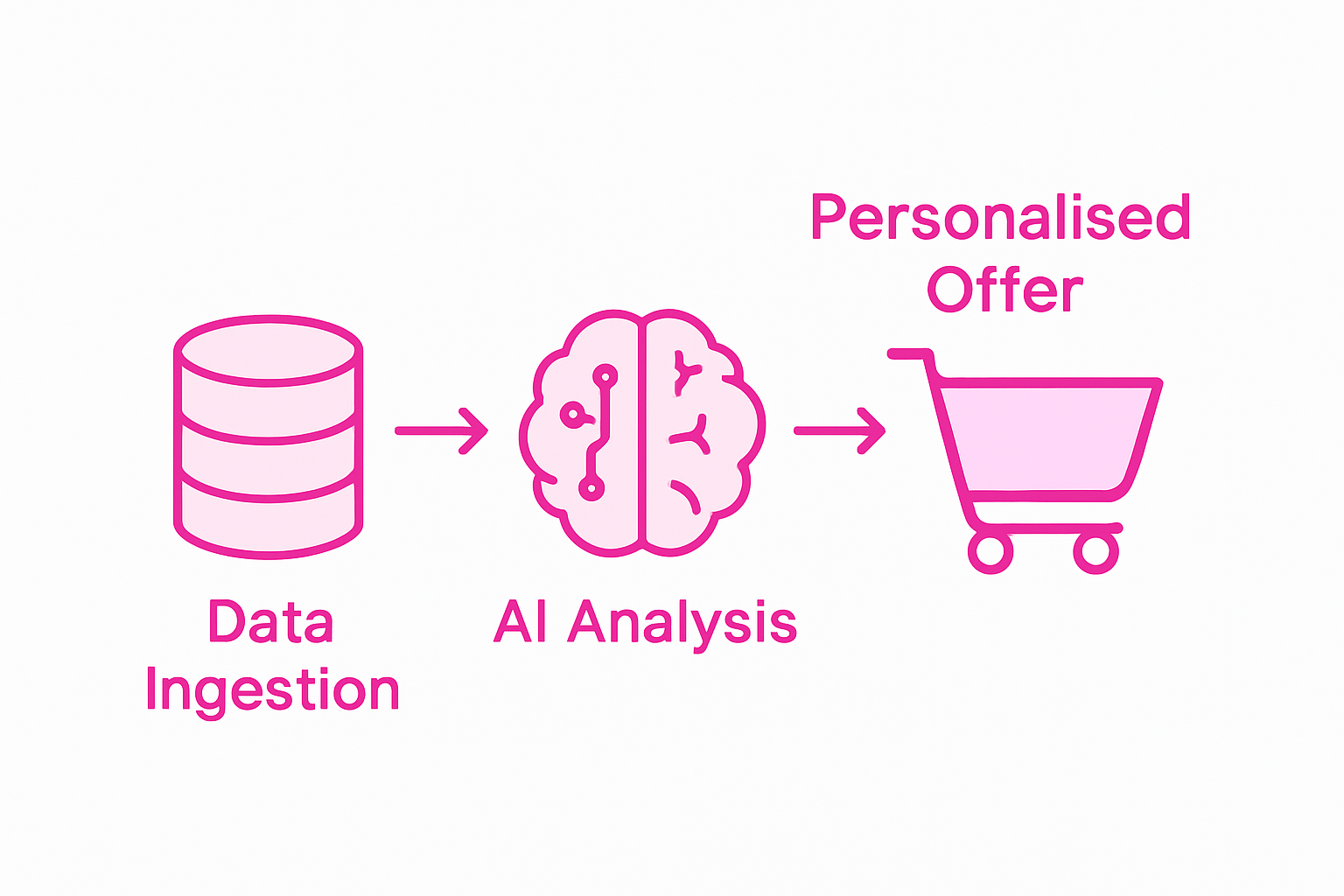
The campaign automation process leverages machine learning algorithms to continuously refine marketing strategies. Generative AI technologies are expanding the potential for real-time personalised storytelling and immersive marketing experiences, allowing businesses to craft dynamic narratives that adapt seamlessly to individual customer interactions. These intelligent systems can rapidly assess campaign performance, recommend strategic adjustments, and predict potential outcomes with remarkable precision.
Key features of AI-driven campaign optimisation include:
Automated performance monitoring
Real-time budget allocation
Predictive audience segmentation
Dynamic content personalisation
Intelligent A/B testing
Cross-channel strategy alignment
By implementing these advanced AI automation techniques, marketing teams can transcend traditional campaign management limitations. The result is a more agile, data-driven approach that maximises marketing efficiency, reduces manual intervention, and creates more meaningful connections with target audiences across multiple digital platforms.
Risks, Missteps, and Ethical Concerns in AI
The proliferation of AI technologies in marketing has unveiled significant risks related to content authenticity and data manipulation, raising critical questions about the ethical boundaries of artificial intelligence. While AI offers unprecedented capabilities for marketing strategies, it simultaneously introduces complex challenges that demand rigorous scrutiny and proactive management from businesses and technology developers.
One of the most profound ethical concerns emerges from AI’s potential to generate misleading or fabricated content. Advanced AI systems can now produce disinformative user-generated content that closely mimics authentic materials, potentially undermining the integrity of marketing research and consumer trust. These sophisticated algorithms can create narratives that appear genuine but lack fundamental truthfulness, presenting a significant threat to transparent communication and brand reputation.
Key ethical risks in AI marketing include:
Potential for algorithmic bias
Privacy violations through data collection
Manipulation of consumer perceptions
Lack of transparent decision-making processes
Unintended demographic discrimination
Erosion of genuine human interaction
Navigating these ethical challenges requires a comprehensive approach that prioritises accountability, transparency, and human oversight. Businesses must develop robust frameworks that balance technological innovation with fundamental ethical principles, ensuring AI remains a tool for enhancing human experience rather than replacing genuine, meaningful communication.
Unlock Your eCommerce Potential with AI-Driven Marketing
The article highlights how AI is transforming eCommerce marketing through personalised experiences, predictive analytics and campaign optimisation. However many businesses struggle to implement these cutting-edge strategies effectively while avoiding risks like content authenticity and ethical concerns. If you want to navigate these complex challenges and harness AI to boost your online sales with confidence you need expert guidance tailored to your brand.
We combine over 25 years of experience scaling successful eCommerce brands with specialised skills in SEO AI Social Media and PPC. Our approach uses the very AI marketing concepts discussed such as intelligent personalisation dynamic campaign management and real-time optimisation to increase conversions and deepen customer loyalty. Discover proven solutions that address your pain points while respecting ethical boundaries outlined in the article.

Ready to transform your eCommerce success with AI-powered marketing strategies? Visit iwanttobeseen.online now and explore how we apply these advanced AI techniques to deliver measurable results. Don’t wait to lead your market with intelligent digital marketing designed for the future.
Frequently Asked Questions
What is AI’s role in modern marketing?
AI in modern marketing is a technological approach that transforms raw data into predictive strategies, enabling businesses to better understand customer behaviour and create personalisation at scale.
How does AI enhance personalised marketing for eCommerce?
AI enhances personalised marketing by analysing diverse customer data to craft tailored experiences, including contextual product recommendations and individualised marketing content that resonates with each customer.
What are the primary AI technologies used in eCommerce?
The primary AI technologies in eCommerce include Machine Learning algorithms, Natural Language Processing, Predictive Analytics, and Generative AI, all of which collectively enhance customer engagement and optimise marketing strategies.
What ethical concerns should businesses consider when using AI in marketing?
Businesses should be aware of ethical concerns such as algorithmic bias, privacy violations, manipulation of consumer perceptions, and the potential erosion of genuine human interaction, necessitating a transparent and accountable approach to AI deployment.
Recommended
Comments