.png)
Role of AI in Advertising: Driving Ecommerce Growth


Most british ecommerce brands are discovering that artificial intelligence is reshaping how they advertise online. With digital competition soaring, companies can no longer depend on basic marketing tactics alone. In fact, over 80 percent of retailers using AI-driven campaigns have seen a significant jump in their conversion rates. This guide unpacks the latest advances and shows how british businesses can harness AI to engage customers more effectively, maximise returns, and sidestep common pitfalls in the fast-changing ecommerce landscape.
Table of Contents
Key Takeaways
Point | Details |
AI Personalisation | AI enhances digital advertising by creating personalised consumer experiences, increasing engagement and conversion rates. |
Dynamic Ad Strategies | Automated systems adjust bids and audience targeting in real-time, maximising return on investment. |
Ethical Considerations | Businesses must address risks like algorithmic bias and data privacy to maintain consumer trust and transparency. |
Phased Implementation | Adopt AI tools gradually, starting with specific applications and expanding as performance metrics improve. |
AI in Advertising Explained for Ecommerce
Artificial Intelligence (AI) is radically transforming digital advertising for ecommerce businesses, offering unprecedented capabilities to personalise consumer experiences and optimise marketing strategies. By leveraging advanced machine learning algorithms, AI enables businesses to analyse vast amounts of consumer data and deliver hyper-targeted advertising campaigns that dramatically improve engagement and conversion rates.
The core strength of AI in advertising lies in its ability to understand complex consumer behaviour patterns through sophisticated predictive analytics. These intelligent systems can process multiple data points simultaneously, including browsing history, purchase patterns, demographic information, and real-time interactions, to create highly nuanced consumer profiles. Such granular insights allow ecommerce platforms to craft advertising messages that resonate precisely with individual customer preferences, moving far beyond traditional broad-stroke marketing approaches.
AI-powered advertising tools now offer remarkable capabilities across multiple channels. Natural language processing enables chatbots to provide personalised product recommendations, while machine learning algorithms can dynamically adjust advertising content in real-time based on user interactions. Advanced AI technologies are transforming consumer decision-making processes by predicting potential purchase intentions and presenting tailored marketing messages at the most opportune moments.
Pro Tip for Smart Implementation: Start small by integrating one AI-driven advertising tool into your current marketing strategy, such as a predictive recommendation engine, and gradually expand your AI capabilities as you observe tangible improvements in customer engagement and conversion rates.
Types of AI Solutions in Digital Advertising
Digital advertising has undergone a transformative evolution with the emergence of sophisticated AI solutions, enabling ecommerce businesses to create more intelligent, responsive, and targeted marketing strategies. These advanced technologies leverage complex algorithms and machine learning techniques to revolutionise how brands connect with potential customers across multiple digital platforms.
One of the most prominent AI solutions in digital advertising is automated bidding and targeting systems, which enable businesses to optimise their advertising spend with unprecedented precision. Such systems can analyse vast datasets in real-time, dynamically adjusting bid strategies, audience targeting, and ad placement to maximise return on investment. By processing multiple variables simultaneously, these intelligent platforms can predict consumer behaviour, identify optimal advertising channels, and allocate marketing budgets with remarkable efficiency.
The landscape of AI-driven digital advertising encompasses several key technological innovations. Natural language processing enables chatbots and conversational interfaces to engage potential customers, while predictive analytics algorithms can generate personalised ad content tailored to individual user preferences. Advanced generative bidding frameworks are emerging that use sophisticated machine learning models to create more stable and responsive advertising strategies, addressing complex long-term marketing objectives with greater accuracy than traditional methods.
Pro Tip for Strategic Implementation: Conduct a thorough audit of your current digital advertising performance before integrating AI solutions, identifying specific metrics and challenges where machine learning can provide the most significant improvements in targeting, conversion rates, and overall marketing effectiveness.
Here is a summary of key AI-driven advertising solutions and their business impact:
AI Solution | Primary Function | Typical Business Benefit |
Automated Bidding | Adjusts ad bids in real-time | Maximises advertising ROI |
Predictive Analytics | Forecasts customer behaviour | Boosts campaign relevance |
Natural Language Processing | Enables conversational marketing | Enhances customer engagement |
Generative Bidding | Creates adaptive bidding strategies | Improves ad spend efficiency |
How AI Transforms Ecommerce Campaign Strategies
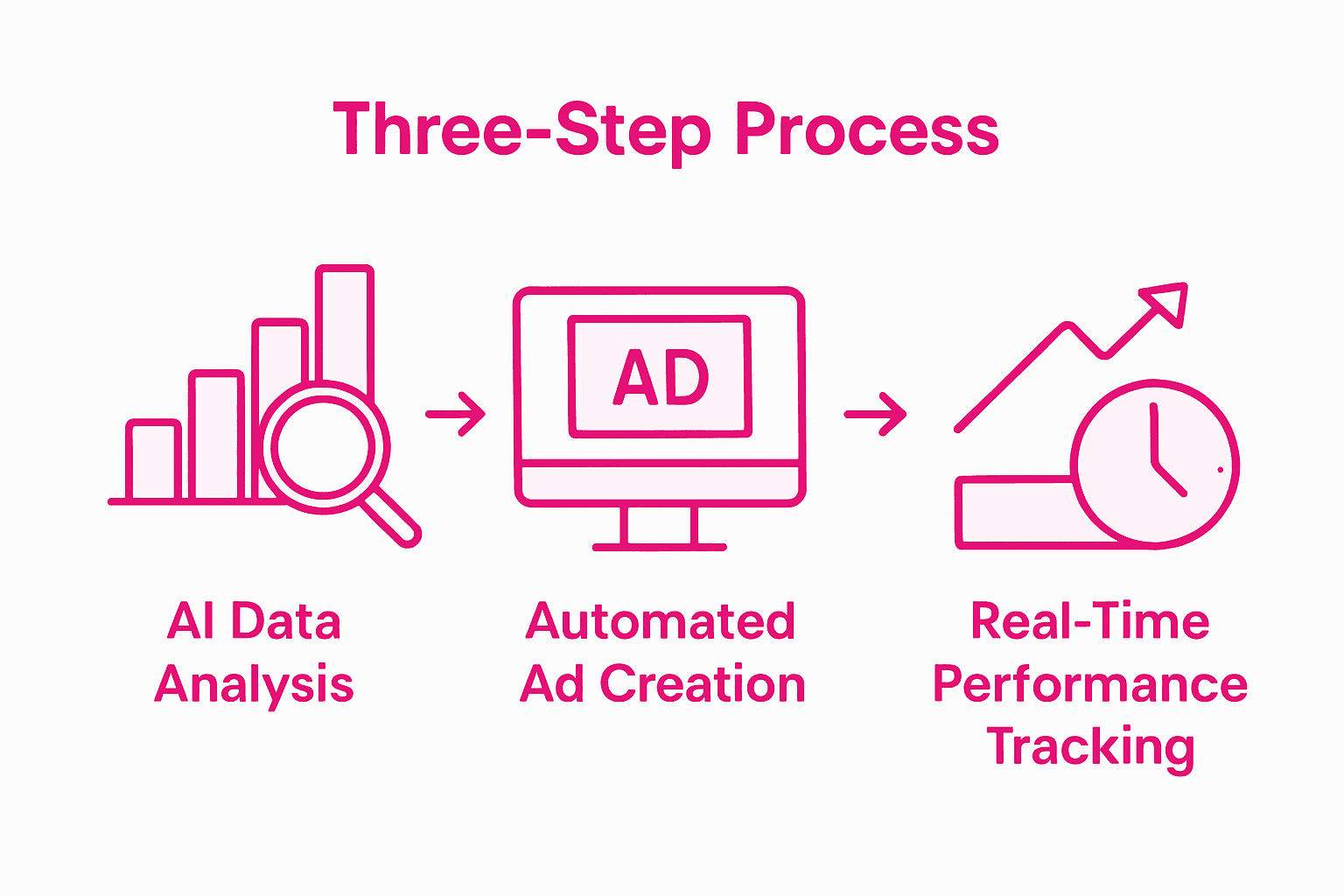
Ecommerce campaign strategies are experiencing a radical transformation through artificial intelligence, enabling businesses to create more sophisticated, responsive, and precisely targeted marketing approaches. Traditional marketing techniques are being systematically replaced by intelligent systems that can analyse complex consumer behaviours, predict purchasing patterns, and dynamically adjust advertising strategies in real-time.
AI is revolutionising campaign development through multilingual and multimodal advertising frameworks that can generate hyper-personalised content across diverse market segments. These advanced systems integrate retrieval-augmented generation techniques, allowing businesses to create culturally nuanced, contextually relevant advertisements that adapt seamlessly to shifting consumer preferences. By leveraging machine learning algorithms, marketers can now develop advertising strategies that go far beyond demographic segmentation, instead creating individualised experiences that speak directly to each potential customer’s unique needs and interests.

The strategic implementation of AI in ecommerce campaigns extends to critical decision-making processes such as pricing and advertising optimisation. AI learning algorithms now enable online sellers to coordinate advertising bids and pricing strategies with unprecedented precision, creating mutually beneficial outcomes for consumers, sellers, and digital platforms. These intelligent systems can analyse multiple variables simultaneously, identifying optimal price points, advertisement placements, and targeting strategies that maximise conversion potential while minimising marketing expenditure.
Pro Tip for Campaign Optimisation: Develop a progressive AI integration strategy by first implementing narrow, specific AI solutions in your marketing workflow, gradually expanding their scope as you measure and validate their performance across different campaign objectives.
Risks, Bias, and Ethical Considerations in Advertising AI
The rapid advancement of artificial intelligence in digital advertising presents profound ethical challenges that demand careful scrutiny and responsible implementation. While AI technologies offer unprecedented capabilities for targeted marketing, they simultaneously introduce complex risks related to privacy, algorithmic bias, and potential manipulation of consumer behaviours.
One significant ethical concern is the phenomenon of AI washing, a deceptive marketing practice where companies overstate the sophistication of their artificial intelligence capabilities. This misleading approach not only erodes consumer trust but also creates unrealistic expectations about the actual performance and limitations of AI-driven advertising technologies. Transparency becomes crucial in preventing such misrepresentations and maintaining the integrity of technological innovations.
Moreover, AI-driven personalisation in ecommerce advertising raises critical data privacy and algorithmic bias considerations. Machine learning algorithms can inadvertently perpetuate existing societal biases by training on historical datasets that reflect systemic inequalities. These biases might result in discriminatory advertising practices that unfairly target or exclude specific demographic groups, potentially reinforcing harmful stereotypes and limiting equitable consumer access to products and services.
Pro Tip for Ethical AI Implementation: Regularly audit your AI advertising algorithms for potential biases, implementing diverse training datasets and establishing clear ethical guidelines that prioritise fairness, transparency, and inclusive representation in your marketing strategies.
Below is a comparison of common risks and ethical challenges in AI advertising:
Risk or Challenge | How It Manifests | Mitigation Approach |
AI Washing | Overstating AI capabilities | Increase transparency and honesty |
Algorithmic Bias | Unfair targeting or exclusion | Use diverse, representative datasets |
Data Privacy | Misuse of personal information | Enforce strict privacy protocols |
Consumer Manipulation | Excessive personalisation tactics | Establish clear ethical boundaries |
Maximising ROI and Avoiding Common Pitfalls
Achieving optimal return on investment in AI-powered digital advertising requires a strategic approach that balances technological sophistication with nuanced understanding of market dynamics. Ecommerce businesses must move beyond simplistic implementation of artificial intelligence tools, instead developing comprehensive strategies that align technological capabilities with specific marketing objectives and performance metrics.
One critical aspect of maximising ROI involves implementing advanced generative auto-bidding approaches that can dynamically adjust advertising strategies across complex, long-horizon scenarios. These intelligent systems utilise conditional diffusion modeling to enhance bidding stability, allowing businesses to optimise their advertising expenditure with unprecedented precision. By continuously analysing performance data and market conditions, AI algorithms can make real-time adjustments that traditional manual approaches cannot match.
Furthermore, AI learning algorithms offer sophisticated mechanisms for coordinating advertising decisions that create mutually beneficial outcomes for consumers, sellers, and digital platforms. These advanced systems can simultaneously evaluate multiple variables, including pricing strategies, audience targeting, and competitive landscape, to generate optimal advertising approaches. The key lies in developing adaptive algorithms that can learn from historical performance data while remaining flexible enough to respond to emerging market trends and shifting consumer behaviours.
Pro Tip for Strategic Implementation: Implement a phased approach to AI advertising integration, starting with narrow, measurable objectives and gradually expanding complexity as you build confidence in your algorithmic performance and data-driven insights.
Unlock the Full Power of AI to Elevate Your Ecommerce Advertising
Struggling to navigate the complexities of AI-driven advertising and maximise your ecommerce growth? This article highlights key challenges such as optimising ad bids, personalising campaigns, and avoiding ethical pitfalls. Understanding concepts like predictive analytics and generative bidding is essential to stay ahead. Your goal is clear: deliver precisely targeted campaigns that increase conversions while managing investment wisely.
At IWantToBeSeen.online, we specialise in harnessing AI technology alongside SEO, Social Media, and PPC to scale ecommerce brands with over 25 years of proven success. We help you implement smart AI solutions tailored to your unique needs, eliminating guesswork from campaign optimisation and ensuring fair, transparent strategies that respect consumer privacy.
Experience the difference of working with experts who transform your advertising challenges into growth opportunities. Visit our main site to learn more about our digital marketing services designed to maximise your return on investment. Ready to elevate your ecommerce advertising with cutting-edge AI? Start your journey today at IWantToBeSeen.online.

Frequently Asked Questions
How does AI personalise advertising for ecommerce?
AI personalises advertising for ecommerce by analysing vast amounts of consumer data, including browsing history and purchase patterns. This allows businesses to create nuanced consumer profiles and craft targeted marketing messages that resonate with individual preferences.
What are the benefits of automated bidding in AI advertising?
Automated bidding in AI advertising optimises advertising spend by dynamically adjusting bids in real-time based on data analysis. This leads to increased return on investment as it maximises the efficiency of ad placements and audience targeting.
How can AI improve customer engagement in advertising?
AI improves customer engagement by using natural language processing in chatbots, providing personalised product recommendations, and tailoring ads based on real-time user interactions, making the advertising experience more relevant and engaging.
What risks are associated with using AI in digital advertising?
Risks associated with using AI in digital advertising include algorithmic bias, where AI may perpetuate existing inequalities, AI washing, which misrepresents the capabilities of AI technologies, and data privacy concerns related to the misuse of personal information.
Recommended
Comments