.png)
Personalised Marketing: Transforming eCommerce Success


Nearly 90 percent of British shoppers say they are more likely to buy from brands offering personalised experiences. This shift highlights how critical targeted marketing has become for eCommerce success in the United Kingdom and beyond. As businesses compete for customer loyalty, understanding the real mechanics and value of personalised marketing is now essential. Discover what makes this approach stand out and why thoughtful personalisation is redefining modern online shopping.
Table of Contents
Key Takeaways
Point | Details |
Personalised Marketing Enhances Engagement | By tailoring content to individual customers’ preferences and behaviours, brands can create more meaningful interactions and boost conversion rates. |
Data-Driven Strategies are Essential | Comprehensive data collection and advanced analytics are crucial for effective personalisation and understanding customer needs. |
Privacy Compliance is Critical | Businesses must navigate stringent data protection regulations while ensuring transparent data handling and customer consent. |
Avoid Common Personalisation Pitfalls | Brands should focus on data accuracy, relevant targeting, and maintaining a balance between personalisation and user experience to enhance customer loyalty. |
Defining Personalised Marketing in eCommerce
Personalised marketing represents a sophisticated approach to digital customer engagement that transforms traditional one-size-fits-all marketing strategies. At its core, this method uses advanced data analysis and digital technology to create highly targeted, individual customer experiences.
The fundamental premise of personalised marketing is straightforward yet powerful: delivering customised content for each individual customer, tailored precisely to their specific preferences and behaviours. Unlike generic marketing approaches, this strategy recognises that each customer is unique, with distinct interests, purchasing patterns, and expectations.
Understanding personalised marketing requires examining its key components. These typically include:
Comprehensive data collection from multiple customer touchpoints
Advanced analytics to interpret customer behaviour
Dynamic content generation that adapts in real-time
Sophisticated segmentation techniques
With personalised marketing technologies, eCommerce businesses can now create remarkably nuanced customer experiences. By leveraging detailed customer insights, brands can craft marketing messages that feel less like broad advertisements and more like personalised recommendations from a trusted friend. This approach not only enhances customer engagement but also significantly improves conversion rates and long-term brand loyalty.
The strategic implementation of personalised marketing represents a profound shift in how digital businesses interact with their customers, moving from generic communication to meaningful, individualised connections.
Major Types of Personalisation Strategies
Ecommerce businesses have multiple sophisticated personalisation strategies at their disposal, each designed to create more targeted and engaging customer experiences. Understanding these approaches allows brands to craft nuanced marketing interventions that resonate deeply with individual consumer preferences.

Behavioural Targeting emerges as a primary personalisation technique, utilising clickstream data to target high-value customers through intelligent, data-driven approaches. This strategy involves tracking online user behaviour, analysing browsing patterns, purchase history, and interaction data to develop highly specific marketing interventions.
Key personalisation strategies include:
Recommendation Engines
Product suggestions based on previous purchases
Similar item recommendations
Complementary product suggestions
Segmentation Strategies
Demographic grouping
Behavioural clustering
Purchase frequency categorisation
Dynamic Content Personalisation
Customised website experiences
Individualised email marketing
Tailored landing pages
Advanced personalisation goes beyond simple data collection, transforming raw information into meaningful customer insights. By understanding individual preferences, eCommerce platforms can create seamless, intuitive shopping experiences that feel uniquely crafted for each user. The goal is not just to sell products, but to build genuine connections that foster long-term customer loyalty and engagement.
How Personalised Marketing Operates Online
Personalised marketing has evolved into a sophisticated digital ecosystem driven by advanced data analytics and intelligent technology. At its core, the online mechanism transforms raw customer data into meaningful, actionable marketing insights that create uniquely tailored experiences.
Uplift modelling applies machine learning techniques to estimate the causal effects of marketing treatments at the individual customer level. This approach allows eCommerce platforms to design precisely targeted promotional campaigns that resonate with specific user segments, moving far beyond traditional broad-brush marketing strategies.
The operational framework of personalised marketing typically involves several critical stages:
Data Collection
Tracking user browsing behaviour
Analysing purchase history
Monitoring interaction patterns
Data Processing
Machine learning algorithms
Predictive analytics
Customer segmentation
Personalisation Execution
Dynamic content adaptation
Individualised product suggestions
Modern personalised marketing goes beyond simple recommendation engines. By leveraging sophisticated algorithms and vast datasets, online platforms can create immersive, anticipatory experiences that feel intuitive and responsive to each user’s unique needs. The ultimate goal is transforming generic digital interactions into meaningful, personalised customer journeys that drive engagement and long-term loyalty.
Real-World Outcomes for eCommerce Brands
Personalised marketing has transformed the digital commerce landscape, delivering remarkable outcomes for brands willing to invest in sophisticated customer engagement strategies. By leveraging data-driven insights, eCommerce businesses can create experiences that dramatically improve customer retention, conversion rates, and overall revenue performance.
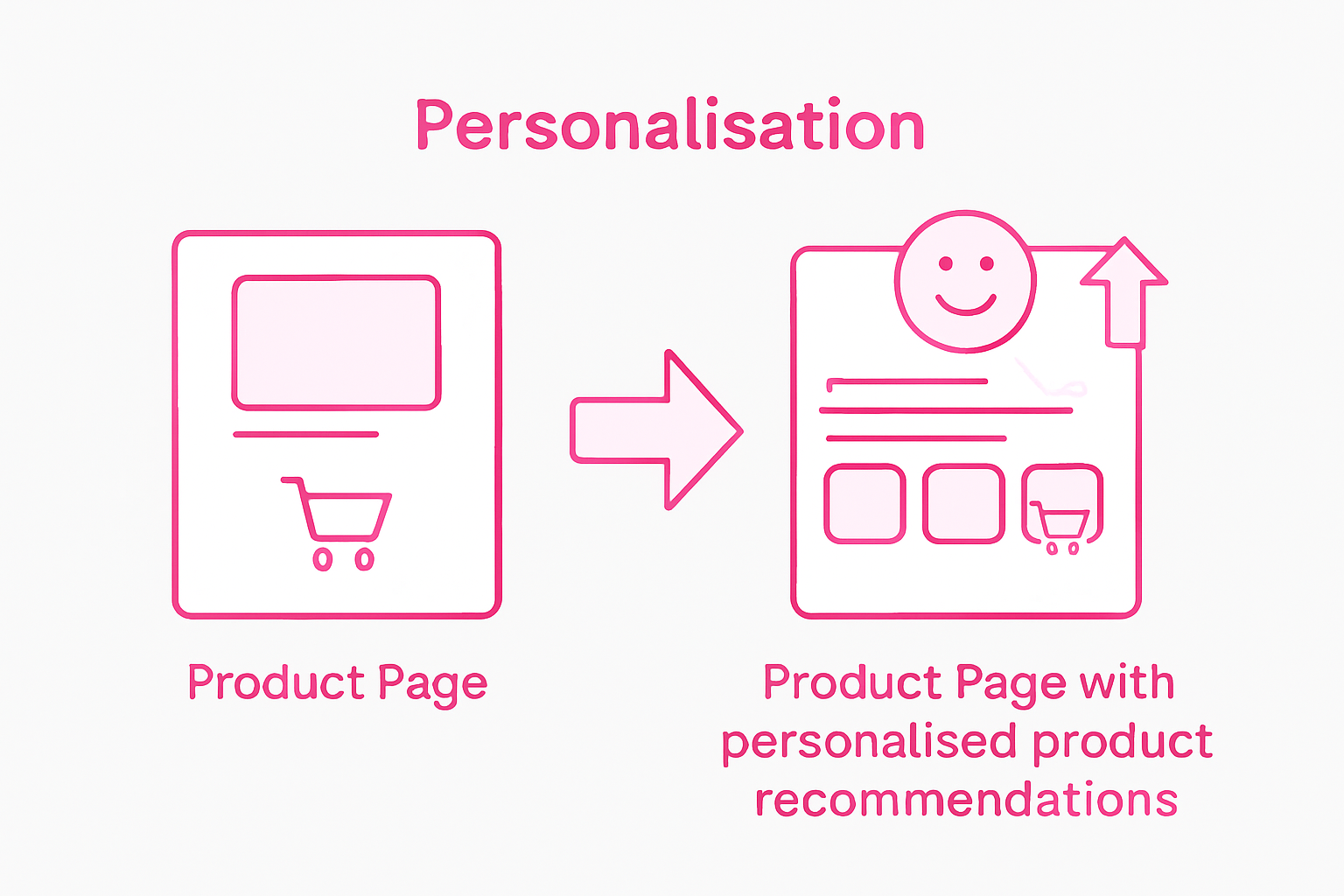
The tangible benefits of personalised marketing strategies are profound. Brands implementing comprehensive personalisation approaches typically witness significant improvements across multiple key performance indicators. These outcomes range from increased average order values to enhanced customer loyalty and reduced marketing expenditure.
Key real-world outcomes for eCommerce brands include:
Revenue Enhancement
Higher conversion rates
Increased average transaction values
Reduced customer acquisition costs
Customer Experience
Improved customer satisfaction
More relevant product recommendations
Enhanced engagement metrics
Operational Efficiency
Streamlined marketing spend
More precise targeting
Better resource allocation
Successful personalisation requires a holistic approach that goes beyond simple product recommendations. The most effective eCommerce brands treat personalisation as a comprehensive strategy, integrating advanced data analytics, machine learning, and deep customer understanding to create truly exceptional shopping experiences that feel intuitive and individually crafted.
Privacy Laws and Customer Data Use
Personalised marketing sits at a critical intersection between innovative customer engagement and stringent data protection regulations. Ecommerce brands must navigate a complex landscape of legal requirements that balance technological capabilities with individual privacy rights.
Targeted advertising involves directing ads toward audiences with specific traits, which inherently raises significant concerns about privacy and data protection laws. The legal framework surrounding customer data use has become increasingly sophisticated, demanding that businesses implement robust consent mechanisms and transparent data handling practices.
Key privacy considerations for eCommerce businesses include:
Data Collection Transparency
Explicit user consent
Clear communication of data usage
Opt-in/opt-out mechanisms
Legal Compliance
General Data Protection Regulation (GDPR)
California Consumer Privacy Act (CCPA)
UK Data Protection Act
Customer Data Rights
Right to access personal information
Right to data deletion
Right to restrict data processing
Programmatic commerce technologies that enable automated purchase decisions must carefully balance innovative tracking capabilities with strict legal requirements concerning consumer consent. Successful personalised marketing strategies recognise that customer trust is paramount, requiring a delicate balance between data-driven insights and rigorous privacy protections that respect individual autonomy and legal standards.
Common Mistakes to Avoid in Personalisation
Personalisation strategies can quickly unravel when eCommerce brands approach customer engagement without nuanced understanding. Sophisticated personalisation requires more than basic data collection and generic targeting techniques.
Failing to offer customizable product options represents a significant missed opportunity in personalisation efforts. Customers increasingly expect tailored experiences that reflect their individual preferences, and brands that cannot adapt risk losing potential sales and customer loyalty.
Common personalisation pitfalls include:
Data Collection Errors
Collecting irrelevant customer information
Relying on outdated or incomplete data
Ignoring data quality and accuracy
Technological Limitations
Inflexible recommendation systems
Poor user interface design
Lack of real-time personalisation capabilities
Customer Experience Mistakes
Over-aggressive personalisation
Insufficient privacy controls
Repetitive or intrusive marketing approaches
Neglecting virtual try-on technologies can significantly hinder personalisation efforts. Modern consumers expect immersive, interactive experiences that allow them to visualise products in context, reducing uncertainty and potential returns. Successful personalisation strategies recognise that technology should enhance, not replace, genuine human connection and individual customer preferences.
Elevate Your eCommerce with Expert Personalised Marketing Solutions
Are you struggling to harness the true power of personalised marketing for your eCommerce brand The article highlights common challenges such as utilising advanced data analytics, avoiding outdated strategies, and complying with privacy laws to create truly customised customer experiences. Your goals of enhancing conversion rates, improving customer loyalty and delivering dynamic content can be fully realised with the right support.
We specialise in SEO, AI, Social Media and PPC tailored specifically for eCommerce businesses with over 25 years of proven success scaling leading brands. From building intelligent recommendation systems to crafting privacy-compliant, customer-centric campaigns that drive engagement, our services cover all critical facets of modern personalisation.
Discover how our deep expertise can transform your digital marketing approach.

Take the next step today by exploring how our bespoke digital marketing services can unlock your brand’s full potential Visit our main website and see why successful eCommerce brands trust us to elevate their personalised marketing strategies. Start turning data into meaningful customer journeys that boost revenue and build lasting relationships now.
Frequently Asked Questions
What is personalised marketing in eCommerce?
Personalised marketing in eCommerce is an advanced strategy that customises marketing messages and experiences for individual customers based on their unique behaviours, preferences, and purchasing patterns.
How do recommendation engines work in personalised marketing?
Recommendation engines analyse customer data, such as past purchases and browsing history, to suggest products that align with a user’s interests, thereby enhancing the shopping experience and driving sales.
What are the main components of a successful personalised marketing strategy?
Successful personalised marketing strategies typically include comprehensive data collection, advanced analytics to understand consumer behaviour, dynamic content generation, and effective segmentation techniques.
What are common mistakes to avoid in implementing personalised marketing?
Common mistakes include collecting irrelevant or outdated data, relying on inflexible recommendation systems, and failing to ensure a pleasant customer experience without being overly intrusive or aggressive in personalisation.
Recommended
7 Ecommerce Marketing Best Practices for UK and Ireland Brands
7 Essential AI Marketing Strategies 2025 for eCommerce Growth
7 Key Digital Marketing Trends 2025 for Malaysian Buyers - Projector Display
Comments