.png)
How to Use AI for SEO to Boost eCommerce Rankings


Over 85 percent of british online shoppers expect fast, relevant search results when browsing eCommerce stores. With so many options available, even a small technical issue can send potential customers straight to a competitor. Mastering the fundamentals of eCommerce SEO has never mattered more, and learning how to leverage AI-powered tools can make a measurable difference. This guide is designed to help british businesses optimize every step of their SEO journey, from initial assessment to ongoing improvement.
Table of Contents
Quick Summary
Key Point | Explanation |
1. Conduct a thorough website audit | Review site architecture, load speeds, responsiveness, and content to identify SEO improvement opportunities. |
2. Perform comprehensive keyword research | Identify relevant search terms and user intent to optimise product categories effectively. |
3. Select suitable AI SEO tools | Choose tools that integrate with your platform and provide predictive analytics for informed decision-making. |
4. Automate content and keyword processes | Deploy AI tools for streamlined keyword research and content optimisation, reducing manual effort. |
5. Regularly evaluate SEO outcomes | Use AI insights to refine your SEO strategies and adapt to changing search behaviours dynamically. |
Step 1: Assess your eCommerce SEO requirements
Assessing your eCommerce SEO requirements is a strategic process of understanding your current digital landscape and identifying opportunities for targeted improvement. This critical first step will help you create a precise roadmap for enhancing your online store’s search visibility.
Begin by conducting a comprehensive audit of your existing website. Analyse your current site architecture, page load speeds, mobile responsiveness, and content quality. Look closely at your product descriptions, metadata, image alt texts, and URL structures. Consider using specialised SEO tools to generate detailed reports on your website’s performance. Generative Engine Optimization techniques are becoming increasingly important in understanding how AI search engines interpret and rank content, so pay special attention to how your content might be perceived by advanced search algorithms.
Your assessment should also include a thorough keyword research process. Identify the most relevant search terms for your product categories, analyse search volumes, and understand user intent behind these queries. Compare your current keyword targeting against top-performing competitors in your niche. E-commerce generative search optimization benchmarks suggest that understanding AI-driven search behaviours can significantly improve your content strategy.
Recommended tip: Perform a monthly SEO health check to ensure your eCommerce website remains optimised and competitive in rapidly changing digital landscapes.
Here is a summary of key factors to review during an eCommerce SEO assessment:
Audit Area | What to Examine | Potential Impact on SEO |
Site Architecture | Navigation structure, category depth | Better crawlability and indexation |
Page Load Speed | Server performance, image sizes | Improved ranking and user retention |
Mobile Responsiveness | Layout adaptation to devices | Higher mobile search visibility |
Metadata Quality | Title tags, meta descriptions | Increased click-through rates |
Image Alt Texts | Descriptive, keyword-aligned tags | Enhanced accessibility and ranking |
Step 2: Select the right AI SEO tools for your platform
Selecting the right AI SEO tools is a crucial step in optimising your eCommerce platform’s digital performance. This process involves carefully evaluating tools that can streamline your search engine optimisation efforts and provide intelligent insights into your website’s potential.
Begin by identifying your specific SEO requirements and matching them with AI tools that offer comprehensive features. SEO basics for eCommerce suggest looking for platforms that combine advanced keyword analysis, content optimization, and performance tracking. Consider tools with machine learning capabilities that can predict search trends, analyse competitor strategies, and provide actionable recommendations for improving your website’s search rankings.
When evaluating AI SEO tools, prioritise solutions that integrate seamlessly with your existing eCommerce platform. Look for features such as automated content suggestions, real-time SEO scoring, semantic keyword recommendations, and competitive analysis. Pay attention to user interface, reporting capabilities, and the tool’s ability to provide insights across multiple search engines and platforms. Some advanced tools now offer predictive analytics that can help you anticipate and adapt to changing search algorithm dynamics.
Pro tip: Always start with a free trial or demo version of AI SEO tools to thoroughly test their compatibility with your specific eCommerce platform before making a financial commitment.
Below is a comparison of core features to consider when selecting AI SEO tools for eCommerce:
Feature | Business Benefit | Example Use Case |
Predictive Analytics | Anticipate algorithmic changes | Adjust strategy proactively |
Automated Content Suggestions | Save time on manual research | Generate content outlines |
Real-time SEO Scoring | Identify optimisation opportunities | Instantly review new product pages |
Competitor Strategy Analysis | Benchmark against top market players | Spot keyword gaps |
Step 3: Integrate AI tools with your site analytics
Integrating AI tools with your site analytics represents a transformative approach to understanding and optimising your eCommerce performance. This strategic process enables you to unlock deeper insights into user behaviour, conversion patterns, and potential growth opportunities.
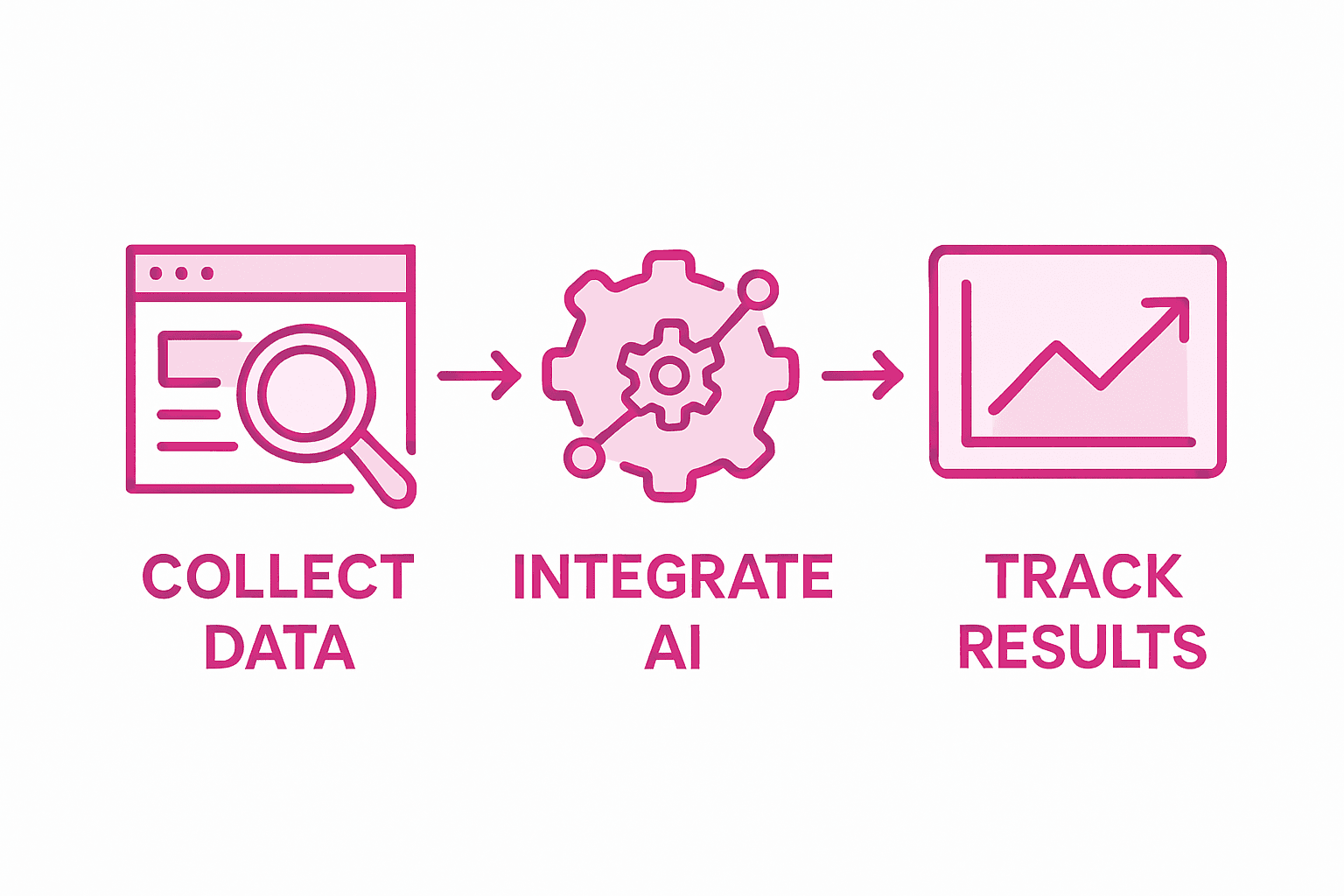
Intelligent classification of e-commerce product data has revolutionised how businesses understand customer interactions. When integrating AI analytics tools, focus on platforms that offer machine learning models capable of providing granular insights into user journeys. Look for solutions that can analyse complex user behaviour patterns, track engagement metrics, and provide predictive recommendations. Advanced semantic query analysis can further enhance your site’s search functionality, allowing for more nuanced understanding of customer search intentions.
Begin the integration process by carefully selecting AI analytics platforms that complement your existing technology stack. Ensure the tools can seamlessly connect with your current analytics infrastructure, providing real-time data processing and comprehensive reporting. Configure custom dashboards that highlight key performance indicators relevant to your specific eCommerce goals, such as conversion rates, customer acquisition costs, and personalised product recommendation effectiveness.
Pro tip: Schedule monthly review sessions to assess the performance of your AI analytics integration and make data-driven adjustments to your eCommerce strategy.
Step 4: Automate keyword research and content optimisation
Automating keyword research and content optimisation represents a strategic approach to streamlining your eCommerce SEO workflow. This process enables you to efficiently identify high-performing keywords and create targeted content that resonates with your audience while minimising manual effort.

AI-powered content generation platforms have transformed how businesses approach keyword research and content creation. When selecting automation tools, prioritise solutions that offer comprehensive keyword analysis, competitor insights, and semantic content recommendations. Look for platforms that can generate data-driven content suggestions, analyse search intent, and provide real-time recommendations for improving your existing content. These intelligent systems can help you identify long-tail keywords, understand search volume trends, and craft content that aligns precisely with user search behaviours.
Implement a systematic approach to automation by integrating AI-powered keyword research tools with your content management workflow. Configure the tools to provide regular reports on keyword performance, search volume changes, and content optimization opportunities. Develop a routine where you review automated recommendations, validate their relevance, and make strategic adjustments to your content strategy. Focus on tools that offer not just keyword suggestions, but also contextual insights into how these keywords perform across different search engines and user segments.
Pro tip: Establish a quarterly review process to assess the effectiveness of your AI-driven keyword research tools and adjust your automation strategy based on actual performance metrics.
Step 5: Evaluate and refine SEO outcomes using AI insights
Evaluating and refining SEO outcomes through AI insights is a critical process for maintaining competitive advantage in the dynamic digital marketplace. This strategic approach enables you to continuously adapt and optimise your eCommerce website’s search performance with data driven precision.
Generative Engine Optimization strategies represent a sophisticated method for understanding and improving content visibility in AI powered search environments. Implement comprehensive AI analytics tools that provide granular insights into your website’s search performance, including detailed metrics on keyword rankings, user engagement, and content relevance. These intelligent systems can help you identify subtle patterns in search behaviours, highlight underperforming content areas, and suggest targeted improvements that align with emerging search algorithm preferences.
Develop a structured approach to interpreting AI generated insights by establishing clear performance benchmarks and regularly comparing your website’s metrics against these standards. Advanced AI search optimization techniques recommend creating a dynamic feedback loop where you continuously analyse search performance data, implement recommended changes, and measure their immediate impact. Focus on tools that offer predictive analytics, enabling you to anticipate potential SEO challenges and proactively adjust your content strategy before performance declines.
Pro tip: Create a monthly AI insights review session where you critically evaluate your website’s search performance and make incremental optimisations based on the most recent data insights.
Elevate Your eCommerce SEO with Expert AI-Driven Strategies
Navigating the complexities of AI-powered SEO for your eCommerce website can feel overwhelming. The challenge lies in effectively assessing your SEO needs, selecting the right AI tools, and optimising content while keeping pace with evolving search algorithms. If you are striving to automate keyword research, integrate predictive analytics, or refine search outcomes through generative engine optimisation techniques ensuring superior rankings, you are not alone.
Our digital marketing services specialise in solving these exact pain points. Backed by over 25 years of experience scaling highly successful eCommerce brands, we deliver tailored SEO, AI, Social Media, and PPC solutions that align precisely with your unique business goals. We understand the critical importance of real-time SEO scoring, automated content suggestions, and intelligent site analytics integration.
Ready to transform your SEO approach and harness AI to boost your eCommerce rankings?

Discover how our proven expertise can accelerate your digital growth. Visit our website now and explore personalised strategies designed to amplify your online presence. Don’t wait until your competitors outpace you. Take the first step today with digital marketing services that understand the future of eCommerce SEO and AI optimisation.
Frequently Asked Questions
How can I assess my eCommerce SEO requirements using AI?
To assess your eCommerce SEO requirements, start by conducting a comprehensive audit of your current website, focusing on site architecture, page load speeds, and content quality. Use AI-powered tools to generate detailed performance reports, allowing you to identify specific areas for improvement within 30 days.
What AI tools should I select for enhancing my eCommerce SEO?
Select AI tools that provide features like keyword analysis, content optimisation, and performance tracking. Look for solutions that seamlessly integrate with your platform and offer predictive analytics to anticipate search trends and changes in algorithm dynamics.
How do I integrate AI tools with my existing site analytics?
To integrate AI tools with your site analytics, choose platforms that can connect smoothly with your current technology stack. Set up your dashboards to track key performance indicators regularly, ensuring that you analyse user behaviour and conversion metrics at least once a month.
What steps should I follow to automate keyword research and content optimisation?
Begin by selecting AI-powered keyword research tools that provide real-time recommendations and competitor insights. Set a routine to review automated suggestions quarterly, making adjustments to your content strategy based on actual performance data to target high-performing keywords.
How can I use AI insights to evaluate and improve my SEO outcomes?
Utilise AI analytics tools to gather insights on your website’s search performance, focusing on metrics like keyword rankings and user engagement. Establish monthly review sessions to compare these metrics against defined benchmarks and implement incremental optimisations to enhance your search rankings.
Recommended
Comments