.png)
How to Measure SEO Performance for eCommerce Success


Most british eCommerce businesses underestimate the power of precise SEO benchmarking, yet sites that track even basic performance indicators enjoy up to 50 percent more consistent growth. Understanding where you stand matters whether you are a small boutique or a growing online retailer. This guide shows you how the right measurement strategies and tracking tools help british brands uncover real business opportunities and transform SEO data into smarter decisions that drive sales.
Table of Contents
Quick Summary
Key Insight | Explanation |
1. Establish SEO benchmarks | Conduct a detailed audit of current SEO metrics to set clear, measurable goals for improvement. |
2. Use essential tracking tools | Integrate Google Analytics and Google Search Console to effectively monitor SEO performance and traffic data. |
3. Monitor key performance metrics | Track organic traffic, keyword rankings, and conversion rates to understand the effectiveness of your SEO strategy. |
4. Analyse SEO data trends | Regularly dig deeper into your metrics to identify patterns that inform strategic decisions for optimisation. |
5. Refine SEO strategy continually | Establish a cyclic review process to adjust your strategy based on performance data for ongoing improvements. |
Stage 1: Set accurate SEO benchmarks for your eCommerce site
Establishing precise SEO benchmarks is crucial for understanding your online store’s performance and identifying strategic improvement opportunities. By setting clear, measurable goals, you can track your website’s search engine visibility and growth effectively.
Begin by conducting a comprehensive audit of your current SEO metrics. This involves examining key performance indicators such as organic traffic, keyword rankings, conversion rates, and page loading speeds. Submitting accurate sitemaps to search engines will provide a solid foundation for tracking these metrics. Utilise tools like Google Analytics and Google Search Console to gather detailed insights into your website’s search performance.
Consider establishing benchmarks across multiple dimensions. Focus on tracking average organic search traffic, keyword ranking positions, click-through rates from search results, and conversion rates for organic search visitors. Compare your current metrics against industry standards and your competitors to understand your relative performance. Remember that benchmarks should be specific, measurable, achievable, relevant, and time-bound (SMART).
Practical tip: Document your initial benchmarks as a baseline and review them quarterly. This approach allows you to measure incremental improvements and adjust your SEO strategy dynamically.
Stage 2: Select and configure essential SEO tracking tools
Selecting the right SEO tracking tools is fundamental for monitoring your eCommerce website’s performance and identifying strategic improvement opportunities. These tools will help you gather critical insights into your search engine rankings, organic traffic, and overall digital visibility.
Start by integrating comprehensive analytics platforms that offer detailed SEO performance metrics. Google Analytics and Google Search Console are essential free tools that provide extensive data about your website’s search performance. Additionally, consider exploring modular SEO configuration tools that can automate and streamline your optimization processes. Look for tools that offer real-time tracking of keyword rankings, organic traffic analysis, backlink monitoring, and competitor benchmarking.

When configuring your tracking tools, ensure you set up custom dashboards that highlight the most relevant metrics for your eCommerce business. Focus on tracking organic search traffic, conversion rates, keyword performance, page loading speeds, and user engagement metrics. Configure goal tracking to measure specific actions like product page views, add-to-cart events, and completed purchases attributed to organic search traffic.
Practical tip: Integrate multiple SEO tracking tools to cross-validate data and gain a more comprehensive understanding of your website’s search performance. Different tools often provide unique insights that can help refine your optimization strategy.
Below is a comparison of popular SEO tracking tools for eCommerce businesses:
Tool | Key Strength | Suitable Use Case |
Google Analytics | Detailed visitor and sales data | Monitoring traffic and conversions |
Google Search Console | In-depth keyword and crawl insights | Tracking index status and rankings |
Third-Party SEO Suites | Competitive analysis and automation | Benchmarking and advanced reporting |
Modular Plugins | Customisable and easy integration | Automating site-wide optimisations |
Stage 3: Identify and monitor key SEO performance metrics
Understanding and tracking the right SEO performance metrics is essential for driving meaningful growth in your eCommerce business. By measuring specific indicators, you can gain actionable insights into your website’s search engine performance and make data-driven optimization decisions.
Tracking comprehensive performance metrics involves examining multiple dimensions of your online store’s search visibility. Start by monitoring organic search traffic, which reveals how many visitors arrive through search engines. Focus on critical metrics such as keyword rankings, click-through rates, bounce rates, and conversion rates. Use Google Analytics Enhanced Ecommerce Reports to analyse detailed checkout process performance, identifying potential drop-off points and user experience barriers that might impact your SEO effectiveness.
Pay close attention to metrics that directly impact your eCommerce success. These include average time on product pages, number of pages viewed per session, cart abandonment rates, and revenue generated from organic search traffic. Create custom dashboards that highlight these key performance indicators, allowing you to quickly assess your SEO strategy’s effectiveness and make informed refinements.
Practical tip: Set up monthly performance review sessions where you compare your current SEO metrics against previous periods. This consistent analysis will help you identify trends, measure improvement, and adjust your optimization strategies proactively.
Here is a summary of core SEO metrics and their strategic significance for eCommerce:
SEO Metric | What It Measures | Business Impact |
Organic Traffic | Visitors from search engines | Indicates reach and potential new customers |
Keyword Rankings | Position of key search terms | Reveals competitive stance and discoverability |
Conversion Rate | Percentage of visitors converting | Tracks effectiveness in generating sales |
Bounce Rate | Single-page session exits | Shows engagement level and content relevance |
Page Load Speed | Time taken to load pages | Affects user experience and conversion rates |
Revenue from SEO | Sales attributed to SEO | Directly links optimisation to income |
Stage 4: Analyse and interpret your SEO data
Analysing SEO data effectively transforms raw numbers into strategic insights that can dramatically improve your eCommerce website’s search performance. By understanding the deeper meaning behind your metrics, you can make precise optimisation decisions that drive tangible business results.
Utilise Google Search Console to monitor critical SEO performance indicators and gain comprehensive insights into your website’s search visibility. Begin by examining your organic search traffic patterns, identifying which keywords are driving the most valuable visitors to your online store. Look beyond surface level statistics and dig deeper into metrics such as click-through rates, average session duration, and conversion rates associated with specific search queries. Leverage keyword research tools to generate strategic insights that can help you understand user search behaviour and align your content with customer intentions.
When interpreting your SEO data, focus on identifying trends and patterns rather than getting lost in isolated data points. Compare your current performance against previous periods, looking for consistent improvements or potential areas of decline. Pay special attention to how changes in your SEO strategy correlate with shifts in organic traffic, keyword rankings, and revenue generation. Create visual representations of your data through dashboards and reports to make complex information more digestible and actionable for your team.
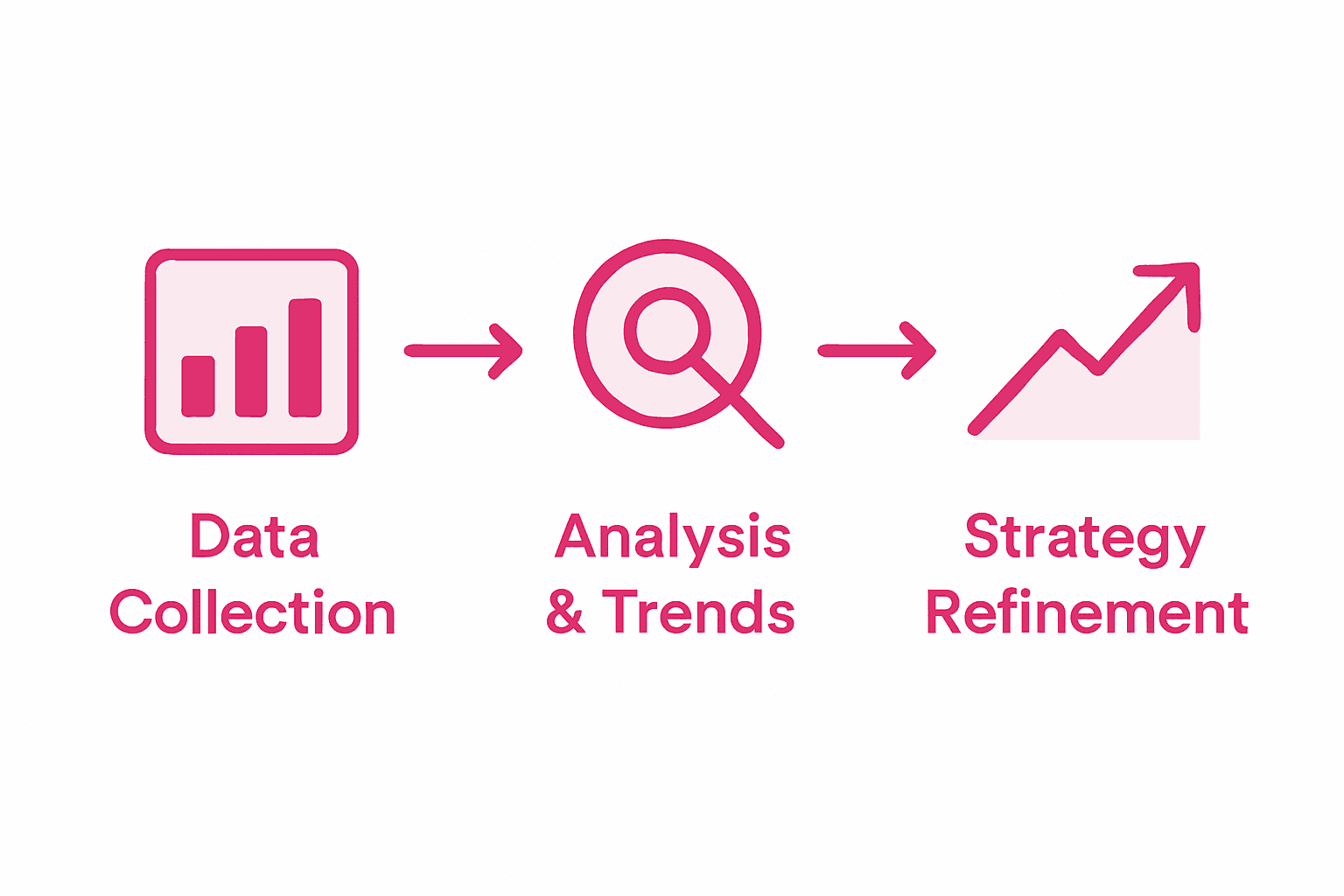
Practical tip: Develop a standardised monthly SEO performance review process where you systematically analyse your data, document key findings, and outline specific recommendations for continuous improvement.
Stage 5: Verify improvements and refine your SEO strategy
Verifying and refining your SEO strategy is an ongoing process that requires careful analysis, patience, and strategic adjustments. Understanding how your optimisation efforts translate into tangible results will help you continuously improve your eCommerce website’s search performance.
Track your SEO improvements with patience and precision, recognising that some ranking signals can take months to show significant changes. Utilise Google Search Console to monitor your progress systematically, comparing your current performance against previous benchmarks. Measure the direct impact of website modifications on sales performance using Google Analytics Enhanced Ecommerce Reports. This will help you understand which SEO adjustments are generating meaningful business outcomes.
Develop a structured approach to strategy refinement by creating a continuous improvement cycle. Regularly review your keyword rankings, organic traffic patterns, and conversion rates. Identify specific areas where your current strategy falls short and develop targeted interventions. Experiment with different content approaches, meta descriptions, and technical SEO elements while maintaining a data driven mindset. Remember that SEO is an iterative process where small incremental improvements can lead to substantial long term gains.
Practical tip: Establish a quarterly SEO strategy review meeting where you critically assess your performance metrics, discuss emerging trends, and collaboratively develop action plans for ongoing optimisation.
Unlock Your eCommerce Growth with Expert SEO Performance Tracking
Measuring SEO performance for eCommerce success is essential but often challenging. The article highlights key pain points including setting accurate SEO benchmarks, selecting the right tracking tools, and interpreting complex data to refine strategies. Many eCommerce businesses struggle with consistently analysing metrics like organic traffic, keyword rankings, and conversion rates — all of which are critical to making informed decisions that drive sales and growth.
At iWantToBeSeen, we understand these obstacles and bring over 25 years of expertise scaling high-performing eCommerce brands. Our digital marketing services specialise in SEO, AI, Social Media, and PPC tailored specifically for online stores. We help you set measurable goals, configure essential tracking systems, and translate data into actionable strategies. Discover how our proven approach turns SEO insights into tangible business outcomes today.
Take control of your SEO journey now and accelerate your eCommerce success.

Ready to transform your SEO performance? Visit our digital marketing services to start your personalised optimisation plan and see real results.
Frequently Asked Questions
How can I establish SEO benchmarks for my eCommerce site?
To establish SEO benchmarks, conduct a comprehensive audit of your current SEO metrics, including organic traffic and conversion rates. Document these initial benchmarks as a baseline, then review them quarterly to track progress.
What key performance metrics should I track for eCommerce SEO?
Key performance metrics to track include organic traffic, keyword rankings, conversion rates, and page loading speeds. Set up custom dashboards to monitor these metrics closely and adjust your SEO strategy based on the insights gained.
How can I interpret my SEO data for actionable insights?
Interpret your SEO data by comparing current performance to past periods and seeking trends rather than isolated data points. Focus on metrics such as click-through rates and average session duration to identify what drives value, then refine your approach accordingly.
What tools are essential for tracking eCommerce SEO performance?
Essential tools for tracking eCommerce SEO performance include analytic platforms that provide insights into organic traffic, keyword rankings, and user engagement metrics. Integrate multiple tools to cross-validate data and gain a comprehensive view of your website’s performance.
How often should I review my SEO performance metrics?
You should review your SEO performance metrics at least monthly to assess trends and measure improvements. Establish a review process to analyse key metrics and adjust your strategies based on your findings.
What steps should I take to verify and refine my SEO strategy?
To verify and refine your SEO strategy, monitor your progress through analytics tools and compare it against established benchmarks. Regularly identify areas requiring improvement, and experiment with different content and technical SEO elements to enhance effectiveness.
Recommended
Comments