.png)
How to Manage Social Media Ads for Ecommerce Success


Most british ecommerce brands now see more than half their web traffic coming from social media platforms. With audiences scrolling faster than ever, standing out requires both sharp strategy and real understanding of your shoppers. How do you set up campaigns that actually convert? If you want your advertising spend to work smarter, this guide breaks down each step to create winning campaigns, from defining clear goals to tracking performance for real growth.
Table of Contents
Quick Summary
Key Message | Explanation |
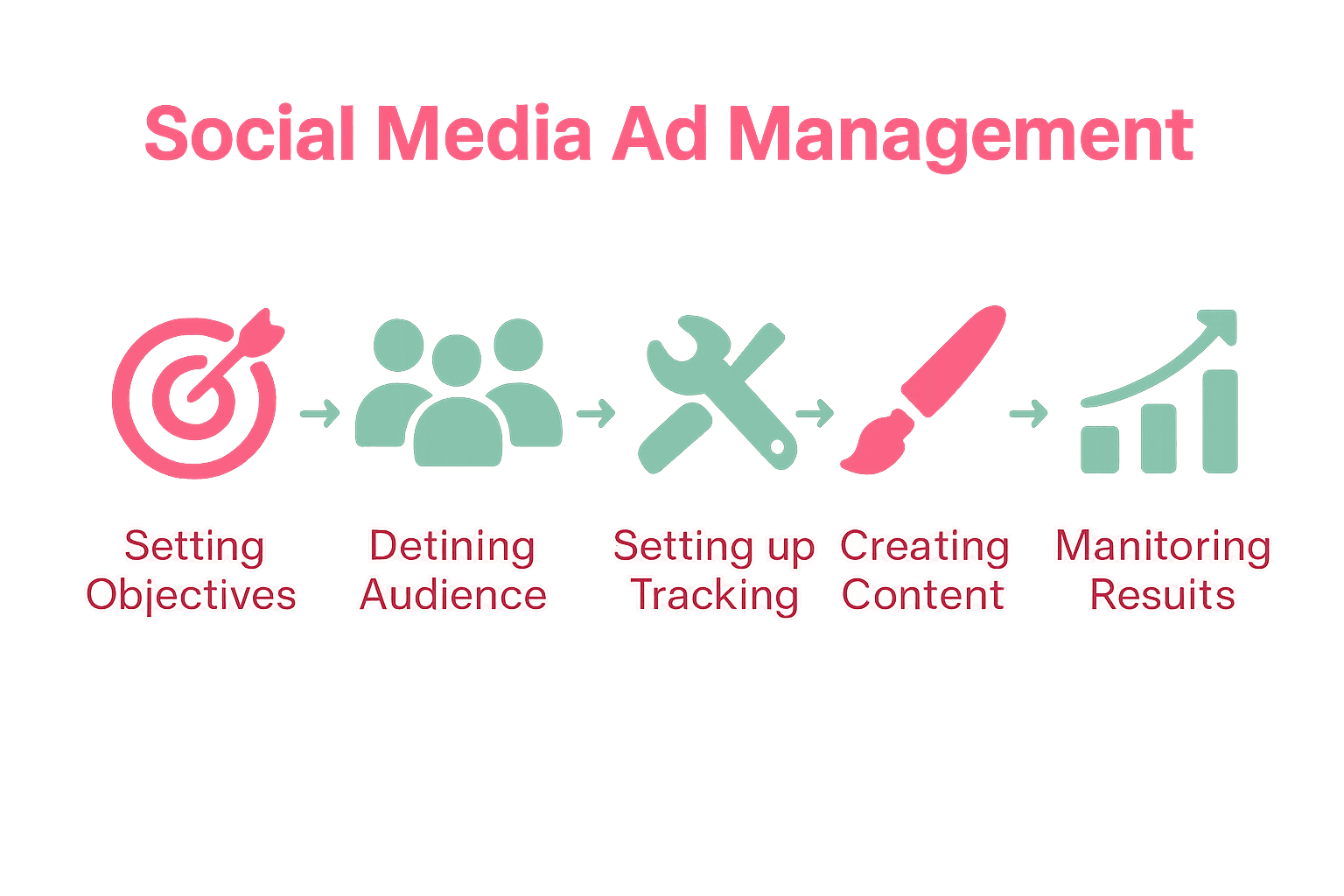
1. Define clear campaign objectives | Establish specific goals like traffic, sales, or brand awareness to guide your advertising strategy. |
2. Identify your target audience | Develop detailed audience profiles based on demographics and psychographics to refine targeting efforts. |
3. Set up ad accounts and tracking | Create accounts on platforms your audience uses and implement tracking tools for performance monitoring. |
4. Create engaging ad content | Use high-quality visuals and persuasive copy that clearly communicate your product’s value to attract attention. |
5. Monitor and refine advertising strategies | Continuously analyse performance metrics to make informed adjustments for optimal campaign effectiveness. |
Step 1: Define campaign objectives and target audience
Before launching social media advertising for your ecommerce business, you need a crystal clear strategy that pinpoints exactly what you want to achieve. According to research from eujournal.org, social media advertising plays a pivotal role in contemporary marketing strategies by effectively reaching and engaging specific target audiences.
Start by establishing precise campaign objectives. Are you looking to drive website traffic, increase product sales, build brand awareness, or generate leads? Each goal requires a different approach. For product sales, you might focus on conversion optimisation. For brand awareness, you’ll prioritise reach and engagement metrics. Consider your current business stage and what metric will most meaningfully impact your bottom line.
Defining your target audience is equally critical. Break down your ideal customer profile by demographic factors like age, gender, income level, and geographic location. Go deeper by understanding psychographic elements such as interests, purchasing behaviours, and online browsing patterns. Use social media platform analytics and customer data to create highly targeted audience segments that match your campaign objectives.
Pro tip: Always start narrow with your targeting. It’s easier to expand your audience later than to waste budget on broad, unfocused advertising. Test different audience combinations and track performance meticulously to refine your strategy.
Step 2: Set up ad accounts and tracking tools
With your campaign objectives and target audience defined, it is time to establish the technical foundation for your social media advertising strategy. Grace Communications Foundation emphasises the critical importance of having a robust marketing plan and setting up comprehensive tests before investing significant resources.
Begin by creating ad accounts across key social media platforms where your target audience is most active. For most ecommerce businesses, this typically includes Facebook, Instagram, and potentially TikTok or Pinterest. Each platform offers unique advertising interfaces, so take time to explore their specific setup processes. As recommended by MSKTC, carefully work through their advertising worksheets to ensure you configure your account correctly.
Tracking tools are your next critical priority. Install pixel tracking codes from each platform on your website to monitor user interactions, conversions, and campaign performance. Google Analytics and Facebook Pixel are particularly powerful for capturing detailed insights. Configure conversion events that align directly with your campaign objectives, whether that is product purchases, email sign ups, or specific page views.
Pro tip: Always test your tracking implementations before launching campaigns. Create a test conversion to verify that data flows correctly between your website and advertising platforms.

This prevents potential tracking blind spots that could compromise your campaign performance analysis.
Step 3: Create engaging ad content and visuals
With your ad accounts and tracking tools set up, it is time to craft compelling visual content that captures your audience’s attention. According to Grace Communications Foundation, developing creative materials and writing persuasive ad copy is crucial during the execution phase of social media advertising.
Start by selecting high-quality visuals that authentically represent your products. Use professional product photography or lifestyle images that demonstrate your items in real world contexts. Your images should tell a story that resonates with your target audience, showcasing not just the product but the experience or solution it provides. MSKTC recommends focusing on ad components that clearly communicate your value proposition.
Craft ad copy that speaks directly to your audience’s needs and desires. Use clear, concise language that highlights the unique benefits of your products. Incorporate strong calls to action that create a sense of urgency or excitement. Experiment with different messaging styles short punchy statements, storytelling approaches, or direct problem solution narratives to see what generates the most engagement.
Pro tip: Always create multiple ad variations to A/B test different visuals and messaging. This approach allows you to understand precisely what resonates most with your target audience and continuously optimise your advertising performance.
Step 4: Optimise targeting and budget allocation
Precision is paramount when allocating your social media advertising budget and targeting the right audience. According to Grace Communications Foundation, your marketing goals should directly inform the types of audiences you target and how you distribute your budget.
Develop a sophisticated targeting strategy by leveraging detailed audience segmentation. HSC recommends exploring multiple targeting categories including demographics, interests, behaviours, geographic location, custom audiences, and lookalike audiences. Start by creating narrow, highly specific audience segments that closely match your ideal customer profile. Use platform analytics to refine these segments based on real performance data.
Implement a strategic budget allocation approach that balances testing and scaling. Begin with smaller daily budgets across your most promising audience segments, carefully monitoring performance metrics like click through rates, conversion rates, and cost per acquisition. Gradually increase investment in top performing audiences while reducing spend on underperforming segments. This dynamic approach allows you to optimise your advertising expenditure continuously and maximise return on investment.
Pro tip: Always maintain a portion of your budget for experimental audiences and ad variations. This approach helps you discover unexpected high performing segments and prevents your targeting from becoming too rigid or stale.
Step 5: Monitor performance and refine strategies
Continuous performance monitoring is the key to successful social media advertising for your ecommerce business. MSKTC emphasises the critical importance of establishing clear monitoring schedules and defining specific roles for tracking and analysing campaign performance.
Develop a comprehensive performance tracking dashboard that consolidates metrics from all your social media platforms. Focus on key performance indicators such as click through rates, conversion rates, cost per acquisition, engagement levels, and return on ad spend. Compare these metrics across different audience segments, ad variations, and creative formats. Grace Communications Foundation recommends approaching this process as a systematic test and investment strategy, where each data point provides insights for future campaign refinement.
Implement a proactive optimization approach by making incremental adjustments based on your performance data. This might involve tweaking audience targeting, adjusting ad copy, rotating creative assets, or reallocating budget between high and low performing segments. The goal is to create a dynamic, responsive advertising strategy that continuously improves its efficiency and effectiveness.
Pro tip: Schedule weekly performance reviews and monthly comprehensive strategy assessments. This disciplined approach ensures you stay agile and can quickly adapt your social media advertising tactics to changing market conditions and audience behaviours.
Unlock Ecommerce Growth with Expert Social Media Advertising Support
Managing social media ads to boost ecommerce success can feel overwhelming when faced with complex audience targeting and constantly evolving campaign optimisation. The article reveals common hurdles such as setting clear objectives, implementing precise tracking tools, and refining budgets for maximum return on investment. These challenges often leave ecommerce businesses struggling to translate ad spend into tangible growth.
At iwanttobeseen.online, we understand the emotional toll of investing time and money without seeing meaningful results. With over 25 years of experience scaling ecommerce brands through tailored digital marketing strategies, we specialise in relieving those exact pain points. Our expertise covers SEO, AI-driven marketing, social media advertising, and PPC, designed to make your campaigns more targeted, measurable, and profitable.
Are you ready to stop guessing and start scaling your ecommerce brand with confidence?

Explore how our proven solutions can streamline your social media advertising efforts and deliver measurable gains today. Visit iwanttobeseen.online to learn more and take the first step toward transforming your ecommerce success.
Frequently Asked Questions
How do I set clear objectives for my social media ads?
To set clear objectives for your social media ads, first identify what you aim to achieve, such as increasing website traffic or driving product sales. Write down your specific goals and choose metrics that will measure success, like conversion rates or engagement levels.
What steps should I follow to define my target audience?
To define your target audience, analyse demographic factors such as age and location, and psychographic factors like interests and purchasing behaviours. Create detailed audience profiles based on your findings to ensure your ads reach the right individuals.
How can I ensure my ad accounts are properly set up for success?
To ensure your ad accounts are properly set up, create accounts on relevant social media platforms and install tracking pixels on your website. Verify that your tracking tools are correctly configured by creating test conversions and monitoring data flow.
What type of content should I create for my social media ads?
For engaging social media ads, use high-quality visuals that showcase your products effectively. Craft persuasive ad copy that highlights benefits and includes strong calls to action, experimenting with different messaging styles to see what resonates best with your audience.
How often should I monitor the performance of my social media ads?
You should monitor the performance of your social media ads on a weekly basis to identify trends and insights. Set aside time for a comprehensive assessment every month to refine your strategies based on performance data.
What is a good approach for budget allocation in social media advertising?
A good approach for budget allocation is to start with smaller daily budgets across promising audience segments and gradually scale up based on performance. Aim to reallocate around 20% of your budget from underperforming ads to those that are achieving better results.
Recommended
Comments