.png)
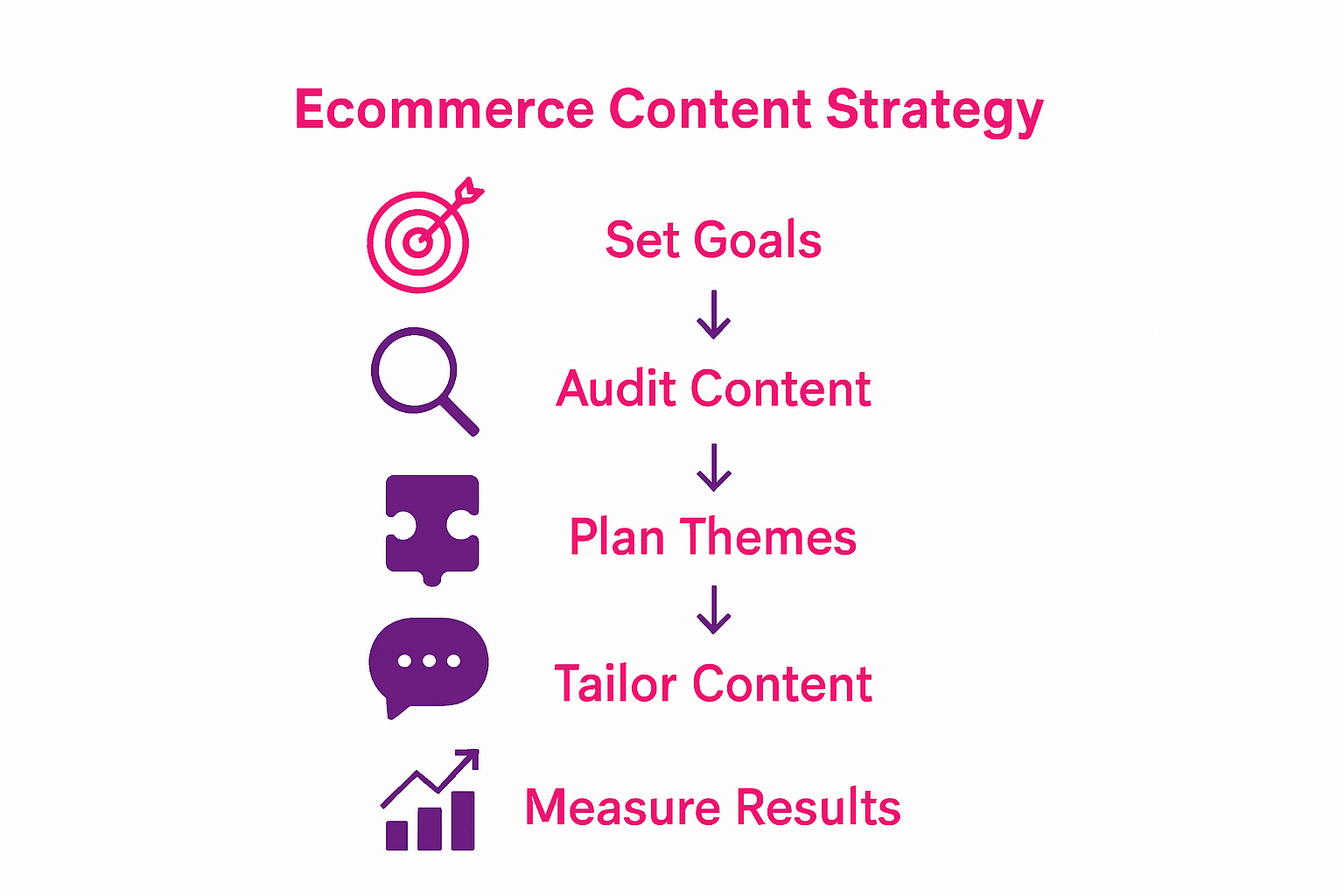
Ecommerce Content Strategy Steps for Effective Online Growth


Nearly 80 percent of britain’s online shoppers expect a tailor-made ecommerce experience, yet many businesses miss the mark right from the start. Setting clear goals and deeply understanding your britain-based audience are not just trendy advice, they are proven to drive better conversion and long-term success. This guide lays out straightforward steps for developing smarter content strategies, so you can connect with your british customers and grow your online business with real confidence.
Table of Contents
Quick Summary
Key Insight | Explanation |
1. Define clear ecommerce goals | Set specific, measurable objectives to guide your overall strategy. |
2. Conduct a thorough content audit | Review existing content to identify gaps and opportunities for improvement. |
3. Align content themes with business objectives | Create content that directly supports your primary business goals and customer needs. |
4. Tailor content to search intent | Develop content that addresses specific user queries while reflecting your brand voice. |
5. Measure and refine strategy regularly | Implement a structured performance review to adapt content strategy based on analytics. |
Step 1: Define your ecommerce goals and audience
Successful ecommerce growth starts with crystal clear objectives and a deep understanding of who you are targeting. According to research from Ibimapublishing, defining the right strategy and conducting thorough audience research are fundamental components of effective online development.
To begin, map out precise business goals that are specific, measurable, and aligned with your broader commercial vision. These might include increasing online sales by a certain percentage, expanding into new market segments, or improving customer retention rates. Next, develop a comprehensive profile of your ideal customer by considering demographics, purchasing behaviours, online preferences, and potential pain points. According to Hummedia, effective ecommerce solutions must be fundamentally driven by user needs, which requires consultation and deep understanding of potential customers.
When defining your audience, go beyond basic demographics. Consider creating detailed customer personas that capture motivations, challenges, and specific online shopping patterns. This granular approach will help you craft targeted marketing messages and product offerings that genuinely resonate with your potential customers. Pro tip: Use analytics tools, customer surveys, and market research to gather robust insights about your target audience and refine your understanding continuously.
With clear goals and a well-defined audience profile, you are now prepared to develop a strategic approach that speaks directly to your potential customers’ needs and desires.
Step 2: Audit existing content for gaps and opportunities
Conducting a comprehensive content audit is critical for identifying potential improvements and strategic opportunities in your ecommerce marketing approach. Arxiv research emphasises the power of systematic auditing in detecting and addressing potential gaps in content strategy.
Begin by creating a detailed inventory of all existing content across your digital platforms. This includes blog posts, product descriptions, landing pages, social media content, and email marketing materials. Systematically evaluate each piece against key criteria such as relevance, engagement metrics, search engine performance, and alignment with your defined audience personas. As suggested by Arxiv, a network-centric approach can help quantify various content properties and surface meaningful insights.
Look for specific opportunities such as content gaps where customer questions remain unanswered, outdated information that needs refreshing, or topics that could be expanded into more comprehensive resources. Pay close attention to performance data like page views, time on page, bounce rates, and conversion rates. These metrics will reveal which content resonates with your audience and which pieces may require significant revision or replacement.
Pro tip: Create a spreadsheet tracking each content piece, its current performance, potential improvements, and strategic recommendations. This systematic approach transforms your audit from a passive review into an actionable strategic planning tool.

With a clear understanding of your content landscape, you are now prepared to develop targeted strategies for content optimisation and creation.
Step 3: Plan content themes aligned with business objectives
Developing a strategic content plan requires thoughtful alignment between your marketing efforts and core business goals. According to DG Vaishnav College, successful e-commerce strategies must integrate business models with targeted content approaches that reflect broader organisational objectives.
Start by mapping your primary business objectives to potential content themes. If your goal is to expand market reach, consider creating content that educates potential customers about your product categories, industry trends, and unique value propositions. For businesses focusing on customer retention, develop themes that provide ongoing value such as product guides, troubleshooting resources, and expert insights relevant to your target audience. This approach ensures your content directly supports your strategic business outcomes.
Consider developing a content matrix that connects each business objective with specific content themes and formats. For instance, if increasing online sales is a key goal, your themes might include product comparisons, customer success stories, detailed buying guides, and expert recommendations. Each theme should be designed to address customer pain points while subtly guiding them through the purchasing journey.
Pro tip: Regularly review and refresh your content themes to ensure they remain relevant to both your evolving business objectives and your customers changing needs. Flexibility and responsiveness are key to maintaining an effective content strategy.
With your content themes strategically planned, you are now prepared to develop a robust content creation roadmap that drives meaningful business growth.
Step 4: Create content tailored to search intent and brand
Crafting content that simultaneously satisfies search engine requirements and reflects your brand’s unique personality is a nuanced art. Research from Theseus emphasises the critical importance of understanding both your target audience and your brand’s core objectives when developing strategic content.
Begin by conducting comprehensive keyword research to identify the specific search intents driving your potential customers. These intents typically fall into three primary categories: informational (seeking knowledge), navigational (looking for a specific website), and transactional (ready to purchase). For each identified keyword cluster, develop content that directly addresses user questions while maintaining a consistent brand voice. Your content should seamlessly blend practical information with your brand’s unique storytelling approach, ensuring that each piece feels both informative and authentically representative of your brand identity.
As recommended by Theseus, adopt an outside-in communication strategy that prioritises audience needs while subtly reinforcing your brand personality. This means creating content that feels less like a sales pitch and more like a valuable conversation with your ideal customer. Consider developing content formats that showcase your expertise while solving real customer problems such as comprehensive buying guides, troubleshooting resources, industry trend analyses, and behind-the-scenes brand stories.
Pro tip: Develop a content style guide that codifies your brand voice, ensuring consistency across all content types while allowing enough flexibility for individual pieces to feel natural and engaging.
With your content strategically aligned to both search intent and brand identity, you are now prepared to create truly resonant marketing materials that connect meaningfully with your target audience.
Step 5: Measure performance and fine-tune your strategy
Measuring the effectiveness of your ecommerce content strategy requires a systematic approach to tracking and analysing key performance indicators. Arxiv research highlights the critical importance of understanding human motives and web browsing behaviours when evaluating content performance.
Establish a comprehensive analytics framework that tracks multiple dimensions of content effectiveness. Key metrics should include conversion rates, engagement levels, time on page, bounce rates, and user journey progression. Utilise tools like Google Analytics, heat mapping software, and custom tracking parameters to gain granular insights into how your content performs across different audience segments. As suggested by Arxiv, understanding user needs comprehensively allows for more precise strategy refinement and improved user experience.
Develop a regular performance review cycle where you systematically analyse these metrics and identify potential areas for improvement. Look for patterns such as content types that consistently drive higher engagement, specific topics that resonate with your audience, and potential friction points in the user journey. Create a responsive strategy that allows for quick iterations and content adjustments based on these insights.
Pro tip: Implement a quarterly content performance dashboard that provides a holistic view of your content strategy’s effectiveness, allowing for data driven decision making and continuous strategic refinement.
By maintaining a rigorous approach to performance measurement and strategic adaptation, you will ensure your ecommerce content remains dynamic, relevant, and aligned with your business objectives.
Unlock Your Ecommerce Growth with Expert Digital Marketing Support
The article highlights critical challenges such as defining clear ecommerce goals, understanding detailed customer personas, and tailoring content to specific search intent and brand voice. These steps are essential for online growth yet can feel overwhelming when managing everything alone. You want precise strategies that connect with your audience while continuously measuring performance for ongoing improvement. We know how frustrating it can be to face content gaps, low engagement, and unclear ROI on your marketing efforts.
At iwanttobeseen.online we specialise in digital marketing services tailored to ecommerce businesses just like yours. With over 25 years of proven success scaling ecommerce brands, our expertise covers SEO, AI-powered insights, social media optimisation, and targeted PPC campaigns. We help you address the very pain points the article describes such as audience definition, content strategy alignment, and performance tracking, turning these challenges into significant growth opportunities.
Elevate your online presence and transform your ecommerce content into a powerful sales engine today. Visit our digital marketing services page to discover how our tailored solutions can drive effective, measurable business results.

Take control of your ecommerce future by partnering with experts who understand what it takes to thrive. Act now and start scaling your online growth with a strategic approach proven to deliver. Explore our offerings at iwanttobeseen.online and get ready to be seen and heard in your market.
Frequently Asked Questions
What are the key steps in developing an ecommerce content strategy?
To create an effective ecommerce content strategy, first define your business goals and target audience, conduct a content audit to identify gaps, plan content themes aligned with your objectives, create content that meets search intent and reflects your brand, and finally, measure performance to fine-tune your strategy. Start by mapping out your specific goals within the next week to set a solid foundation.
How can I identify my ideal customer for my ecommerce site?
You can identify your ideal customer by creating detailed customer personas that capture their demographics, buying behaviours, pain points, and online preferences. Conduct customer surveys or use analytics tools to gather insights, aiming to complete this research within 30 days for a comprehensive understanding.
What metrics should I track to measure the effectiveness of my ecommerce content?
Key metrics to track include conversion rates, engagement levels, time spent on pages, bounce rates, and user journey progression. Set up a performance review cycle to analyse these metrics regularly, ideally every month, to identify opportunities for improvement.
How do I ensure my content aligns with my business objectives?
To ensure alignment, map your primary business objectives to specific content themes that support these goals. Regularly review and refresh these themes to maintain relevance, aiming to conduct this alignment check at least quarterly.
What should I include in a content style guide for my brand?
A content style guide should include your brand voice, tone, and guidelines for writing, visual elements, and formatting to ensure consistency across all content. Develop this guide as part of your content creation process within 60 days to strengthen your brand identity.
How often should I perform a content audit for my ecommerce site?
You should perform a content audit at least twice a year to identify gaps and optimise your content strategy effectively. Set a reminder to schedule these audits every six months to stay on top of your content performance.
Recommended
Comments