.png)
Brand Reputation – How It Shapes E-Commerce Success


Over 90 percent of customers say that brand reputation directly shapes their trust in digital retailers, making it a key factor in every british e-commerce decision. In a crowded market where options are endless, shoppers look beyond products to see how a business is perceived. Understanding what truly builds credibility—from trustworthiness to transparency—can turn casual browsers into loyal advocates and help british brands thrive in the ever-evolving world of online commerce.
Table of Contents
Key Takeaways
Point | Details |
Brand Reputation is Dynamic | Businesses must actively manage their reputation, as it is shaped by customer experiences and interactions. |
Core Elements Impact Outcomes | Trustworthiness, reliability, transparency, and customer experience are critical in driving sales, loyalty, and trust. |
Measure Reputation Continuously | Use a comprehensive approach to track various metrics such as customer reviews and social media sentiment for real-time insights. |
Avoid Common Mistakes | Brands must ensure consistent messaging and transparent communication to mitigate risks and protect their reputation. |
Defining Brand Reputation And Its Core Elements
Brand reputation represents the comprehensive perception customers and stakeholders form about an organisation based on its past performance, behaviour, and communication. Corporate reputation emerges through social evaluation, reflecting how different social and political contexts shape expectations for business interactions.
At its core, brand reputation encompasses several critical elements that collectively determine how an enterprise is perceived. These foundational components include:
Trustworthiness: The degree to which customers believe the brand will consistently deliver on its promises
Reliability: Demonstrated capability to provide consistent, high-quality products or services
Transparency: Openness about business practices, pricing, and communication
Customer Experience: The cumulative interactions and emotional responses generated through engagement
Successful e-commerce brands understand that reputation is not static but a dynamic construct continuously shaped by customer experiences, public communication, and organisational behaviour. Reputation functions as a powerful mechanism of social evaluation, influencing consumer trust and purchasing decisions across digital marketplaces.

Pro Tip for Brand Reputation Management: Proactively monitor and respond to online feedback across all digital platforms, treating each customer interaction as an opportunity to reinforce your brand’s commitment to excellence and customer satisfaction.
By strategically cultivating these core elements, e-commerce businesses can build a resilient brand reputation that attracts and retains customers in an increasingly competitive digital landscape.
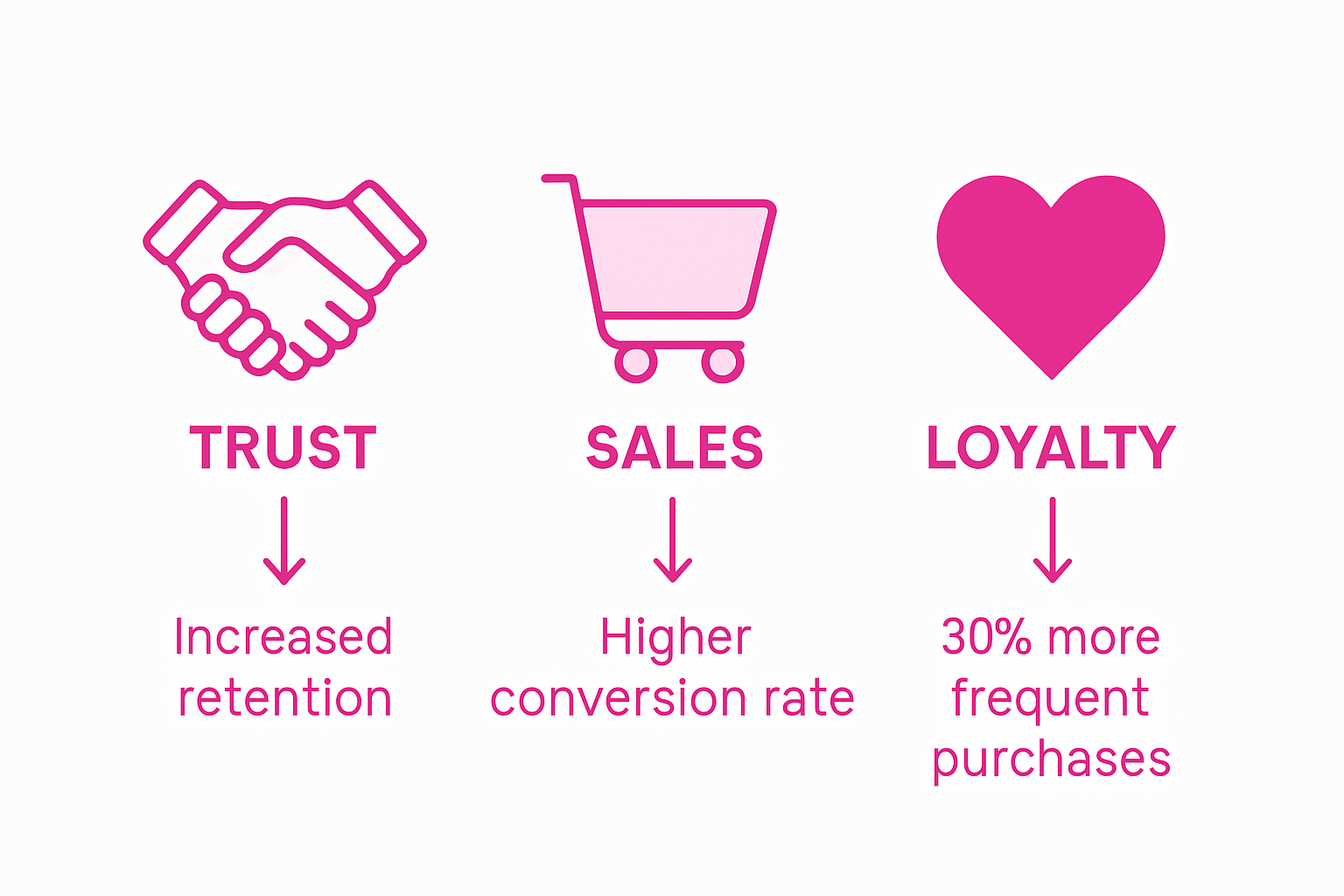
Here is a summary of how core elements of brand reputation influence key e-commerce outcomes:
Core Element | Influence on Sales | Impact on Loyalty | Effect on Brand Trust |
Trustworthiness | Boosts conversion rates | Increases customer return | Strengthens customer belief |
Reliability | Encourages repeat buying | Enhances long-term ties | Reduces perceived risk |
Transparency | Increases purchase intent | Improves satisfaction | Builds long-term confidence |
Customer Experience | Drives positive reviews | Sparks advocacy | Fosters emotional connection |
Types Of Brand Reputation In E-Commerce
In the dynamic world of e-commerce, brand reputation manifests across multiple interconnected domains, each representing a unique dimension of organisational perception. Comparative studies of trust and reputation systems reveal nuanced approaches to evaluating digital trustworthiness, highlighting the complexity of reputation management in online marketplaces.
The primary types of brand reputation in e-commerce include:
Transactional Reputation: Based on direct purchasing experiences, customer service interactions, and product quality
Social Media Reputation: Shaped by online conversations, reviews, comments, and public engagement across digital platforms
Customer Service Reputation: Determined by responsiveness, problem resolution, and overall support quality
Product Quality Reputation: Established through consistent product performance, reliability, and alignment with customer expectations
Dynamic reputation frameworks demonstrate how online entities adapt to changing market environments, emphasising the need for continuous monitoring and strategic reputation management. Each reputation type interconnects, creating a comprehensive digital perception that influences consumer trust and purchasing decisions.
Successful e-commerce brands recognise that reputation is multifaceted, requiring a holistic approach that addresses every potential touchpoint between the business and its customers. By understanding and actively managing these reputation types, organisations can build robust digital credibility.
Pro Tip for Reputation Management: Implement a comprehensive tracking system that aggregates feedback and performance metrics across all reputation domains, enabling real-time insights and proactive reputation enhancement strategies.
Through strategic investment in reputation management, e-commerce businesses can transform perception into a powerful competitive advantage.
How Brand Reputation Is Measured Online
Axiomatic approaches to reputation systems reveal the complex methodology behind measuring online brand perception. Digital reputation measurement involves aggregating multiple data points from diverse sources, transforming raw feedback into comprehensive social rankings that reflect an organisation’s digital credibility.
Key metrics for measuring online brand reputation include:
Customer Review Analysis: Evaluating sentiment, ratings, and qualitative feedback across platforms
Social Media Sentiment Tracking: Monitoring engagement, mentions, and public discourse about the brand
Net Promoter Score (NPS): Calculating the likelihood of customers recommending the brand
Conversion Rate Performance: Assessing how reputation translates into actual purchasing behaviour
Response Time and Quality Metrics: Measuring customer service effectiveness and resolution capabilities
Trust mechanisms in e-commerce platforms demonstrate the intricate relationship between policy frameworks and reputation management, highlighting the need for sophisticated measurement techniques. These systems go beyond simple numerical ratings, incorporating contextual understanding of customer interactions and organisational performance.
E-commerce brands must adopt a holistic approach, recognising that reputation measurement is not a static process but a dynamic, continuous evaluation of organisational credibility. By implementing robust tracking mechanisms, businesses can gain actionable insights into their digital perception.
Pro Tip for Reputation Measurement: Develop a comprehensive dashboard that integrates multiple reputation metrics, enabling real-time monitoring and strategic response to emerging reputation trends.
Successful online reputation management requires persistent attention, sophisticated analytical tools, and a commitment to transparency and customer satisfaction.
Impact On Sales, Loyalty And Customer Trust
Research examining seller marketing capability reveals profound connections between brand reputation and consumer purchasing behaviour, demonstrating how digital credibility directly influences key e-commerce performance metrics. The intricate relationship between reputation and commercial success extends far beyond simple transaction dynamics.
The multifaceted impact of brand reputation manifests through several critical dimensions:
Conversion Rate Enhancement: Positive reputation increases likelihood of initial purchase
Consumer Confidence: Strong brand perception reduces perceived transaction risks
Purchase Frequency: Trusted brands experience higher customer retention
Price Tolerance: Customers willingly pay premium prices for reputable brands
Referral Potential: Satisfied customers become active brand advocates
Empirical studies highlight how customer experiences and brand trust significantly drive repurchase intentions, underscoring reputation’s pivotal role in long-term business sustainability. The correlation between positive brand perception and customer loyalty represents a powerful competitive advantage in increasingly saturated digital marketplaces.
Successful e-commerce organisations recognise reputation as a dynamic asset requiring continuous investment and strategic management. By prioritising transparency, consistent quality, and genuine customer engagement, brands can transform reputation from a passive metric into an active growth mechanism.
Pro Tip for Brand Trust Development: Implement a proactive feedback loop that systematically captures, analyses, and responds to customer experiences, demonstrating commitment to continuous improvement.
Ultimately, brand reputation functions as a critical bridge between customer expectations and organisational performance, determining an e-commerce business’s capacity to attract, retain, and expand its customer base.
Risks And Common Mistakes To Avoid
The Entity-Referent Correspondence Framework highlights critical risks associated with brand authenticity and perception management, revealing how seemingly minor discrepancies can profoundly damage an organisation’s digital reputation. Understanding these potential pitfalls is crucial for proactive brand protection.
Common brand reputation risks in e-commerce include:
Inconsistent Messaging: Conflicting communication across different platforms
Delayed Customer Service Response: Slow or inadequate problem resolution
Inauthentic Brand Representation: Presenting an image disconnected from actual organisational values
Ignoring Negative Feedback: Failing to address or learn from critical customer experiences
Lack of Transparency: Concealing product limitations or business practices
E-commerce brands frequently stumble by treating reputation management as a reactive rather than strategic process. The most significant errors emerge from disconnects between promised brand experience and actual customer interactions. Organisations that fail to maintain alignment between their projected image and real-world performance risk substantial credibility erosion.
Maintaining brand reputation requires continuous vigilance, genuine commitment to customer satisfaction, and a willingness to adapt. Successful digital businesses view reputation not as a static metric but as a dynamic relationship requiring consistent nurturing and authentic engagement.
The table below compares digital reputation risks with their potential business consequences:
Reputation Risk | Example Scenario | Potential Business Consequence |
Inconsistent Messaging | Conflicting ads across platforms | Customer confusion, churn |
Delayed Customer Response | Slow replies to complaints | Negative social media publicity |
Ignoring Negative Feedback | No visible action on poor reviews | Loss of trust, declining ratings |
Lack of Transparency | Hidden delivery fees | Cart abandonment, complaints |
Inauthentic Representation | Overpromising features | Damaged credibility, fewer sales |
Pro Tip for Reputation Risk Mitigation: Develop a comprehensive monitoring system that captures real-time customer sentiment across multiple channels, enabling swift and meaningful responses to emerging reputation challenges.
Ultimately, sustainable brand reputation demands more than clever marketing – it necessitates genuine commitment to delivering consistent, high-quality customer experiences.
Elevate Your E-Commerce Brand Reputation with Proven Digital Marketing Expertise
Building trustworthiness, enhancing customer experience and maintaining transparency are critical challenges for e-commerce brands seeking to thrive in competitive markets. If your goal is to transform your brand reputation into a powerful asset that drives sales, improves customer loyalty and fosters deep brand trust, expert guidance is essential. The article highlights how continuous reputation management and strategic measurement can make all the difference between fleeting success and lasting growth.
At iwanttobeseen.online we combine over 25 years of experience scaling e-commerce brands with cutting-edge digital marketing services including SEO, AI-driven strategies, social media and PPC campaigns specifically designed to bolster your online credibility. Discover how our tailored solutions address core reputation elements and help you monitor feedback in real-time, so you never miss a chance to convert engagement into growth.
Looking to harness the full potential of your brand’s reputation?

Start your journey to enhanced digital credibility today by visiting iwanttobeseen.online. Unleash the true power of your e-commerce brand with strategies that build trust, reliability and transparency every step of the way.
Frequently Asked Questions
What are the core elements that define brand reputation in e-commerce?
Brand reputation in e-commerce is defined by trustworthiness, reliability, transparency, and customer experience. Together, these elements shape how customers perceive a brand and influence their purchasing decisions.
How does brand reputation affect customer loyalty?
A strong brand reputation enhances customer loyalty by fostering trust and connection. Customers are more likely to return to brands they perceive as reliable and trustworthy, leading to increased repeat purchases and long-term relationships.
What are the common risks that can harm a brand’s reputation online?
Common risks include inconsistent messaging, delayed customer service responses, ignoring negative feedback, inauthentic brand representation, and a lack of transparency. These pitfalls can damage credibility and trust with consumers.
How can e-commerce businesses effectively measure their brand reputation?
E-commerce businesses can measure brand reputation by analysing customer reviews, monitoring social media sentiment, calculating the Net Promoter Score (NPS), evaluating conversion rates, and assessing customer service response times. These metrics provide insights into overall brand perception.
Recommended
Comments