.png)
Omnichannel Strategy: Driving eCommerce Growth and Loyalty


Nearly 90 percent of british shoppers expect the same smooth experience whether browsing online or stepping into a store. Seamless customer journeys are no longer a bonus but a necessity in today’s eCommerce landscape. As digital and physical touchpoints blur, understanding how an omnichannel strategy unites these platforms helps retailers meet rising expectations, drive satisfaction, and stand out in a crowded market.
Table of Contents
Key Takeaways
Point | Details |
Omnichannel Strategy Defined | An omnichannel strategy provides a seamless, integrated customer experience across multiple platforms, enhancing flexibility in shopping journeys. |
Integration Over Multichannel | Unlike multichannel approaches, omnichannel strategies ensure a fully integrated experience, allowing customers to enjoy consistent interactions regardless of the platform used. |
Core Components Required | Successful omnichannel integration relies on unified customer data management, real-time inventory synchronisation, and personalised communication protocols. |
Benefits of Implementation | Implementing an omnichannel strategy leads to enhanced customer satisfaction, increased loyalty, and improved customer lifetime value through personalised experiences. |
Defining Omnichannel Strategy for eCommerce
An omnichannel strategy represents a comprehensive approach for eCommerce businesses to create seamless, integrated customer experiences across multiple interaction points. Sophisticated multichannel retailing strategies enable customers to engage with brands through various platforms and devices, providing unprecedented flexibility in their shopping journey.
At its core, an effective omnichannel approach transcends traditional single-channel marketing by creating a unified, interconnected ecosystem. This means customers can smoothly transition between digital platforms - such as websites, mobile apps, social media channels, and physical retail spaces - without experiencing disruption or inconsistency. The strategy recognises that modern consumers expect personalised, frictionless interactions regardless of how or where they choose to engage with a brand.
Key components of a robust omnichannel strategy include:
Consistent brand messaging across all platforms
Real-time inventory synchronisation
Integrated customer data management
Personalised communication and recommendations
Seamless payment and delivery options
Research demonstrates that implementing comprehensive omnichannel marketing approaches can significantly enhance customer satisfaction, loyalty, and overall lifetime value. By breaking down technological and organisational barriers, businesses can create a more responsive, customer-centric shopping experience that meets the evolving expectations of modern consumers.
Distinguishing Multichannel and Omnichannel Approaches
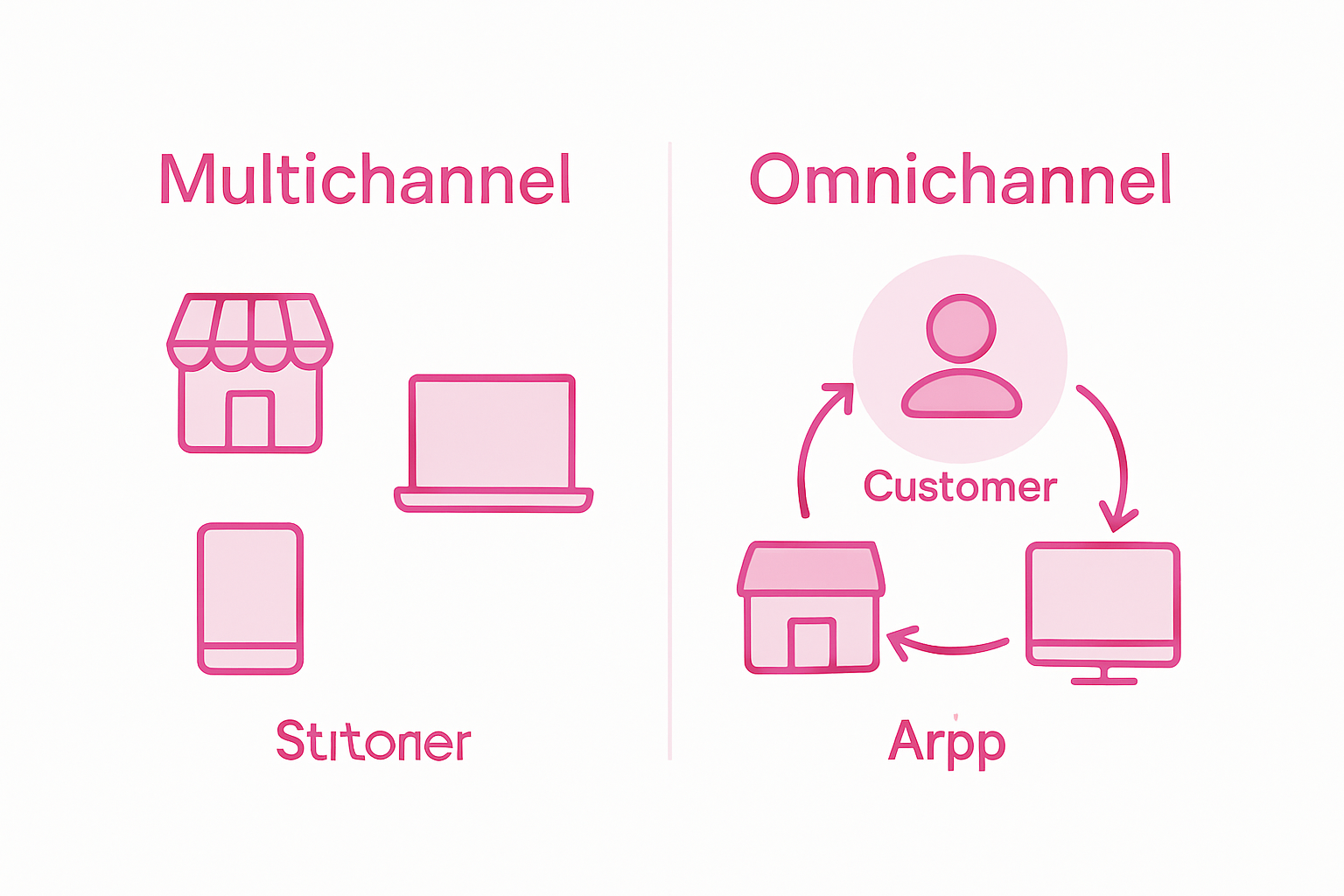
While multichannel and omnichannel strategies might seem similar at first glance, they represent fundamentally different approaches to customer engagement. Multichannel retailing involves operating multiple independent sales channels, where each platform functions as a separate entity with its own distinct processes, inventory management, and customer interactions.

In contrast, omnichannel strategies create a truly integrated ecosystem where every customer touchpoint works seamlessly together. Unlike multichannel approaches, which simply provide multiple ways to purchase, omnichannel methods focus on providing a consistent, personalised experience across all platforms. This means a customer could start browsing on a mobile app, continue on a desktop website, and complete their purchase in a physical store - with each interaction feeling like a continuous, unified journey.
Key differences between these approaches include:
Multichannel: Separate, disconnected channels
Omnichannel: Fully integrated, synchronised experiences
Multichannel: Independent inventory and pricing
Omnichannel: Unified inventory and consistent pricing
Research in the fashion retail sector demonstrates that brands across different price segments are increasingly recognising the value of omnichannel strategies. By breaking down technological and operational barriers, businesses can create more responsive, customer-centric experiences that meet the evolving expectations of modern consumers who demand flexibility, convenience, and personalisation in their shopping journey.
Core Components of Successful Integration
Successful omnichannel integration requires a strategic approach that goes beyond simply connecting multiple sales channels. Channel integration involves carefully synchronising promotion, product, pricing, and transaction information to create a cohesive customer experience that feels seamless and intuitive across all touchpoints.
The technical infrastructure supporting omnichannel strategies must be robust and flexible. This means implementing advanced technologies that enable real-time data synchronisation, personalised customer tracking, and consistent communication across different platforms. Businesses need to invest in sophisticated customer relationship management (CRM) systems, integrated inventory management platforms, and analytics tools that can provide deep insights into customer behaviours and preferences.
Key technical and strategic components include:
Unified customer data management
Real-time inventory synchronisation
Consistent pricing and promotional strategies
Personalised communication protocols
Seamless payment and fulfilment systems
Digital channel integration plays a critical role in shaping consumer attitudes towards virtual shopping experiences, demonstrating that successful omnichannel strategies are not just about technological connectivity, but about creating meaningful, personalised interactions that meet evolving customer expectations. By breaking down traditional operational silos and embracing a holistic approach to customer engagement, businesses can develop more responsive and customer-centric retail ecosystems.
Benefits for Customer Experience and Growth
Omnichannel strategies represent a transformative approach to customer engagement, offering profound benefits for both customer experience and business growth. Comprehensive channel integration can significantly enhance customer satisfaction and loyalty, creating a more responsive and personalised shopping journey that meets the evolving expectations of modern consumers.
The impact of omnichannel approaches extends far beyond simple convenience. By providing seamless interactions across multiple touchpoints, businesses can create a more intuitive and emotionally resonant customer experience. This means customers can effortlessly transition between digital platforms, physical stores, mobile apps, and customer support channels without experiencing friction or disconnection. Such smooth experiences build trust, encourage repeat purchases, and ultimately drive long-term customer retention.
Key benefits of omnichannel strategies include:
Enhanced customer satisfaction
Increased customer loyalty
Improved customer lifetime value
More personalised shopping experiences
Higher conversion rates
Deeper customer insights
Research demonstrates that integrated channels positively impact both cognitive and emotional customer experiences, highlighting the strategic importance of a holistic approach to customer engagement. Businesses that successfully implement omnichannel strategies can differentiate themselves in a competitive marketplace, transforming traditional transactional relationships into meaningful, personalised interactions that resonate with modern consumers.
Potential Pitfalls and How to Avoid Them
Omnichannel implementation presents several complex challenges that can derail even the most well-intentioned strategies. Technology integration and organisational culture represent significant obstacles in successful omnichannel deployment, requiring businesses to approach transformation with careful planning and strategic investment.
One of the most critical challenges involves ensuring consistent customer experiences across different channels. This means aligning technological infrastructure, data management systems, and communication protocols to create a truly unified approach. Inconsistent pricing, conflicting product information, or disconnected customer service can quickly erode trust and undermine the entire omnichannel strategy. Businesses must invest in robust integration platforms that enable real-time data synchronisation and provide a holistic view of customer interactions.
Key potential pitfalls to anticipate include:
Technological incompatibility between systems
Inconsistent customer data management
Fragmented communication channels
Lack of cross-departmental collaboration
Insufficient staff training
Inadequate customer journey mapping
Careful channel integration requires a meticulous, customer-centric approach that prioritises seamless experiences over technological complexity. By anticipating potential challenges and developing proactive mitigation strategies, businesses can transform potential obstacles into opportunities for enhanced customer engagement and operational excellence.
Unlock Seamless Omnichannel Growth with Expert Digital Marketing
The article highlights the critical challenge of integrating multiple sales channels into a unified, personalised omnichannel experience. Key pain points such as real-time inventory synchronisation, consistent brand messaging, and seamless customer data management require sophisticated strategies to overcome technological incompatibilities and fragmented communication. If you aim to enhance customer loyalty and boost conversion rates by creating a truly integrated eCommerce ecosystem, specialised digital marketing is essential.
At I Want To Be Seen, we bring over 25 years of experience scaling successful eCommerce brands with targeted SEO, AI-driven insights, Social Media, and PPC campaigns designed for omnichannel growth. Our expertise ensures your brand delivers cohesive customer experiences that drive satisfaction and long-term loyalty. Benefit from a proven partner who understands how to break down operational barriers and craft personalised interactions that resonate.

Ready to transform your eCommerce strategy with data-driven digital marketing solutions that fuel omnichannel success? Visit I Want To Be Seen today and discover how we can help you deliver consistent messaging, optimise real-time inventory visibility, and elevate your customer engagement to the next level.
Frequently Asked Questions
What is an omnichannel strategy in eCommerce?
An omnichannel strategy in eCommerce is a cohesive approach that aims to provide a seamless, integrated customer experience across multiple platforms and devices, allowing customers to engage with a brand consistently across digital and physical spaces.
How does an omnichannel strategy differ from a multichannel strategy?
An omnichannel strategy focuses on creating a fully integrated experience, where all customer touchpoints work together seamlessly, in contrast to a multichannel strategy that operates multiple independent channels without synchronisation between them.
What are the key components of a successful omnichannel strategy?
Key components include consistent brand messaging, real-time inventory synchronisation, integrated customer data management, personalised communication, and seamless payment and fulfilment options.
What benefits can businesses expect from implementing an omnichannel strategy?
Businesses can expect enhanced customer satisfaction, increased loyalty, improved customer lifetime value, more personalised shopping experiences, higher conversion rates, and deeper insights into customer behaviours.
Recommended
Comments